Wild vegetables can be dug up right by the roadside, and they work in stir-fries or cold dishes alike, clearing heat and detoxifying the body
No one knows when it started, but even though people's lives are going well these days, with no shortage of food or clothing at home and every kind of delicacy within reach, sometimes they still crave that taste of wild vegetables. Even though the home has everything, wild vegetables are not something you can just buy whenever you want!
That is because wild vegetables are not like the other vegetables sold in supermarkets, where you can just grab a bunch whenever you feel like eating them. Wild vegetables must be dug up yourself. Although a scattered few people still sell wild vegetables at the market, that good fortune never lasts long. Huahua also thinks that, being wild vegetables after all, they are of course best when you dig them up and eat them yourself!
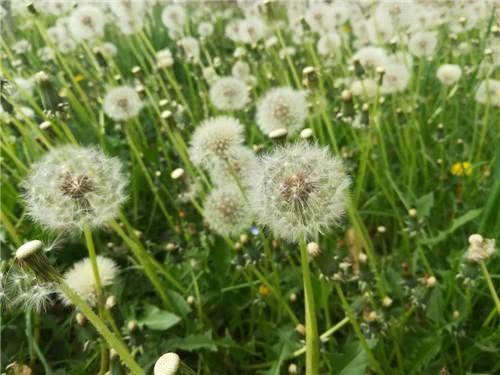
Today Huahua is going to introduce a delicious wild vegetable. Whether you stir-fry it, toss it in a cold dish, or use it to make buns, the results are all great! This vegetable is the dandelion. When people hear "dandelion," they immediately think of that fluffy ball that flies away with a puff of wind, so how exactly do you stir-fry it and eat it?
What we eat is of course not that fluffy ball part, but the roots and leaves of the dandelion. Although it is called dandelion, different regions call it different names. Some places call it "popo ding," and some call it "lantern grass." In short, they are all referring to this wild vegetable, the dandelion!
Generally speaking, dandelions grow in a very wide range of places. They do not only grow in the suburbs or in rural fields. In fact, dandelions can be seen just about everywhere, in every kind of place: by the roadside, along the paths, in the garden downstairs, and so on. You will find traces of them everywhere.
Even though dandelions look so ordinary, the benefits of eating them are many! Dandelions are a wild vegetable and contain many nutrients that we do not usually get from vegetables, so their nutritional value is quite rich. Besides being nutritious, dandelions also have the effect of clearing heat and detoxifying the body. For people with excess internal heat or poor digestion, eating dishes made with dandelions can also help relieve these issues.
When choosing dandelions to eat, it is best to pick them before they have formed their dandelion puffballs. At this stage, the leaves are relatively tender and taste better. Once the puffballs have formed, the roots and leaves become a bit older, but after removing the old leaves they are still tasty.
Besides using them for cooking, we can also take dandelions home with their roots and soil still attached and grow them as a small potted plant, which is not a bad idea at all! Put them on the balcony, and when the wind blows, the dandelions scatter, which is a little bit romantic!
When a potted dandelion has grown to a certain height, you can harvest it to eat. As long as you leave about 2 cm at the bottom, the dandelion will keep growing. When you want to eat it, cut a handful, then wait for the next round of dandelion growth. It is both ornamental and edible, a truly good thing!
Finally, Huahua suggests that since we usually eat too much refined rice and fine flour, we can occasionally try eating a little wild vegetables and coarse grains too!