A Detailed Guide to Making Landscape Bonsai from Decayed Wood
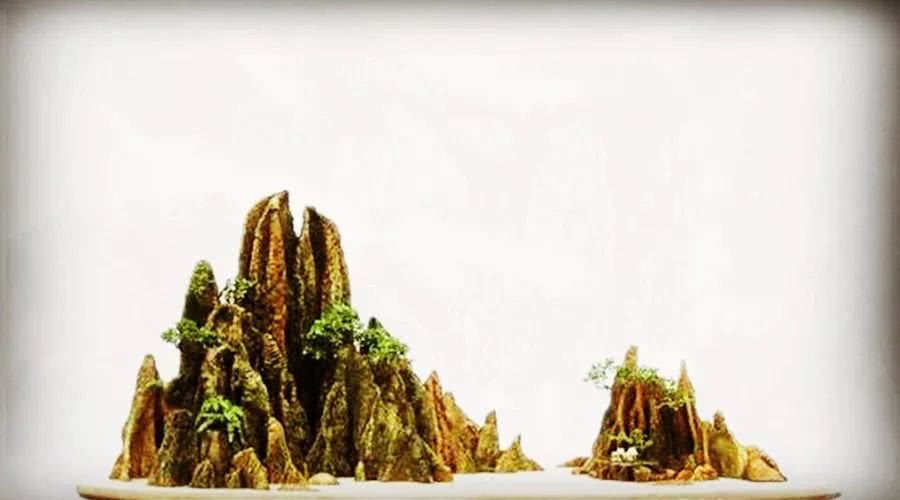
Decayed wood landscape bonsai is a type of simulated bonsai. The wood itself has natural grain, and after insect damage and weathering it develops many holes, much like natural mountain rocks - resembling peaks and ridges in varied forms, some like axe-cut stone, some like sandstone and conglomerate stone, some like Taihu stone. Through processing and combination, it can create endlessly changing fantastic peaks and strange crags in a thousand shapes and forms, as if made by nature.
Using decayed wood to make bonsai has many advantages: materials are easy to find and can be sourced locally, the making is simple and easy to manage, it is novel and distinctive with a special charm, and decayed wood absorbs water extremely well. The plants used as accents are easy to keep alive, so decayed wood will become a natural resource for bonsai enthusiasts.
Material selection:Generally, the decayed and insect-damaged parts of poplar and willow are chosen, because poplars have many pests and decay and are bored easily, and their forms are good. Before sawing, observe carefully and consider repeatedly until you have a clear picture in mind. Then saw off the needed part.
Coloring and combination:This depends on the grain and form of the decayed wood. Those resembling axe-cut stone are colored black-gray; those resembling sandstone are colored yellow-brown; those resembling Taihu stone are colored gray. The natural color of the decayed wood can also be used.
When coloring, first mix the color accurately. Use coal dust, ink, poster paint, etc., to blend the desired color into a water-based dye according to the color needed. Rinse the selected decayed wood clean with clear water, soak it in the prepared water-based dye so that it colors evenly. Take it out, let it dry, then rinse off the floating color with clear water. For one piece of work, it is best to use decayed wood of the same tone and from the same tree. In this way the grain is consistent, the tone is consistent, and the image is more lifelike.
When combining, first set the theme and concept, and carry out the design, combination and layout around the theme. You can also draw on the artistic conception of landscape painting for the making. When joining pieces, use nails and wire to fix them.
Plant arrangement:"A mountain without forest is lifeless." Once plants are grown on a landscape bonsai, it immediately feels full of vitality, with green mountains and lush beauty. Into the joined crevices and the carved or natural caves, fill fertile potting soil, and plant ferns, small flowers, flowering plants, grasses, moss and other plants. Then water thoroughly so that the roots make close contact with the soil, which helps them survive. When planting moss, it is easy to keep alive after transplanting. In arranging plants, pay attention to proportional relationships, season, geographical location and the content of the scene, and strive for naturalness, reasonableness and harmony.
Placement of accessories:Accessories play the role of the finishing touch and of scale. A landscape bonsai fitted with accessories such as pavilions, terraces and towers, boats and bridges, figures, birds and beasts not only enriches the content but also adds a flavor of life. When placing accessories, note that the proportions of rocks, plants and accessories must be appropriate, and the number should not be too many, to avoid clutter. Arrange them so that some are hidden and some visible, with heights and lows staggered and density well measured, composing the work into a unified picture.
Care and management:Decayed wood absorbs water very easily, so the pot should always be kept full of water. This both ensures the growth of the plants and increases the artistic effect of the work. "Green mountains and blue waters" bring out the best in each other. At the same time, spray water frequently to benefit the growth of the moss, making the bonsai appear with clear mountains and beautiful waters, lush and dripping with green. In addition, fertilize frequently to supply the nutrients the plants need. Generally use a thin liquid fertilizer for watering, and the amount used each time should not be too much. After applying it, spray once with clear water to keep the bonsai clean.
Usually place it in a spot with ample light and good ventilation. In summer, pay attention to shading; in winter, pay attention to protection from the cold, so as to keep the plants growing well and enhance their ornamental value.
Further reading