3 plants with golden leaf edges that do not bloom, symbolizing wealth attraction
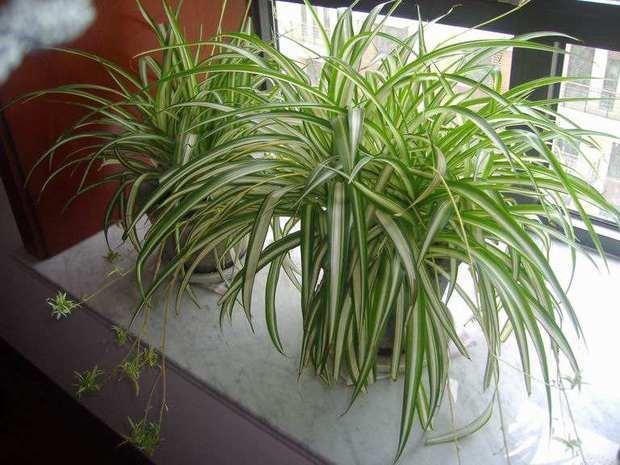
There are about 400,000 species of plants on Earth, which can be divided into two major categories: lower plants and higher plants. Lower plants appeared the earliest and are the most widely distributed. They are relatively primitive: their roots, stems and leaves are not differentiated, and their reproductive organs are also very simple. Lower plants all do not bloom and do not bear fruit. Lower plants include three categories: algae, fungi and lichens, but the plants to be discussed today are not these. The following 3 plants are very easy to grow, do not bloom, and have "gold" on the edges of their leaves, carrying the meaning of "wealth attraction"!
The first is the variegated spider plant (Chlorophytum comosum 'Variegatum'), as the name suggests, its leaf edges carry gold and look very beautiful. The variegated spider plant likes a semi-shaded environment. In spring and autumn, avoid direct strong sunlight; in summer, when sunlight is especially strong, it can only receive some oblique light in the morning and evening, and during the day 50%~70% of the sunlight needs to be shaded, otherwise the leaf tips will dry up. Variegated varieties are especially afraid of strong sunlight. In weak light, the variegated spider plant grows more beautifully, the yellow golden edges are more obvious, and the leaves are more glossy. But in winter it should receive more sunlight so that the leaves can remain tender and fresh green.
The second is the variegated snake plant (Sansevieria trifasciata 'Laurentii'), which also has golden edges, and this name also sounds very nice. The variegated snake plant grows best at 20-25°C and can be grown indoors year-round. When the weather is warm, it can be moved outdoors, where it will grow better. From late autumn to early winter, when the weather turns cold, it should be placed indoors, preferably in a place above 10°C, and watering should be controlled well. If the room temperature is below 5°C, watering can be stopped; watering at low temperatures can very easily cause the death of the variegated snake plant.
As for the choice of soil, potted variegated snake plants are best planted in clay pots, and a plastic pot or porcelain pot can be placed outside the clay pot, providing ventilation and breathability while also looking attractive. The variegated snake plant likes loose, breathable, well-drained soil. You can use leaf mold, loam or garden soil with an equal amount of coarse sand, plus a little decomposed barnyard manure, mixed evenly to make a nutrient soil.
The third is the golden-edge lucky bamboo (Dracaena sanderiana 'Golden Edge'). The golden-edge lucky bamboo is a shade-loving plant. It has some shade tolerance and is suitable for placement in a semi-shaded place. Never place it under strong light and expose it to the sun, otherwise it will cause the golden-edge lucky bamboo to turn yellow and grow slowly. The golden-edge lucky bamboo is relatively cold-tolerant, and its suitable growth temperature is 20~28°C; it can tolerate low temperatures of 2~3°C. But in winter it should be protected from frost; if the temperature is too low, it will cause cold damage and lead to withering.
This is a gathering place for flower lovers, sharing flower care tips. You are welcome to follow and exchange ideas.