Growing Clivia in October, drip nutrient oil once every 15 days, and it will be full of flower buds in a month
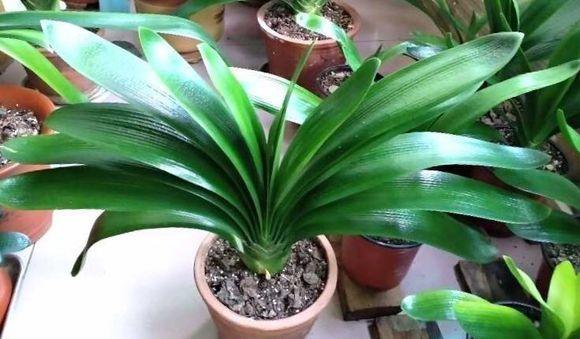
Clivia is an evergreen perennial herbaceous plant with strong shade tolerance and thick, large, dark green leaves. The leaf mesophyll contains a large amount of chlorophyll, which can absorb carbon dioxide and water in sunlight and synthesize organic matter for its own growth and development, while releasing oxygen. Many flower lovers keep a pot at home, but there is often a situation of insufficient nutrients, and at this time the "nutrient oil" at home can be used to supplement nutrients.
When growing Clivia in October, drip "nutrient oil" on it, use it once every 15 days, and it will be full of flower buds in a month!
The "nutrient oil" mentioned here is the waste oil produced in a range hood. Originally this waste oil was to be poured into the trash can, but now it can be turned from waste into treasure and used as flower fertilizer. Using waste oil as fertilizer, if you master certain skills, is somewhat helpful to flowers, but for some flowers that do not like fertilizer and are afraid of being disturbed, it will do the opposite. When using oil, use a small amount and keep it away from the roots of the flowers. It is best to dig a small hole, put the oil in, and then cover it with soil, so as to avoid the flower pot becoming greasy.
It can be used to water plants such as Clivia, spider plant, and pothos. Generally, use it once every 15 days, which can accelerate the blooming of Clivia. The waste oil in the range hood can be used as fertilizer for Clivia. The method is to dig a shallow trench in the soil near the edge of the pot, pour a small amount of waste oil into the trench, and cover it level with soil. However, it cannot be generalized, because not all flowers can use range hood waste oil as fertilizer; it depends specifically on the flower species.
What should you do if Clivia does not grow leaves in autumn? If Clivia has severe root rot, it will cause Clivia not to grow new leaves, because root rot will lead to insufficient nutrient supply for Clivia, so it will not provide the nutrients needed for growth and hinder the growth of new leaves. If the roots have already rotted, replace the soil and replant. You can mix in river sand in proportion, or soak the roots of the plant with rooting powder so that the root system becomes strong as soon as possible, and then new leaves will grow.
Water temperature: The water temperature we usually use to water flowers must be higher than or equal to the soil temperature (or air temperature). So I suggest sunning the water to raise the water temperature. In addition, the old saying that it is not suitable to water flowers at noon during high summer temperatures also means being afraid that the low water temperature will suddenly cool the soil and roots that are in a high-temperature state and damage the flower roots. But if you use water that is equally warm to water, then you can water at noon. Sensitivity to water temperature is most obvious in azaleas. Watering azaleas with low-temperature tap water that has not been sunned suddenly changes their soil temperature, and soon the flowers and leaves fall.
Every time you water flowers, the water flow should be slow rather than urgent. If you use flood irrigation, then pay attention not to let the water flow directly hit the soil surface; if you use spraying, then pay attention that if the water column is large, do not hold it too high above the ground and "smash" the water down, as this will make the soil compact and easily cause diseases.