Montebore cheese is reborn: an 80-year-old grandmother carries on a thousand-year-old mountain way of life
Five hundred years ago, was this the very flavor Renaissance master Da Vinci ate?
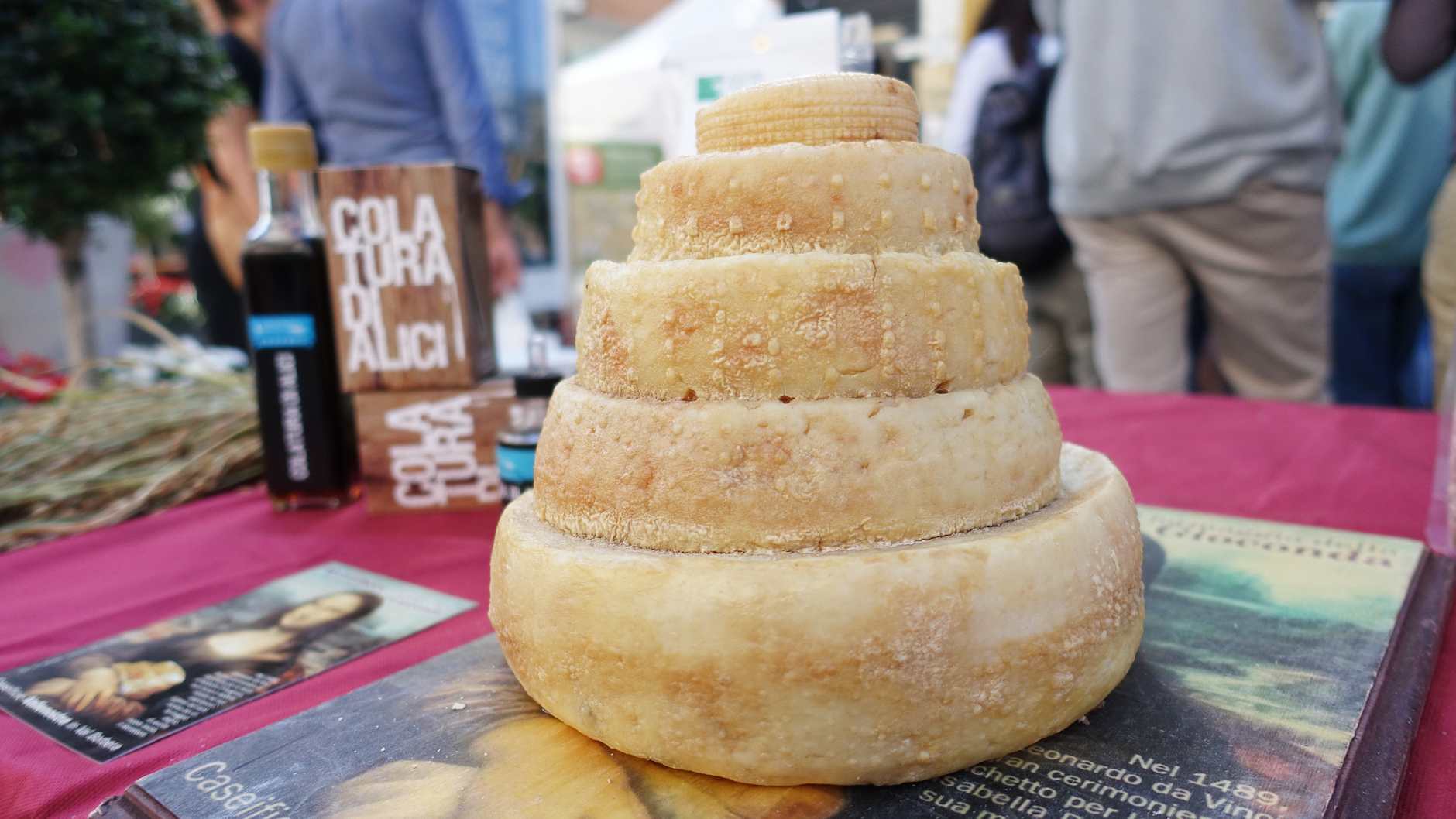
Cut lengthwise into slices, Montebore cheese looks like the side of a staircase, and its flavors climb like musical scales. Bring it close to your nose, and amid the gamy notes of cow and sheep milk, a faint scent of green grass lingers. Break open the soft, mellow cheese aged for four months, and it melts in your mouth like butter; the rich milky aroma spreading across your taste buds is like a mushroom that has absorbed the full richness of the earth, and an unexpected spiciness pricks the throat as if a brilliant firework had burst open.
The cheese Da Vinci loved quietly faded into the tide of modernization
No wonder the only cheese Leonardo Da Vinci recommended at a noble wedding banquet was Montebore. When he was in charge of designing the wedding scene for Gian Galeazzo Sforza, Duke of Milan, at the end of the 15th century, he suggested that Montebore cheese could not be missing from the banquet, since its shape was as pleasing as a wedding cake and its flavor was superb.
The Borbera Valley, from which Montebore cheese takes its name, sits where Italy's northwestern regions of Piemonte, Liguria and Lombardia meet; beyond the mountain peaks lie a vast sea on one side and broad plains on the other.
The winding, undulating valley has its own scenery: lush green grass makes rich pastureland, grazed by both cattle and sheep. For over a thousand years, the Montebore made by mountain folk from raw milk was mostly for their own consumption. Although very little reached the market for trade, its fame spread from one person to ten, from ten to a hundred, from the valley to the ears of nobles. Montebore first left its name in the history books in 1153: a marquis specified that he wanted one hundred pieces of this one-of-a-kind cheese.
As time passed, today we can still admire the Mona Lisa that Da Vinci painted and read the voluminous notebooks he left behind, but the flavor that once astonished him quietly faded into the tide of modernization, without even a soft sigh of regret. Italy's economic golden age of the 1960s and 1970s was also an era of decline for herding; mountain people moved to the cities one after another, and in 1982 the last cheese workshop closed, making Montebore a lost tradition.
"Control everything, and cheese has no character"
Raw milk with no fat skimmed off is the key to Montebore's unique flavor. Agatha explains, "Even pasteurization removes the good bacteria along with the bad, making the cheese monotonous and bland, like industrialized cheese that is all the same." The key is that raw milk must be obtained nearby, otherwise the risk of harmful bacteria growing rises sharply, so large factories that gather milk from far and wide really do need to sterilize it.
Raw milk retains the scent of the grass chewed by cows and sheep; some of those grasses are unique to the valley and give off different aromas with the seasons and changes in temperature and humidity, which in turn shape the cheese's flavor. More importantly, the interaction of the natural good bacteria in raw milk determines the cheese's character. Agatha points out modern people's blind spot: "You kill everything, you want to control everything, and the cheese has no character. You have to know how to let go and let nature do its work."
"Valle Nostra" rescues Montebore, and also rescues mountain life
At this point, Agatha and Roberto could no longer let go of the cheese they had recovered. After long consideration and asking many people, they decided to stay with Montebore for the long haul. Because of emigration, the beans, grapes and apples traditionally grown and eaten in the Borbera Valley were on the verge of extinction, and several years earlier Roberto and his friends had founded a cooperative to defend local agriculture and food, called "Valle Nostra" (Our Valley). Agatha said, "There's no reason not to rescue Montebore."
In for a penny, in for a pound. Agatha quit her job as a postal worker, and Roberto resigned from his position as a livestock technician at the farmers' association Coldiretti; in 2002 they started from scratch and built their own local enterprise under the name "Valle Nostra." Besides Montebore, there are more than ten other kinds of cheese, and in their gardens they have also revived the grape variety Timorasso, the Carla apple, and the beans that Columbus brought back from South America. The farm is a living agricultural museum. (The article is not finished; please continue reading)