Diversified dairy farming is exhausting, yet they still push against the tide of globalization
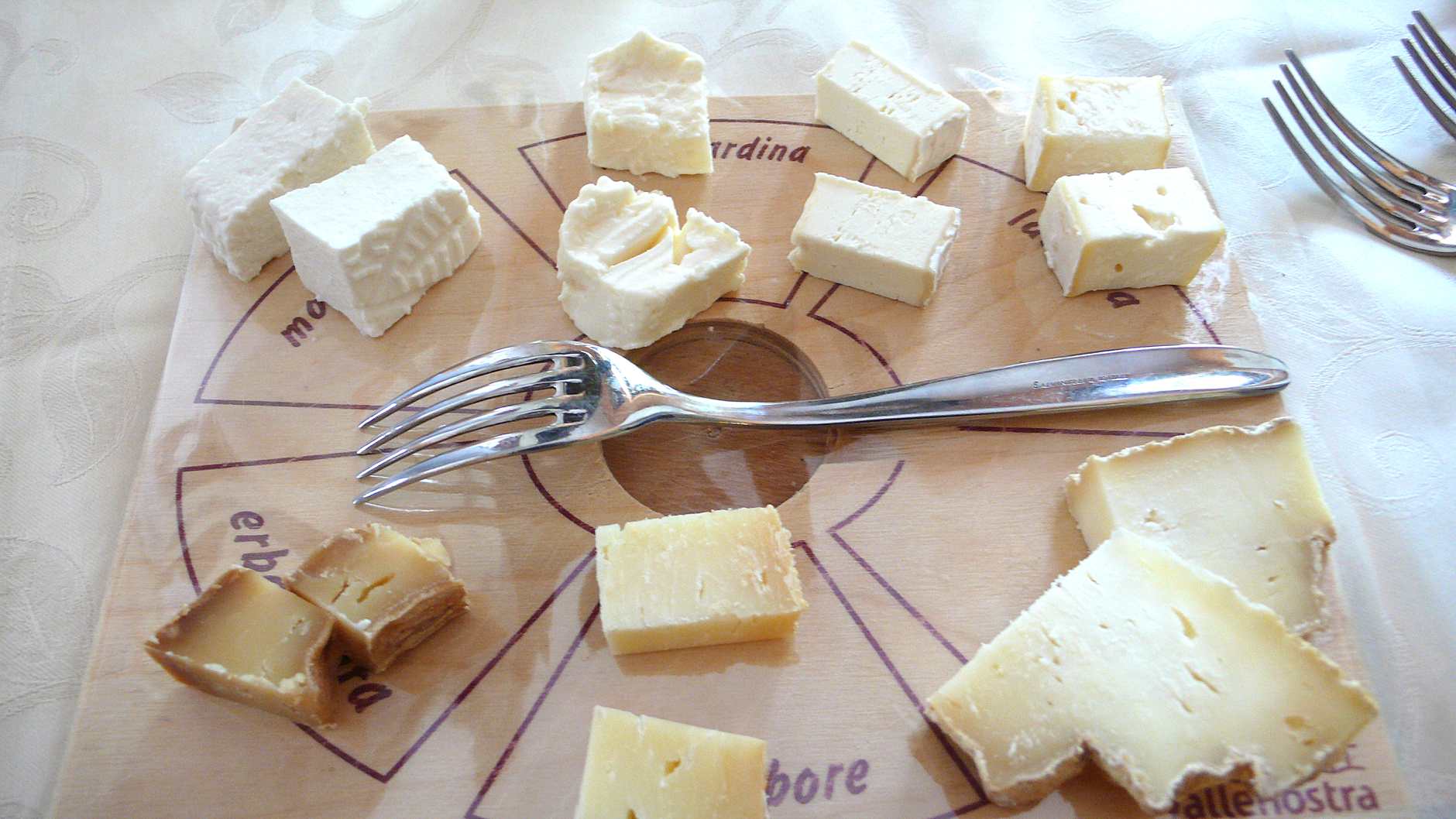
Previously: To revive a cheese that had vanished for a thousand years, and to restore a lost valley culture, Agata and Roberto in Italy, together with their friends, founded a cooperative defending local agriculture and food called "Valle Nostra." Besides passing on Montebore cheese, there are more than ten other kinds of cheese. In the garden they have also revived traditional grape varieties, as well as the beans Columbus brought back from South America. The farm is a living agricultural museum. Yet pushing upstream against the stormy waves of globalization is another thrilling story altogether.
Diversified dairy farming is wonderful, but running it leaves you drained
"If I had to do it again, I would still make the same choice. This is not just a livelihood and income, but a way of life and of living. Population loss and the disappearance of traditional products are not the inevitable fate of mountain areas. We have proven that changing against the tide is possible." After that declaration, Roberto looked back on 18 years of grueling struggle and, with weight in his voice, uttered the word "but," then went on: "Diversified dairy farming sounds wonderful, but it requires a great deal of investment, and keeping it running leaves us exhausted."
Working in the mountains is not a leisurely slow life. Although they have created 10 jobs for the mountain village and have assistants to help, Roberto and Agata still spin like tops. Their roles keep changing: they are bosses, laborers, herders, farmers, dairy farmers, and also cooks and salespeople.
"The division of labor raises productivity and brings prosperity," Adam Smith stated at the very beginning of The Wealth of Nations. A craftsman cannot make even a single pin in a whole day, but when the process is divided into drawing the wire, straightening it, cutting it, sharpening it, grinding the tip, and attaching the head, with each worker focusing on a single motion, each person can produce five thousand pins a day on average.
Although the father of economics also pointed out that agriculture in the 18th century could hardly be divided as finely as manufacturing, by the 21st century many kinds of agriculture have also taken the path of division of labor and scale. Valle Nostra's diversified cultivation and livestock raising echo the idea of biodiversity. Using every part of what is produced and offering many kinds of products also reduces food waste. Selling directly reduces the grip of middlemen, but it also makes the farm's work complicated and heavy, and the struggle in the market is quite hard.
A few years ago, Roberto decided to hand the livestock work to others. "We have to accept that we cannot do everything ourselves." His cousin raises cattle nearby, while Matteo Beccuti, a young man determined to stay in the mountains, is responsible for grazing 200 sheep.
After crossing a small bridge without guardrails, we leave the Valle Nostra farm. Driving along the road through the deep valley, with a ribbon-like trickling stream below, the towering mountains remind me of the phrase "coiled dragon and crouching tiger." There are no dragons here, and no tigers, but Agata says there are wolves. "At night, you can see their glittering eyes, coveting the sheep."
More than the wolves of the wilderness, I worry about the jackals, wolves, tigers, and leopards of the mortal world devouring the hard-won rebirth of Montebore and sending Agata and Roberto plummeting into the abyss beneath the blade.