What Is the Estimative Index Fertilization Method? A Detailed Explanation of the American Doctor's Fertilization Method
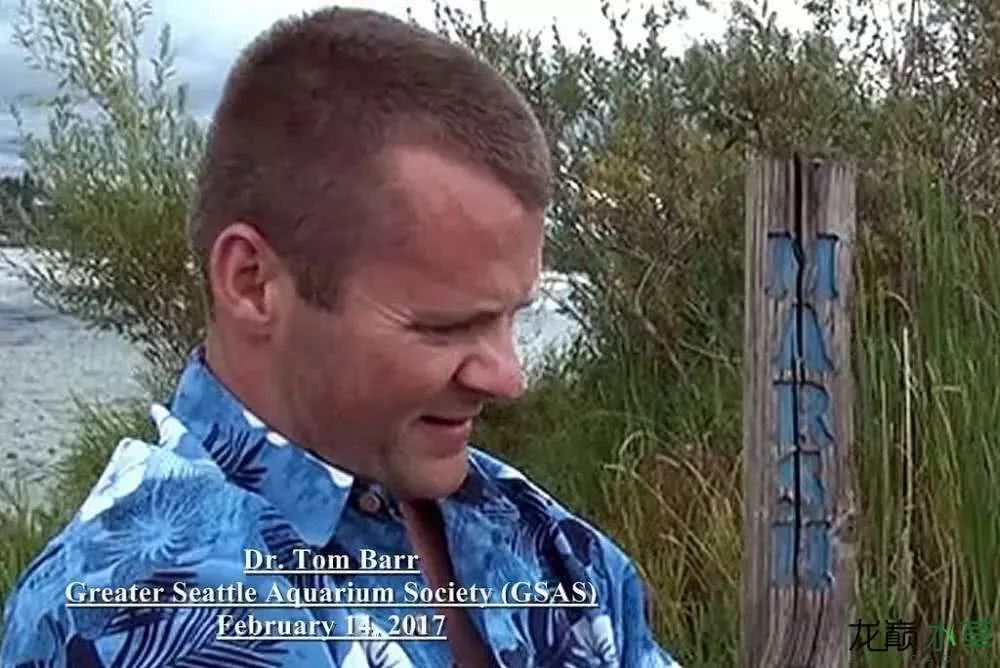
The Estimative Index (EI) fertilization method, abbreviated as the EI method, is a simple and practical aquatic plant fertilization method invented by American aquatic plant expert Tom Barr.
The characteristic of this aquatic plant fertilization method is that it does not require measuring numerous water quality data such as TDS, nitrate concentration, phosphate concentration, and so on. You only need to add a sufficient amount of fertilizer on schedule and remove the accumulated excess fertilizer through a large weekly water change, ensuring the aquatic plants are well fed without causing algae blooms.
First, let us get to know the inventor of the EI fertilization method, Tom Barr.
Tom Barr graduated from the University of California, majoring in Water treatment and Aquatic Biology, later earned a master's degree in Botany from the University of Florida, and obtained a doctorate in Plant Sciences from UC Davis. He now teaches at the University of California (by now he should already be a professor) and conducts scientific research. He is the founder of the Barr Report website, where he has published more than 10,000 papers on the forum. In his spare time, he also sells aquatic plants he has grown and driftwood he has collected, and he also helps others set up tanks, plant aquatic plants, remove algae, and keep fish. In addition to the EI fertilization method, using monopotassium phosphate to remove green spot algae was also first invented and vigorously promoted by him. It can be said that in the field of aquatic plant cultivation there are only two masters in the world: in the East, the late Takashi Amano, and in the West, Tom Barr of the United States.
Next, let us discuss which type of aquatic plant tank this fertilization method is suitable for.
The EI fertilization method is built on the foundation of strong light and stable carbon dioxide.
Only strong light can ensure sufficient photosynthesis in aquatic plants. Not only must PAR be sufficient (PAR is the abbreviation of photosynthetic active radiation, which can also be simply understood as light intensity), but the lighting duration must also be long enough and kept constant.
Carbon dioxide is best supplied stably 24 hours a day, keeping the carbon dioxide concentration in the tank at around 30 PPM. Higher concentrations are unnecessary and, on the contrary, tend to cause algae blooms.
The aquatic plants in the tank must be densely planted and large in number. To what extent? Do not let the substrate be exposed to strong light; plant as many different aquatic plants as possible to fill it up. The main purpose of densely planting a large number of aquatic plants is to prevent algae blooms, and it also provides sufficient oxygen for algae-eating organisms.
In my own view, it is 0.5 to 1.5 watts of lighting electricity per liter of water. Generally, 1 watt of lighting per 1 liter of water is strong enough, with 8-10 hours of uninterrupted lighting every day, and it is best to turn the lights on and off according to the local sunrise and sunset times. Run carbon dioxide 24 hours a day: 2-3 bubbles per second for a 60 tank, 3-4 bubbles per second for a 90 tank, and 5-6 bubbles per second for a 120 tank (referring to standard rectangular tanks; for cube tanks, double the amount).
Third, let us talk about the specific operation.
The standard EI fertilization method should involve fertilizing six times a week, from Monday to Saturday, and then doing a large water change of more than 50% on Sunday. If the tap water quality is good, you can even change 80% at a time.
Taking a standard 60*45*45 cm tank as an example, its maximum water capacity is 120 liters. You can add 1/4 teaspoon of potassium nitrate powder and 1/8 teaspoon of monopotassium phosphate powder every Monday, Wednesday, and Friday, and add 1/8 teaspoon of trace element powder every Tuesday, Thursday, and Saturday.
This trace element fertilizer is homemade by Tom Barr and contains elements such as iron, magnesium, manganese, and boron. The specific formula is unknown. It can be replaced with commercially available finished trace element liquid fertilizer, or you can DIY it (the link provided in post 3 is about how to make your own aquatic plant trace element fertilizer).
Another point to note is that the 1 teaspoon mentioned here is 5 milliliters, and 1 tablespoon is 15 milliliters. Do not confuse the two. The spoon commonly used by Chinese people for eating is a tablespoon, not a teaspoon.
Why not add all the fertilizers on the same day? Because many metal elements in the trace elements can react with monopotassium phosphate to form water-insoluble precipitates, which will seriously reduce the fertilizer's effectiveness, so it is best to add them separately.
Finally, let us discuss why this fertilization method is unlikely to cause algae blooms.
Tom Barr believes that algae blooms are the result of multiple factors working together. Excessive accumulation of a single fertilizer does not necessarily cause algae blooms.
Under stable carbon dioxide and appropriate lighting intensity, adding excessive NPK fertilizer, iron fertilizer, or trace elements will not immediately cause algae blooms, unless a relatively large amount of ammonium is added or the NPK fertilizer ratio is unreasonable, such as too much nitrate and too little phosphate, causing an imbalance in the ratio between the two, which may lead to a massive outbreak of green spot algae.
Moreover, for algae to proliferate massively, excess nutrients alone are not enough; they also need more light and carbon dioxide supply. If the lighting duration is extended or the lighting intensity is increased at this time, algae blooms may occur.
In addition, Tom Barr proved through experiments that algae utilize carbon dioxide more efficiently than aquatic plants. Once the CO2 concentration exceeds 30 ppm, it may allow algae to obtain more carbon sources, so more carbon dioxide supply is not always better; ensuring sufficient and stable supply is enough.
The EI fertilization method's six sufficient fertilizations per week will indeed lead to fertilizer accumulation, but under stable lighting and carbon dioxide supply, algae are unlikely to multiply massively. Moreover, every Sunday, after the large water change, at least half of the accumulated fertilizer has already been removed. Combined with not fertilizing on that day, the aquatic plants will absorb part or even all of the remaining fertilizer, so algae have even less chance to multiply massively.
Therefore, the design of the EI fertilization method is very scientific, and it is simpler and more effective than the previous "PPS fertilization method." (The PPS fertilization method involves precise measurements and then adding just enough fertilizer for the aquatic plants. It is quite cumbersome and often leads to aquatic plants lacking fertilizer.)
Some non-standard EI fertilization methods use fertilization three times a week, adding iron fertilizer and trace elements together with NPK fertilizer. This is a lazy approach that causes fertilizer waste and is not worth advocating. In addition, some people always worry that the aquatic plants are not getting enough, so they also add a small amount of NPK fertilizer or trace elements on Sunday. These practices do not conform to the basic spirit of the EI fertilization method.
The above is my understanding of the EI fertilization method invented by Tom Barr. Due to limited English proficiency and insufficient understanding, there may be errors, and I hope fellow fish keepers will point them out.
Supplementary Content
The image above shows the relationship between aquatic plant growth rate and fertilizer concentration (assuming lighting and carbon dioxide are both supplied sufficiently and stably).
The image above shows the fertilizer dosage required for aquatic plant tanks of different volumes (the "spoon" in it refers to a teaspoon, not the tablespoon used for eating; be sure to pay attention).
The image above shows another EI fertilization method, which reduces the amount of monopotassium phosphate by half and additionally adds potassium sulfate, suitable for situations with heavier green dust algae.
End
There is also a surprise here
Click the original text to buy now