How do you care for a kalanchoe? Grandma has an old method she won't share with outsiders
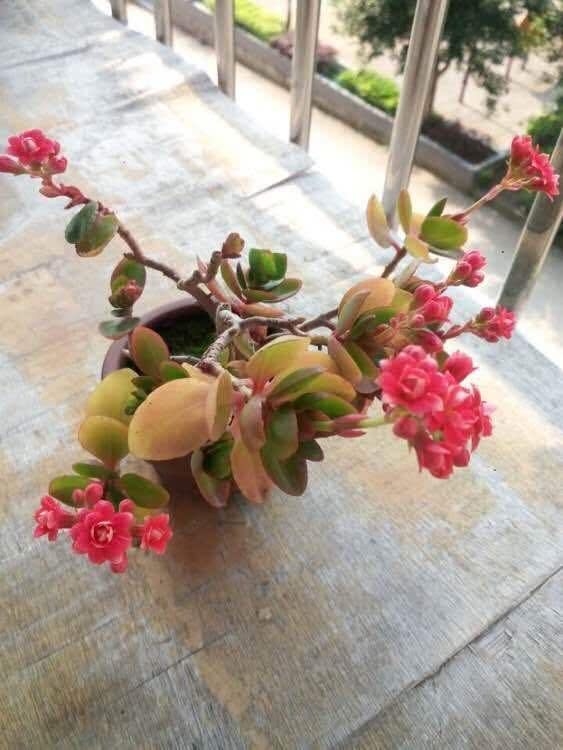
Grandma especially loves growing kalanchoes, and she has been growing them for 10 years. Grandma says that growing a kalanchoe well represents its beautiful meaning, and she also hopes to be healthy and long-lived, so she can stay with us even longer. Grandma also has her own method for growing kalanchoes, and she is reluctant to tell just anyone about it!
To grow kalanchoes well, sunlight and rain dew are indispensable
Sunlight
Because kalanchoe is a plant that really loves light, as long as there is enough light, it can bloom all year round. If the light is insufficient for a long time, the branches tend to grow leggy, the leaves are not plump, and there are relatively few flowers. Except in summer, it can receive full sun at other times. In winter, the temperature should be kept above 10°C, otherwise kalanchoe has a hard time getting through the winter, and it should be placed outdoors to grow in the open air. It usually blooms in February. At the same time, in autumn and winter, kalanchoe should be misted to avoid the air being too dry, which can cause leaf drop.
Rain dew
Rain dew means it can be placed outdoors in the morning so the kalanchoe can come into contact with dew. This is natural water, formed when vapor in the air drops down because the climate turns colder. Rain dew contains a certain amount of nitrogen, oxygen, and so on, which can promote plant growth, flowering, and plump leaves. It also contains relatively little sediment, so it is not likely to cause conditions such as the potting soil becoming compacted.
For a kalanchoe to bloom a lot, you have to give it a good house and good meals
A good house
Kalanchoe has fleshy roots and requires a soil environment that is relatively loose, breathable, and well-draining, and also rich in humus, minerals, amino acids, and so on, so the root system can become more developed. Generally, it is better to use leaf mold, garden soil, and river sand in a ratio of 4:4:2 for care.
Good meals
In order to improve the plant's resistance, an appropriate amount of bone meal can be added. During the vigorous growth period, a certain amount of organic liquid fertilizer should also be added to promote plant growth, flower bud differentiation, lush branches and leaves, and a longer flowering period. If you are a gardener who makes your own fertilizer, it is recommended to use a liquid made by mixing monopotassium phosphate with water at 1000 times dilution once before the bud stage, and the effect of promoting flowers is quite good.
Grandma says that in the past, when there were no such good fertilizers and conditions at all, she would go to the mountains herself to dig up the leaf mold under the pine needles and then combine it with garden soil and river sand to make soil for kalanchoes. The fertilizer was basically things like rice straw, leaves, and wheat straw, fermented together with rice-washing water for about half a year, and then the fermented fertilizer was diluted with water at about 100 times, which could very well promote the plant's growth and flowering.