Grow clematis this way, and next year it will burst into a sea of flowers
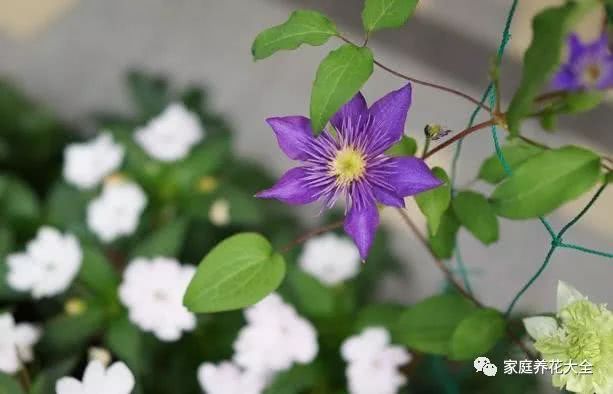
Clematis, known as the "queen of climbing flowers", blooms from June to September, with bright colors and a fragrant scent. But many flower lovers are only drawn in by clematis and still fail to grow it well. Today Xiaoye will talk about how to grow clematis. Come and learn!
How to grow clematis:
NO.1 Preparing the soil
The soil medium for growing clematis must stay breathable and water-retentive. When mixing soil, you can use coconut coir : peat : perlite = 3:1:1, or you can mix some organic fertilizer into the soil; chicken manure and bone meal fertilizer are both fine!
NO.2 Watering, pests and diseases
Many times, the reason clematis dries up and wilts is excessive watering. Clematis has fleshy roots and is very afraid of waterlogging. But it also likes to stay moist. So generally in winter you should control water, and watering about once every half month is enough. The watering method follows the principle of watering when dry and keeping it moist; avoid watering every day. Spring and autumn are the growing seasons for clematis, and when watering, it is suggested to just water casually!
The common problem with clematis is wilting. For clematis, wilting is like a person catching a cold. On cloudy days or when the weather is unsettled, you can throw some plant ash into the clematis pot to prevent clematis wilt. When you find the clematis leaves wilting, immediately remove the leaves, follow the vine to find the place that has wilted and turned black, and trim it off!
NO.4 Pruning
There is no absolute rule for the pruning cycle of clematis. Generally after flowering, if you do not need to keep seeds, you can cut off the 3 nodes of branches below the flower for cuttings. In autumn and winter, clematis enters dormancy and should be pruned immediately. Small seedlings can be cut off as well, while larger seedlings should keep the strong branches!
NO.5 Overwintering care
If the clematis is a small seedling, after pruning you should cover it with dry peat/coconut coir. For large seedlings, you can place them as you like, and in winter you should control water in time. Just spray a little water on the surface of the peat soil or coconut coir! After the small seedlings sprout, they can be repotted.
Be cautious when fertilizing clematis. Flower lovers should be careful when choosing fertilizer. Some use granular fertilizer for a long time, causing the soil to compact, so the roots have difficulty breathing and suffocate to death. It is recommended to choose a microbial agent fertilizer specially for clematis, which is non-irritating, promotes the growth of clematis, and makes it easier to grow lush and full. Use it about once every 15 days.