How should the site be chosen for the landscape planning and design of a bonsai garden?
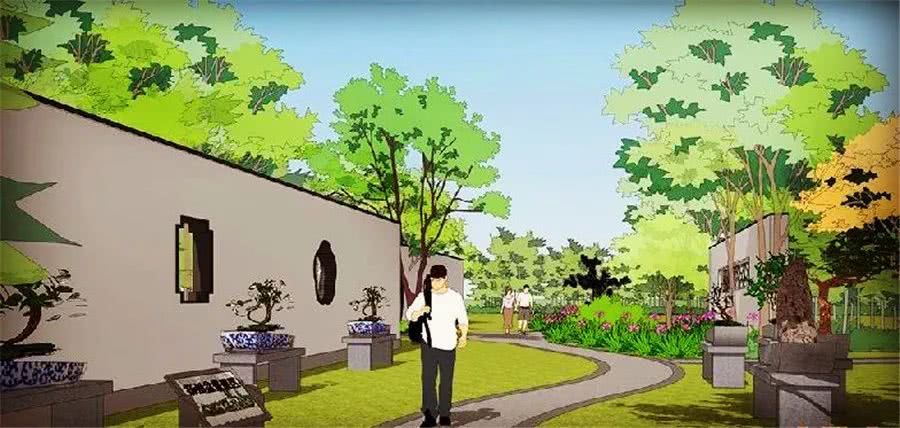
The art of bonsai originated in China. With its distinctive Oriental natural charm, it stands tall in the forest of world art and is a traditional garden art unique to our country. The art of bonsai reflects the author's observation and thinking about the natural environment. Based on plants and rocks, and combined with literati sentiment, through artistic creation and scientific domestication, it sketches out a small world full of poetry within a tiny flower pot. The bonsai garden has its own individualization and diversification in cultural development, and the collision and integration of this individualization and multiculturalism is the key to design. How to combine the cultural connotation of the bonsai garden with its spiritual thought is the core question considered in this article. In the design of a bonsai garden, it is necessary both to highlight its own characteristics and to set off its culture and spirit, so that diverse cultural elements are combined with the local human customs, and at the same time out-of-town visitors can appreciate the unique elegance of the local traditional culture.
Chinese bonsai art originates from people's admiration for the beautiful scenery of nature. Through long-term production and life, people artistically distilled the features of nature and gradually condensed the landscape of the earth into a tiny space. Because of differences in regional culture, the art of bonsai also differs from place to place. As the number of people creating and collecting bonsai in regions where bonsai is developed increases day by day, bonsai gardens have emerged as the times require.
The emergence of bonsai gardens has been a tremendous boost to the inheritance and development of Chinese bonsai. Without bonsai gardens, it would now be very difficult for us to see so many excellent traditional works, to appreciate the exquisite traditional techniques, or to understand concretely the rise and fall and changes of Chinese bonsai.
As for the selection of the site for a bonsai garden, it can mainly be considered from the following four points:
1. Incorporate it into the scope of urban green space planning:In the planning of the urban green space system, according to the local culture, consider setting up a bonsai garden in an appropriate location, with the theme mainly based on the local distinctive culture, and the bonsai style combining classical and modern styles to form a dialogue across time and space.
2. Creation of a fine bonsai garden:At present, although the number of bonsai gardens in China is not small, there are few fine ones, and some long-established bonsai gardens also show signs of gradual decline. How to inherit and carry forward bonsai, this traditional Chinese culture, essentially still requires a good display venue. Not only does the quality of the bonsai itself need to be high, but the place that carries the bonsai also needs to be elegant. Scientifically and artistically creating an ecological environment suitable for bonsai cultivation, dedicated cultivation rooms, and professional maintenance personnel are all indispensable.
3. Build a garden within a garden, adding beauty to what is already beautiful:Within an already built park, according to its existing conditions and the needs of its visitors, appropriately open up a bonsai display area of a certain scale.
4. Maintain an appropriate distance from the city center:In terms of site selection, a newly built bonsai garden also cannot be far from the city. The main purpose of building the garden is to provide a place for people who love bonsai to exchange and learn, so attention must be paid to its accessibility in terms of transportation.
In-depth reading