What to do if your Clivia doesn't bloom for years? Do these 5 things and it will easily shoot up a flower stalk and bloom
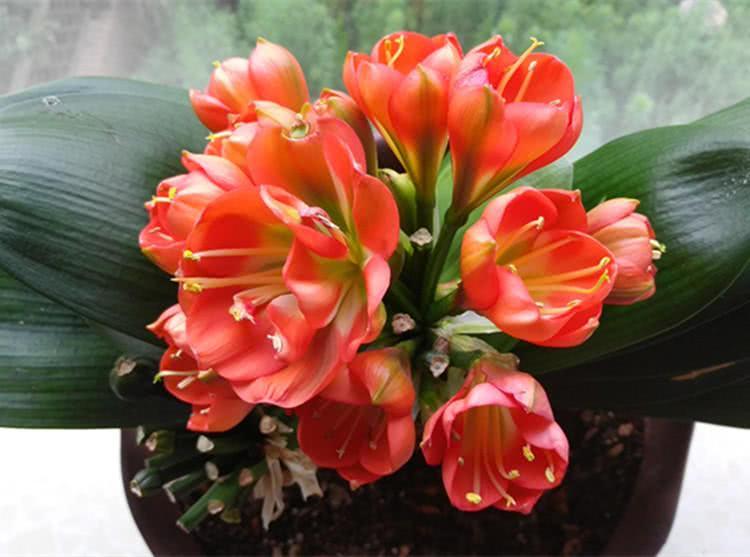
Clivia has thick, plump leaves and dazzling, vibrant flowers. It is so beautiful that people cannot resist growing a few. However, some flower lovers confide that they never get to enjoy the sight of Clivia in bloom, which makes them very sad. What are the reasons why Clivia does not bloom?
Xiaoye tells you: there are quite a few reasons why Clivia does not bloom. First, look at the number of leaves on your Clivia. If the leaf count is relatively low at this point, do not worry; just care for it as usual. That is because some Clivia plants need 12 leaves before they can bloom, or 14 or 16 leaves before they can bloom. Of course, when your Clivia has more than 16 leaves, you need to check whether it is due to the following detailed reasons.
1. Light
Clivia is a plant of intermediate day length. If the light period is too long, exceeding 13 hours, it will affect the flower bud differentiation of Clivia, so blooming becomes a problem. Why is it said that more than 13 hours of light is too much? Generally, daytime light plus nighttime lamp light adds up to more than 15 hours in total, which has a great impact on Clivia flower buds.
So to reduce the impact, in the evening you can simply put the Clivia in a dark room with no light. Normally, gently wipe its leaf surface with a damp cloth to keep the leaves clean and glossy, which is good for its photosynthesis and promotes bud development.
2. Fertilizing
During the growing period, Clivia needs nitrogen fertilizer and potassium fertilizer, but before blooming it needs phosphorus fertilizer. Clivia generally blooms in December, so more than a month before blooming, it needs a general-purpose microbial fertilizer for flowers. It can not only replace the effect of phosphorus fertilizer and promote blooming, but also extend the flowering period. Note that during the flowering period, Clivia consumes a large amount of nutrients. If these are not replenished in time, blooming the next year will be difficult.
3. Temperature
The environment for growing Clivia should not be below 10 degrees, but should not exceed 20 degrees. Generally, around 20 degrees is best, which is good for its blooming. After it blooms, lower the temperature a little, which helps extend the flowering period, so you can slowly enjoy the sight of Clivia in bloom.
4. Water
Clivia, like orchids, has fleshy roots and fears waterlogging. However, during flower bud differentiation, it needs a certain amount of water, so when watering it, you can use a spray bottle to water it thoroughly, not just halfway. When Clivia blooms, you can reduce watering, which helps extend the flowering period.
5. Soil
Clivia likes loose, breathable, well-drained, slightly acidic soil. If the potting soil is not changed for a long time, the soil will become compacted and alkalized. So when watering and fertilizing, pay attention: tap water needs to be left to stand before use, and do not use granular fertilizer such as the general-purpose microbial fertilizer for flowers recommended by flower lovers for a long time. This can reduce the probability of soil compaction. Besides this method, the best method is to change the potting soil.
Once you master these points for Clivia, it would be hard not to grow it well. If you encounter any problems while growing flowers, you can leave a comment below!