Can calendula be propagated by cuttings on a balcony? If you don't know, come learn from the master
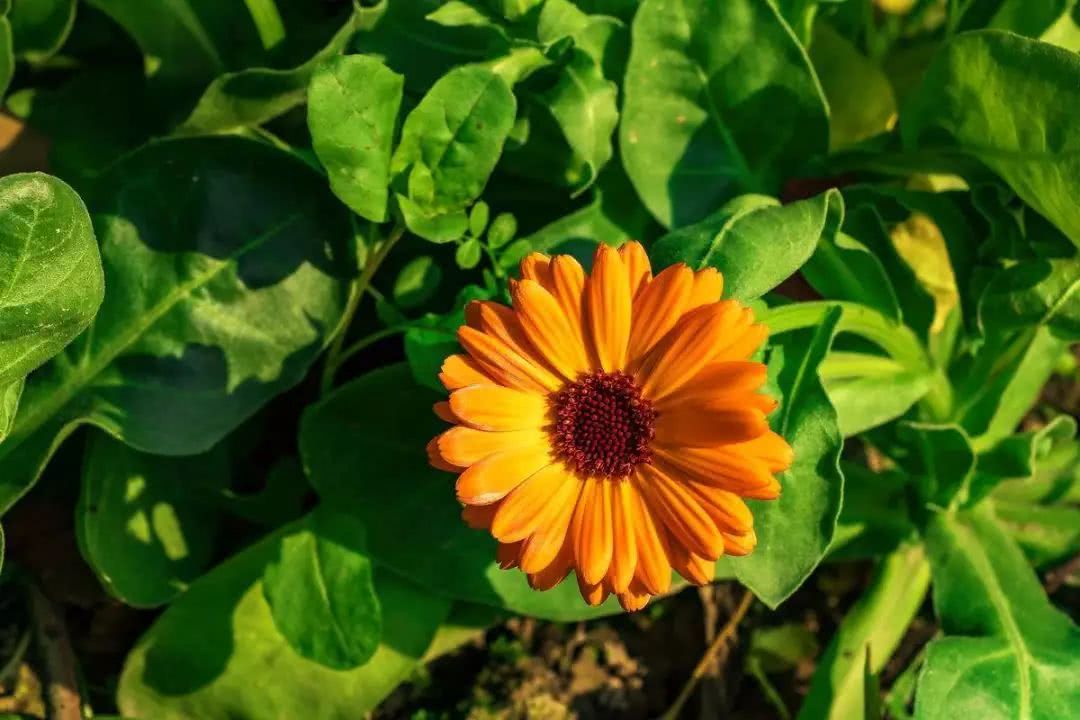
When the master heard a fellow gardener ask this question, he also gave it some careful thought.
The answer is: calendula on the balcony can be propagated by cuttings!
However, this requires some additional conditions, so let the master explain in detail.
If you want to propagate calendula by cuttings, you must pay attention to temperature, light and humidity.
The suitable temperature for cuttings to take root is 18-25°C. If it is lower than 18°C, the cuttings will root with difficulty and slowly; if it is higher than 25°C, the cut ends of the cuttings are easily infected by pathogens and rot.
After cutting, the heat-preservation measure when encountering low temperatures is to wrap up the flower pot used for cuttings, and the cooling measure when encountering high temperatures is to shade the cuttings.
Calendula can be given increased humidity by misting the cuttings, but excessive misting must be prevented, otherwise they are easily infected by pathogens and rot.
Cutting propagation cannot do without sunlight, but the stronger the light, the higher the temperature inside the cuttings, the more vigorous their transpiration, and the more water they consume, which is very unfavorable for the survival of the cuttings.
Calendula grown on the balcony
Aliases: calendula, golden marigold, sober-up flower, ever-spring flower.
Family and genus: Asteraceae, Calendula.
Flowering period: December to June of the following year.
Habits: likes a sunny and ample environment, fears hot weather, is relatively cold-tolerant, has no strict requirements for soil, and can tolerate poor and dry soil.
Calendula cultivation methods
Temperature/light
The suitable growth temperature is 15-25°C. When the summer temperature is higher than 34°C, growth is obviously poor, and when the winter temperature is lower than 4°C, it will enter dormancy or even die.
Likes sunlight, has strong adaptability, fears hot weather, and should be shaded appropriately in summer.
Watering
In spring and autumn, water once a week, keeping the potting soil moderately moist.
In summer, water about twice a week, and in addition, mist the plant frequently.
In winter, water usually about once every 10 days.
Fertilizing
After sprouting in spring, apply dilute decomposed manure water once a week. During the growth period, apply decomposed urine diluted 10 times with water once every 15-30 days, and stop fertilizing by the end of February.
Propagation
Mainly by sowing, usually sown in autumn or in a greenhouse in early spring. The suitable germination temperature is 20-22°C. After sowing, cover with about 3 mm of soil, and germination occurs in about 7-10 days.
Pest and disease control
1. Common diseases are fusarium wilt and downy mildew, which can be controlled by spraying a 500-fold solution of 65% zineb wettable powder.
2. Rust disease is prone to occur in summer, and a 2000-fold solution of 50% triforine wettable powder can be sprayed.
3. In early spring during the flowering period, calendula is susceptible to damage by red spiders and aphids, which can be controlled by spraying a 1000-fold solution of 40% omethoate emulsifiable concentrate.
Important tips from the master
1. Autumn sowing is often carried out in mid-to-late September.
2. When the seedlings grow 3 true leaves, transplant them for the first time. After the seedlings grow 5-6 true leaves, plant them in flower pots of appropriate size.
3. During the growth period, fertilize once every half month. Sufficient fertilizer can make calendula bloom more and larger.
4. Do not keep seeds during the flowering period. Cutting off faded flowers can help the flower branches sprout and bloom more, thereby extending the ornamental flowering period.
Growing flowers on the balcony: you water and fertilize, and she blooms for you to see.
Growing flowers on the balcony: you care for her, and she keeps you company.
I just like a simple life,
I just like growing on the balcony!
Grow on the balcony
Alright, that's all for today. If fellow gardeners still have any questions they hope the master will answer, leave a message in the comment section below.
I do not know whether the master explained clearly and in detail. For fellow gardeners who did not understand, the master has specially written an acrostic poem for you. It may not be well written, but it can help you find the master.
More wonderful articles are all in an acrostic poem:
A gentle breeze lightly caresses, flowers remain ever present
Strolling in spirit, wandering to the south slope
Searching for wonders and clever finds at Bronze Sparrow Terrace
Planting red and growing green above the blue clouds
- Come take the challenge: four lines of an acrostic-and-tail poem. Connect the first characters + connect the last characters, and you can get an eight-character motto to summon the master's true form! When you come, remember to say: "Master, your secret has been cracked by me"!
Growing on the balcony, learning knows no end.