What to do if your Clivia doesn't bloom? A few tricks to make it shoot up flower stalks quickly
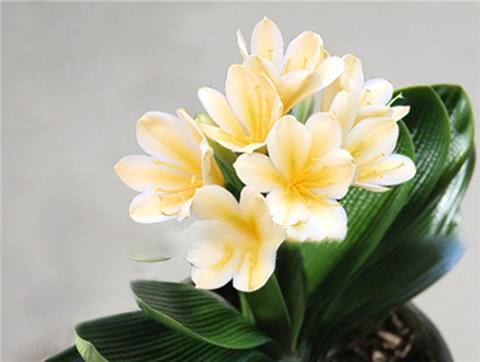
Clivia is easy to keep alive, but getting it to bloom is quite difficult. Many people grow it for years without ever seeing a flower. What is the reason? Let's take a look!
While meeting Clivia's basic needs, it will only bloom once the number of leaves on one side reaches 12 or more, so a young seedling must be grown for about 3 years. It blooms from February to May each year, and with proper care it can bloom twice a year.
(1). Soil requirements
Clivia needs loose, fertile, slightly acidic soil with good air permeability. Clivia has fleshy roots, so the soil must have good drainage; it fears waterlogging, which causes root rot. For the soil mix, use 5 parts leaf mold + 3 parts pine needles + 1 part coarse sand + 1 part bone meal. Broken bricks, tiles and the like can be placed at the bottom of the pot to help drainage. To keep the soil on the acidic side, water periodically with ferrous sulfate or homemade acidic fermented water, adding just a little when watering; the concentration should not be too high. Repot and change the soil regularly, otherwise the soil becomes compacted and its permeability weakens, which is bad for Clivia's growth and blooming.
(2). Light requirements
Clivia likes light but does not like strong light, and it is also shade-tolerant. In autumn and winter it can take more light, especially in winter; sufficient light ensures flower bud differentiation and is very beneficial for Clivia blooming. Appropriately increasing light during the bud stage can make Clivia's flowers more brightly colored.
(3). Fertilizer requirements
Stop applying nitrogen fertilizer before blooming; phosphorus and potassium fertilizers are needed, otherwise it will not bloom well. After entering the bud stage, bone meal and phosphorus-potassium fertilizer can be applied to help the flowers bloom more brightly. After blooming, cut off the faded flowers promptly and replenish fertilizer at the same time to provide nutrients for later growth. Follow the principle of light, frequent fertilization, and never apply concentrated fertilizer or raw fertilizer that has not been fermented and decomposed; in summer in particular, fertilization can be stopped.
(4). Temperature requirements
The suitable growing temperature for Clivia is 10-30 degrees. In northern winters, take good measures to keep it warm; during the high-temperature period in summer, spray water frequently to cool it down. Controlling the temperature well allows Clivia to bloom normally; temperatures that are too high or too low will affect the plant's blooming.
(5). Water requirements
Autumn is a period of vigorous growth and flower bud formation for Clivia, so an adequate water supply must be ensured. When watering, do not let the potting soil become too wet; keep the soil slightly moist, and do not wait until the soil is completely dry before watering, as this is bad for bud formation.