How is Aloe arborescens grown so that it becomes a small tree in just one year?
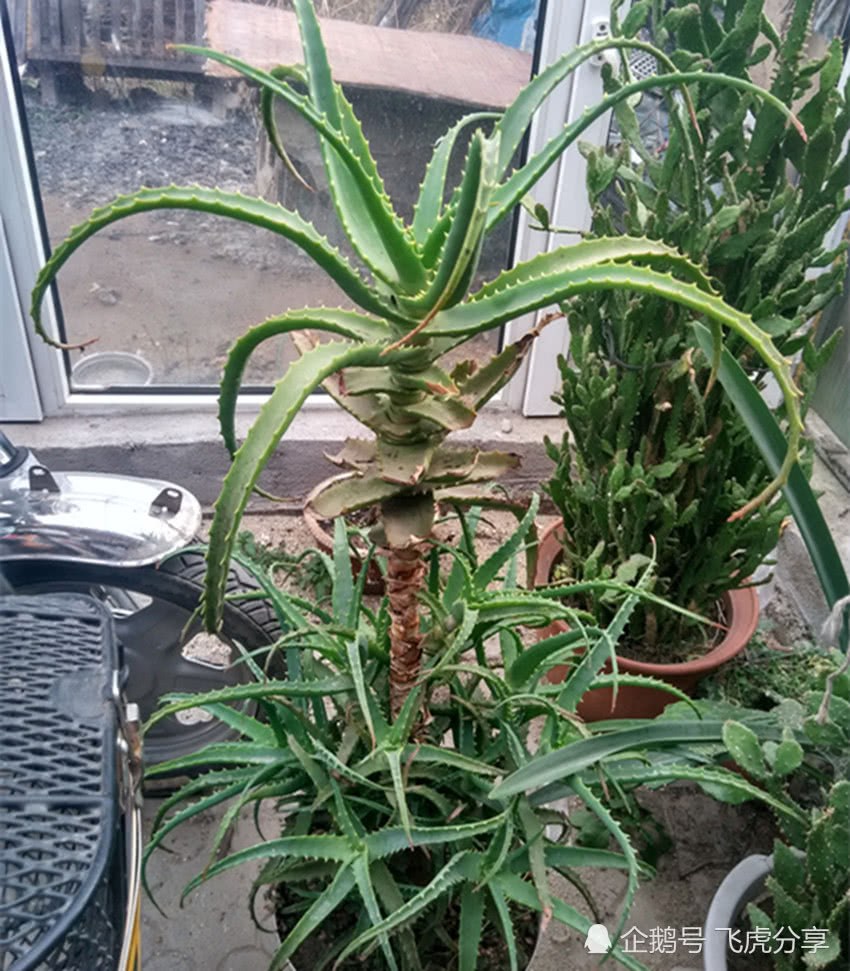
Aloe arborescens, also called tree aloe, is a large variety of aloe; in the wild it can grow up to 6 m tall. Grown indoors it can also reach 2-3 m at most, and it has excellent ornamental and medicinal value, and can also be processed into health foods and cosmetics. Both in China and abroad, Aloe arborescens is recognized as a panacea and a plant with miraculous healing effects, and is also called the king of natural detoxification. Aloe arborescens can be used for whitening, acne removal, face masks, moisturizing, and preventing mosquito bites; beauty-loving girls can also use it for food, medicine, landscaping the environment, and so on. Aloe arborescens is very simple to grow, with strong drought tolerance, cold tolerance, and very robust vitality. Last year the editor bought an Aloe arborescens; when first bought it was only just over 20 cm tall, and one year later it had grown to over 1 m tall, like a small tree. So just how was it grown?
Aloe likes to grow in loose, well-draining sandy soil. Ordinary soil can be mixed with some sand or furnace slag; if compacted soil with poor air permeability is used, the roots' breathing will be blocked and they will rot. Aloe likes a warm environment with good light, is especially drought-tolerant, and must not be watered often; frequent watering will cause root rot, so watering once every half month is enough. It is not cold-tolerant; in winter the temperature must not be below 0°C, and in the cold northern winter it is best to move it indoors to overwinter.
Timely watering is something to pay special attention to in the hot summer. Aloe likes light and tolerates heat, but when summer temperatures are high and rainfall is low, drought must also be prevented, and proper watering can achieve a higher yield. Watering must not be excessive; generally watering once every 5-10 days is enough. During the vigorous growth period, nutrients in the soil are constantly absorbed by the plant; if fertilizer is not applied in time, the growth of the aloe will be affected. Organic fertilizer generally has a slow effect, so you cannot wait until the aloe's growth has been affected before fertilizing, as by then it will be too late. Do not apply too much fertilizer at one time, and do not let it contaminate the leaves; if it does, rinse with clean water.
In autumn, watering must be controlled, and misting can be used instead; it does not matter even if the soil is rather dry, otherwise the roots will easily rot. In autumn and winter, besides paying attention to keeping warm, also try to let the aloe see as much sunlight as possible. Potted aloe indoors can be placed in a ventilated spot with scattered light. Growing Aloe arborescens is the same as growing other aloes: as long as you water less, ventilate more, and fertilize appropriately, it will grow well and strong.