Free testing for strawberry anthracnose! Miaoli District Agricultural Research and Extension Station pioneers molecular detection technology
A first in the country: molecular detection technology for strawberry anthracnose! Once strawberry seedlings are infected with anthracnose, they easily die, and it is difficult to tell from appearance alone whether they are healthy. Farmers often only discover large-scale anthracnose infections after transplanting to the field, suffering heavy losses. According to estimates by the Miaoli District Agricultural Research and Extension Station (abbreviated as Miaoli ARES) under the Council of Agriculture, about 5 million strawberry seedlings are lost each year to anthracnose. At 10 yuan per seedling, that amounts to a loss of 50 million yuan per year in seedling cultivation costs alone.
Miaoli ARES spent three years developing the "anthracnose molecular detection technology - nested polymerase chain reaction primer pair." Farmers only need to send in strawberry seedling samples, and through molecular detection technology, a segment of gene primer is obtained to determine whether the plant is infected with anthracnose. The test takes only two days, and farmers bear no cost at all, as Miaoli ARES covers everything.
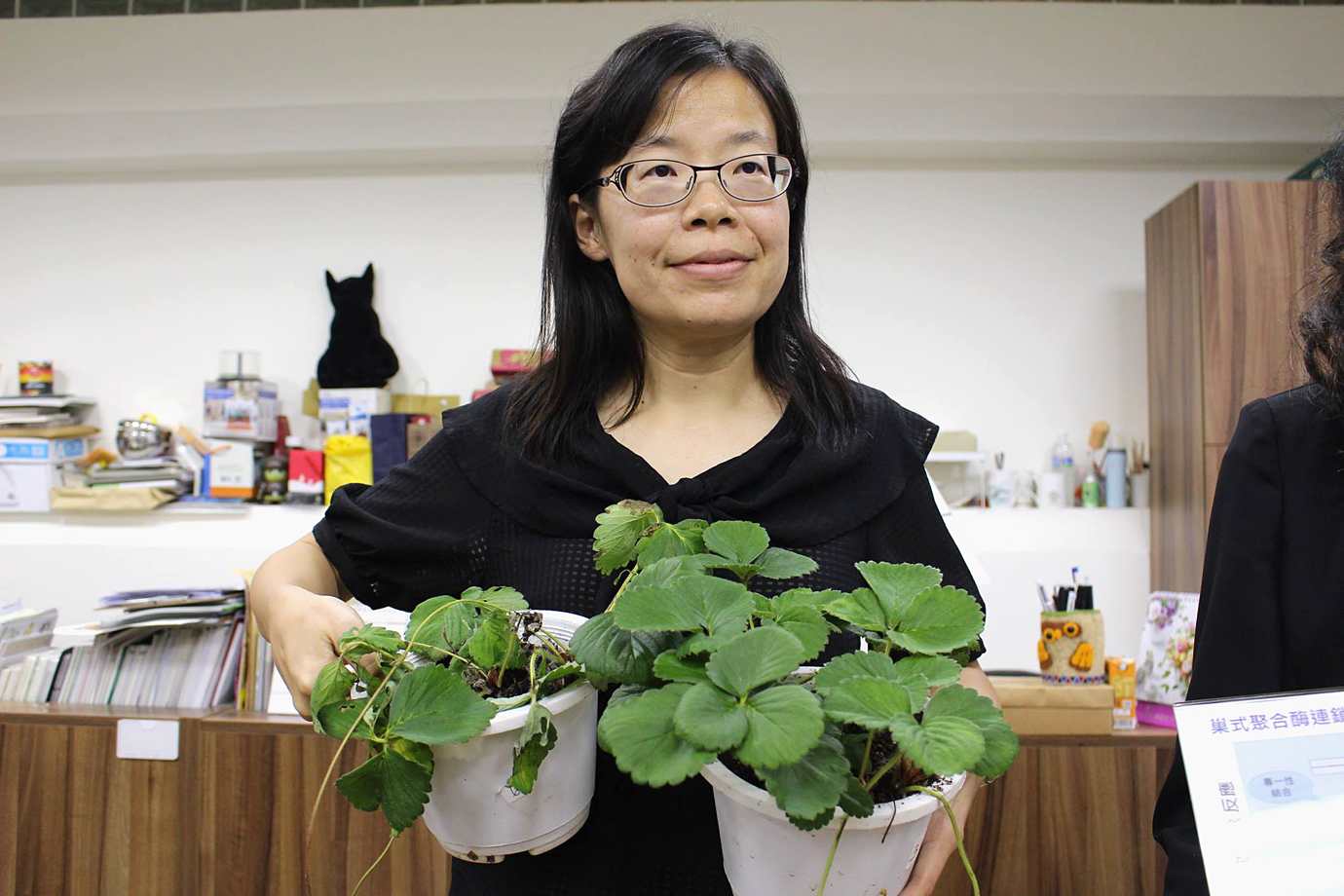
A clean seed source is the best approach
However, Zhong Peizhe also stated that the ideal situation would be for farmers to have a clean, well-managed site as a seed source. He does not want mother plants replaced every year; it would be better to establish a clean seed source through production and marketing groups and seedling nurseries. So far, 870 samples have been tested, including samples submitted by seedling nurseries and farmers. However, because the technology is relatively sensitive and can detect anthracnose infection before symptoms are visible to the naked eye, farmers still psychologically want to continue planting such seedlings. "We suggest farmers at least plant seedlings that have tested positive in isolation, and observe whether disease develops."
Zhong explained that even healthy seedlings will not necessarily remain free of anthracnose after planting. Strawberries are prone to anthracnose infection in high-temperature, humid environments; healthy seedlings in the early stage can only reduce the probability of infection. Will this technology be applied to other crops in the future? Zhong said there are many types of anthracnose, and strawberry anthracnose alone has four types. In the future, they will consider continuing research on molecular detection technology for anthracnose in jujubes.