Elm stump care methods and precautions
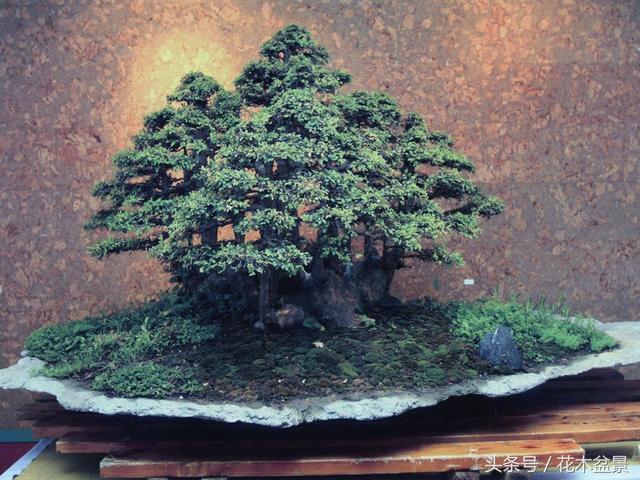
People who love flowers, trees and bonsai are people of refined taste!
Elms are distributed throughout our country, with a free and easy posture, grayish-brown bark that peels off in irregular thin scales, and small, dense branches and leaves, giving them high ornamental value.
Elms can withstand cold, drought and barren soil, are not particular about soil, and have strong adaptability, making them good material for making bonsai. In addition, there is also the Chinese elm (Ulmus parvifolia), which has a smaller tree form, with leaves only about one cm long, and lush branches and leaves, also making it very good material for making bonsai.
Elms can be dug up from deep mountains and open fields. Wild elms, due to poor growing environment conditions, grow slowly. At the same time, they are also affected by many factors such as artificial cutting and livestock gnawing, which gives elms peculiar postures, with exposed roots and claws. Although some xylem has already rotted, new branches still grow out. After digging up such old stumps to make bonsai, they should be tidied up in time.
Elms are generally transplanted during the dormant period in winter and spring, with the highest survival rate in February and March before budding. Before making the bonsai, they should first be planted in sandy soil to "nurture the blank". Before planting, the branches, trunk and root system should be pruned. Sticky sap often flows out from the wounds. If too much of this sap seeps out, it will seriously affect the survival rate. Wax, lacquer, etc. can be applied to the cuts, or a layer of erythromycin ointment can be applied, and then fine sandy soil can be sprinkled on to prevent the sap from flowing out. However, they must never be soaked in water, otherwise it will aggravate the loss of sap, causing the tree roots to rot and the plant to die.
You can also seal the wounds with mud, then apply a layer of grafting wax on top, and the effect is also quite good. After planting, compact the soil, but there is no need to water. You can spray the trunk with clean water once or twice a day, and after two to three days, water thoroughly once. Afterward, keep the plant in a ventilated and light-transmitting place for care. Water according to the principle of not watering until dry, and watering thoroughly when watering. Water accumulation in the soil is strictly prohibited.
The shaping of elm bonsai can be done during the growing period or during the dormant period, but the budding period should be avoided to prevent excessive sap loss and affect plant growth. Its form can be processed according to the basic shape of the stump into various different forms of bonsai, such as straight-trunk style, curved-trunk style, slanting-trunk style, deadwood style, waterside style, cliff style, and forest style. The crown can use either a free and natural style with elegant, sparse branches, or a large tree shape with a rounded top, and can also be processed into a neatly rounded disc shape. The shaping method uses both wiring and pruning. First use metal wire to bend and shape the basic form, then carefully prune.
For more bonsai, flowers and plants information, please follow the WeChat public accounts: Flower and Tree Bonsai, Flower Growing Family.