A Detailed Guide to Common Forms of Rock-Clinging Bonsai and How to Make Them
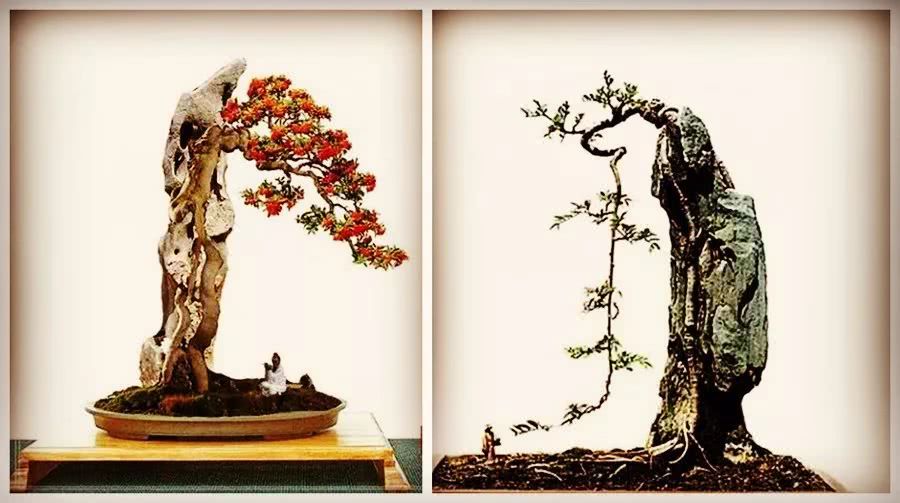
The first is the scene in nature of a tree growing while embracing a rock. Take an old stump with relatively long roots and a graceful form (you can also use the root-sleeving method to grow the roots longer before making it), and, according to the characteristics of the chosen stone and your creative intent, embed it along the stone's grain into the crevices, then bind it with fine iron wire, fill the crevices with mud slurry, and plant it together with the stone in a deep pot for care. Later, according to how it grows, gradually scrape away the soil along with repotting, remove the iron wire, expose the roots, and prune the fine roots that spoil the appearance, then rinse away the excess soil with clean water and plant it in a shallow pot for care.
The second is the scene of tree roots striking down into the crevices of a rocky mountain. First carve deeper stone crevices and hollows in the rock, fill them with mud, and then extend the roots directly onto the sandy soil beneath the stone. If the stone's grain is fairly deep, you can let the tree's roots hang down along the stone and use aluminum wire or plastic string to tie the stone and roots firmly together. Mist the tree, stone and potting soil frequently to keep them moist, so the long roots grow deep into the stone's crevices and stone and tree become one.
The third is the scene of tree roots growing through a hole in the stone. Carve a hollow in the rock where the tree is to be planted. The hollow should have a small opening and a larger interior, and ideally run through to the bottom, so the tree can take up water and grow. The hollow should be opened on the side or back of the stone so it stays hidden, and then the stump is planted into it and cared for. Take special note that in midsummer, when the blazing sun beats down, the rock itself, heated until it is scorching, can burn the roots clinging to the stone and may even directly threaten the stump's life, so bank soil around the roots to protect them. In addition, in the depths of winter, when temperatures plunge, you should also bank soil around the roots to protect them from freezing.
In-depth reading