Bring a wooden stump home from the mountain, and in 30 days it sprouts new shoots, something you'd rarely even see at the flower market
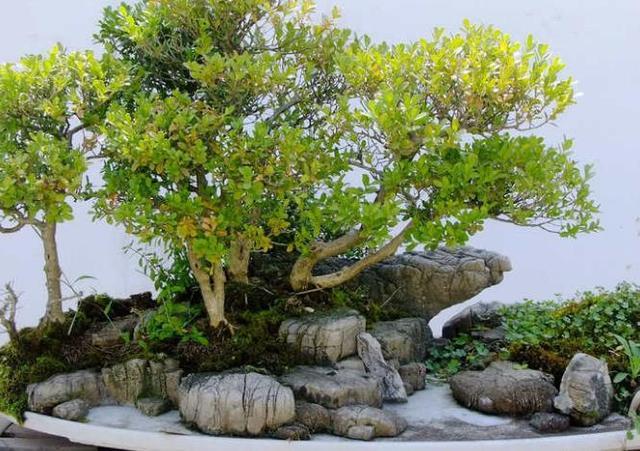
People who like growing potted flowers may also keep a few bonsai. When it comes to the benefits of keeping bonsai at home, it is simply about cultivating character, refining the mind, raising the taste and enjoyment of life, gaining aesthetic pleasure from nurturing them, and making yourself happy in body and mind. Of course, if you care for many of them, some rather unusual plants will appear, and you can gain economic benefits. Some flower lovers dig up the "wooden lumps" on the mountain and take them home, and in 30 days they sprout new shoots, something you cannot even see at the flower market!
There are many trees on the mountain. Some look as if their root systems have rotted, yet they may still survive when made into bonsai, and they are no less attractive than the greenery at home. Common ones like pothos, gardenia and spider plant are all fairly ordinary, while the bonsai mentioned here are more distinctive. The important thing is the choice of stump. Stumps are characterized by their varied shapes, so you can pick the ones you like. Below I will introduce several kinds of stumps.
Vitex negundo (Chinese chaste tree) bonsai
You may often see Chinese chaste trees on the mountain, with unusual shapes. Even if they do not look very pretty, they will still be beautiful when planted in a pot. The root stumps of Chinese chaste tree are vigorous and quaint in form. Therefore the Chinese chaste tree can be made into bonsai, with excellent ornamental effect, and it is very easy to keep alive. Chinese chaste tree mostly grows in low hills and beside gullies and at forest edges. You can select old stumps that have sprouted after many years of cutting, with an aged, gnarled and twisted posture full of wild charm, and dig them up in spring from February to March. Take care to protect the root system, cut off overly long main roots, and prune the branches and trunk according to the needs of the shape.
Pay attention to care and management at ordinary times. You can put a little moss on the trunk. If the weather is rather dry, you can basically water it every day, keeping the soil moist. Wait until the stump's root system has recovered its growth and the branches and leaves have sprouted lushly, generally after 1 to 2 years, then you can pot it and design the bonsai shape you like.
Wild old stumps are easy to keep alive and have strong sprouting ability, and they can also be cultivated by the rapid shaping method, so they can be potted and enjoyed in the same year. For Chinese chaste tree bonsai, it is generally best to use a purple clay pottery pot, or a relatively attractive glazed pottery pot. The shape of the pot can be decided according to the tree's form, with a rectangular pot being the most common. For the pot color, a darker cinnabar purple or dark green is preferable.
Elm bonsai
Another kind is elm bonsai. In the same way, we can dig up stumps and bring them home as potted plants. When the potted plant is well grown and has a shape, it naturally becomes a bonsai. Elms generally grow in moist areas, but they also fear waterlogging. Therefore, when spraying water, water thoroughly. In midsummer, water once in the morning and once in the evening. If water accumulates in the pot, drain it as soon as possible to avoid root rot.
Freshly dug old elm stumps should be planted in plain sandy soil in the ground or in an earthenware pot for "stump cultivation." This is generally done from late autumn to spring (the survival rate is highest in the two or three months before budding). Before planting, first prune the root system and branches and trunk. Sticky sap often flows out from the cut. If too much sap seeps out, it will seriously affect the survival rate.
You can seal the cuts with paint or wax, or apply a layer of erythromycin ointment or sulfonamide ointment, then sprinkle on fine sandy soil. After planting, press the soil down as much as possible. You need not water it; just spray the branches and trunk with clean water 1-2 times a day, and after 3-4 days water thoroughly once. In winter, you can bury the whole pot outdoors in a wind-sheltered, sunny spot, or move it to a cold room to overwinter. The temperature should not be too high, otherwise the plant will not get sufficient dormancy, affecting next year's growth.
This is a gathering place for flower lovers, sharing tips on the care of flowers and potted plants. You are welcome to follow and exchange ideas.