In October, add a little of this to the Christmas cactus pot, and the roots will be vigorous with nonstop blooming
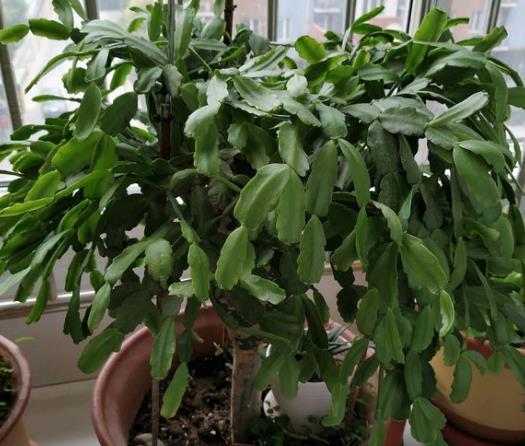
In October, gardening enthusiasts can grow a pot of Christmas cactus on the balcony. This period is the peak season for growing Christmas cactus and kalanchoe. The growing environment for Christmas cactus requires partial shade and moisture; in summer, avoid scorching sun exposure and rain; in winter, it requires warmth and sufficient light. During care, we can bury something in the pot so that the Christmas cactus can absorb nutrients. Let's introduce it below.
In October, drop a bit of this "thing" into the Christmas cactus pot, and the roots will grow vigorously with nonstop blooming!
This "thing" is soybean residue and eggshells. Making soybean residue into flower fertilizer must take a certain amount of time to ferment. There are two fermentation methods: soil-buried fermentation and water-soaked fermentation. Soil-buried fermentation is to bury the soybean residue into the potting soil, cover the soybean residue with a layer of soil, and let the soybean residue ferment naturally in the soil. When the temperature is high (such as in summer), it can ferment well in one to two months; when the temperature is low, it takes more time.
Once fermented, it can be used on the Christmas cactus pot. The nutrients contained in soybean residue, such as a large amount of nitrogen fertilizer, can supply the growth of flowers such as Christmas cactus, kalanchoe, and Chinese rose, making the plant's roots grow vigorously and bloom nonstop. Soybean residue is a superior fertilizer, non-alkaline. Although it is the residue left after grinding and extracting juice, it still contains a considerable portion of protein, multiple vitamins, carbohydrates, etc. After artificial treatment, it is most suitable for the growth of flower seedlings.
Regarding the watering issue for Christmas cactus, the amount of watering should be controlled according to the different seasons. Although winter is the growing season, due to low temperatures, it should not be watered too much. As long as the potting soil is kept moist and not too dry, it is generally watered once every four to five days. In summer, the temperature is high. Although there is shading, the potting soil is still easy to dry out, so it is generally watered once every one to two days.
Christmas cactus is a short-day plant. Under conditions of 8~10 hours of light per day, it can bloom in 2~3 months. From May to September, shade is needed, maintaining a 50% light transmission rate. After October, it should be given sufficient sunlight. In the dry and hot summer, sunlight cannot shine directly. The most commonly used method for propagating Christmas cactus is cuttings. The method is very simple: just take a few segments of stems and insert them, and the survival rate is very high.
Some gardening enthusiasts have asked: the Christmas cactus has been grown for several years, from a small segment into a large plant in a pot, but why has it never bloomed? Generally, it is due to insufficient nutrients. The soil should be changed every year. Summer is its dormant season, so remember to water less. In autumn, change the potting soil and add a little fertilizer, and that is enough.
There is another thing that can be used to grow plants such as Christmas cactus, pothos, and Chinese rose, which is eggshells. We wash the eggshells clean and put them outdoors to dry. After one to two days, the eggshells become dry and brittle. After crushing them, push aside the soil on the surface of the flower pot, bury the crushed eggshells in, and mix them evenly at a ratio of 1 part eggshell powder to 3 parts potting soil. Then fill it back with soil and let it slowly absorb, and that is enough.