A winter balcony can grow more than just plum blossoms; the purple cineraria warms the bleak winter
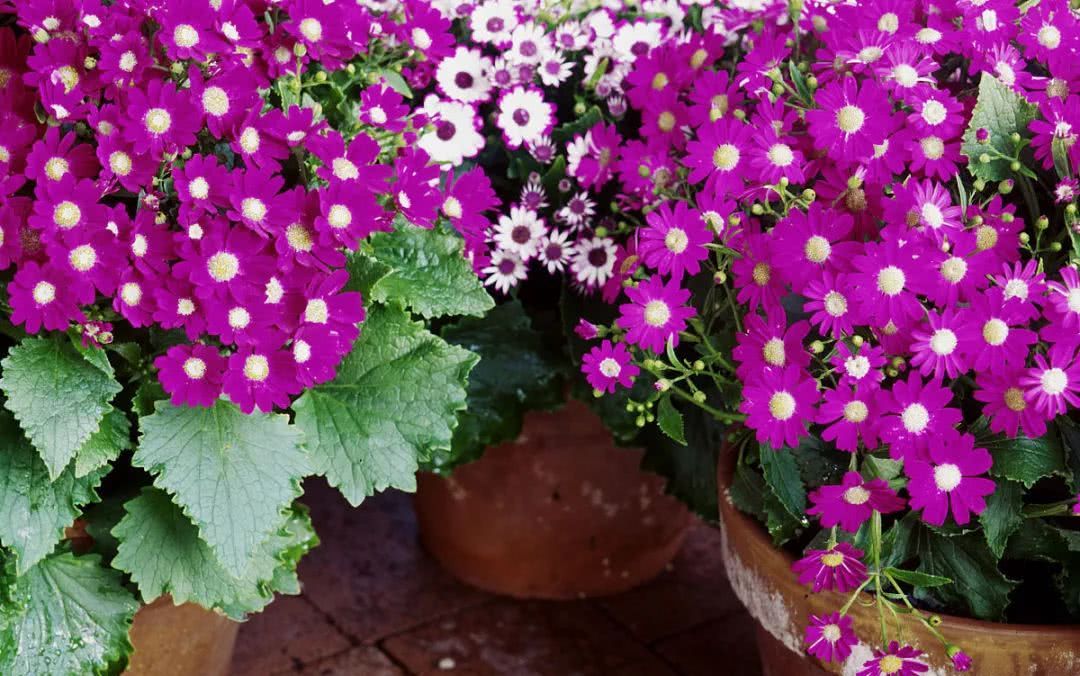
Oh, so it's a cineraria!
Cineraria is also known as qianye lian and qianri lian, and its flowering period runs from December to May of the following year.
It seems especially suited for sowing in this season. When winter arrives, this lovely little sun flower is sure to warm the hearts of balcony gardeners.
In this article, let's talk about cineraria growing techniques!
Well, this isn't a textbook, it's the voice of experience, and it will surely get balcony gardeners twice the result with half the effort!
Cineraria cultivation methods
Temperature / Light
Cineraria likes a warm environment and cannot tolerate high temperatures or severe cold.
The suitable growing temperature is 10-15°C, with the most suitable environment being one where the night temperature is not lower than 5°C and the daytime temperature is not higher than 20°C.
During the growing period it requires plenty of sunlight, but please note: avoid dryness and exposure to blazing sun.
Watering
Cineraria has a high water demand, but it should not be overwatered. Usually it is best to water when a small number of leaves begin to wilt due to drought.
However, do not water when the wilting is caused by excessive ventilation or by pests and diseases.
Fertilizing
Apply fertilizer about once every 10 days. Before flower buds appear, apply nitrogen fertilizer at a concentration of 1%-3%; after flower buds appear, apply a compound fertilizer at a concentration of 1%-3%.
After flowering, fertilizer can be reduced appropriately, but it must not be cut off entirely!
Propagation
Cineraria is mainly propagated by sowing, usually sown in July-August, with a suitable germination temperature of 20-25°C, and seedlings emerge in about 7 days.
When the seedlings grow to 3 true leaves (about 20-30 days), they begin to emerge. After pricking out, apply fertilizer once every 10 days and spray insecticide and fungicide once a week. Once they grow to 6-7 leaves, they can be potted and planted out.
Important tips from the head gardener
1. The potting soil is made from leaf mold and peat soil plus 1/4 sandy soil and a small amount of base fertilizer.
2. After sowing, place the sowing pot in a cool, ventilated environment. In about 20 days the seedlings can grow 2-3 true leaves, and at this point carry out the first transplanting.
3. Once the seedlings resume growth, apply dilute liquid fertilizer. When the plants grow to 5-6 leaves, pot them up, then apply fertilizer once every 1-2 weeks. The concentration of the liquid fertilizer depends on the growth condition of the plants.
4. At the final planting out, apply organic fertilizer containing phosphorus and potassium as a base fertilizer.
Cineraria pest and disease control
The common diseases of cineraria are powdery mildew and verticillium wilt, and the common pests are aphids and red spider mites.
Powdery mildew
When the room temperature is too high and the air humidity is too high, powdery mildew is likely to occur.
The control method is to increase indoor light, maintain good ventilation, and control watering. After the disease occurs, promptly remove the diseased leaves, then spray an 800-fold dilution of 50% carbendazim for control.
Verticillium wilt
To prevent verticillium wilt, appropriately increase potassium fertilizer during the growing period and spray some potassium permanganate aqueous solution for disinfection.
Controlling the flowering period of cineraria
A balcony gardener asked: Head gardener, can we make cineraria bloom during a specific holiday just as we please?
That's easy. The flowering period of cineraria can be determined by different sowing dates.
Remember the flowering times of cineraria:
Early-flowering varieties bloom 5-6 months after sowing;
Ordinary varieties bloom 7-8 months after sowing;
Late-flowering varieties bloom about 10 months after sowing.
If you want flowers for New Year's Day, sow in March;
If you want flowers for Spring Festival, sow in May;
If you want flowers for May Day, sow in August-September of the previous year.
Sow according to these time points, and controlling the flowering season of cineraria is a sure thing.
Balcony gardeners who like it, give it a try right away!
Grow it on the balcony
All right, that's all for today. If balcony gardeners still have any questions they'd like the head gardener to answer, leave a message in the comment section below.
I don't know whether the head gardener explained it clearly and in detail. For balcony gardeners who didn't quite understand, the head gardener has written an acrostic poem especially for you. It may not be well written, but it can help you find the head gardener.
More wonderful articles are all in an acrostic poem:
A gentle breeze softly strokes, flowers ever remain
Strolling in spirit through the southern slope of Nanshan
Seeking wonders and finding delights at Bronze Sparrow Terrace
Planting red and greenery, ascending the blue clouds
-- Come take the challenge: a four-line acrostic-and-tail poem. Link the first characters together + link the last characters together, and you can get an eight-character motto to summon the head gardener's true self! When you come, remember to say: "Head gardener, I've cracked your secret!"
Growing on the balcony, learning never ends.