Wild ganba fungus is expensive; can it be cultivated artificially?
Summary: Wild ganba fungus is expensive; can it be cultivated artificially?
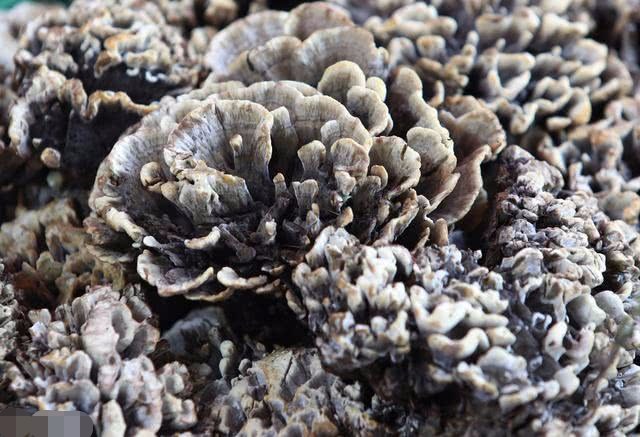
Some people say that on the mountain, apart from matsutake, ganba fungus is the most expensive. Can ganba fungus be cultivated artificially? Ganba fungus, scientific name Thelephora ganbajun, is a rare wild edible fungus. This fungus can be stir-fried with green peppers or eggs. Because of its rich aroma, firm and chewy texture, and endless chewiness, it tastes very much like cured beef jerky. Beef jerky is commonly known as ganba, so this fungus is called ganba fungus. The price of ganba fungus has remained high all along, 800-1000 yuan/kg. This is because at present ganba fungus mainly exists wild among the pine trees in the mountain forests of Yunnan and Hubei, and it has not been found in other places, including abroad.
The price of ganba fungus is so high, and apart from a few areas in Yunnan and Hubei, it is found in no other regions, so how does ganba fungus grow? What are its requirements for the growing environment?
Ganba fungus mainly grows during the rainy season in July and August each year. This is because the roots of pine trees are infected by ganba fungus, and then part of the nutrients absorbed by the pine roots are taken in through the ganba fungus roots. The ganba fungus attaches to the pine roots, and the two live symbiotically together. Ganba fungus can also provide the necessary nutrient supply for pine trees. If the pine roots cannot absorb this part of the nutrients, their resistance may decline and they may become diseased and die.
Some studies have shown that when people artificially isolate fungal strains from wild ganba fungus, make them into mushroom bags or fungus blocks, and then place them beside pine roots and wood in mountain forests, the survival rate is found to be less than 20%. There is another method, which is to mix pine seeds together with ganba fungus, then artificially cultivate small pine seedlings, and indirectly obtain ganba fungus plants. This method is currently still at the scientific research stage, and there have been no reports of successful cultivation.
In theory, this method is feasible. The specific operation method is as follows:
From the growth characteristics of pine trees, if a pine tree wants to survive, it cannot do without the nutrients provided by mycorrhizal fungi. Mycorrhizal fungi act as the role of the pine tree's fibrous roots. These "fibrous roots" are an important part for the pine tree to absorb water and nutrients from the soil. Moreover, this kind of mycorrhizal fungus can also secrete certain substances that can prevent pine roots from being infected by pathogenic bacteria. It is precisely because of this kind of mutual relationship that pine trees and mycorrhizal fungi maintain a very delicate state. There are many kinds of mycorrhizal fungi for pine trees, such as porcini, puffball, ganba fungus, and so on. In other words, ganba fungus is only one kind of mycorrhizal fungus.
Therefore, mix pine seeds with ganba fungus, and give the ganba fungus as many opportunities as possible to contact the pine roots, so that after infection they can form a symbiosis. After Yunnan pine seeds germinate, they need mycorrhizal fungi to infect their roots, thereby forming a symbiotic relationship. After the pine tree survives, the ganba fungus will also slowly grow.