Do grapevines need fertilizer in winter? A detailed guide to fertilizing methods
Summary: Do grapevines need fertilizer in winter? How should fertilizing be done?
Do grapes need winter fertilizer? Many friends do not pay much attention to this, or even dismiss it, but Science Farming believes winter fertilizer is still very necessary. From the time grape leaves fall in autumn to bud break the following year, this period is basically the stage when grapevines dormancy and accumulate energy. You may have seen peonies: if planted too late or if the field fertility is poor, they may even fail to bloom, and this phenomenon is also very obvious in grapes, typically showing few flowers and few fruits. Therefore, supplementing with winter fertilizer in winter can effectively improve the quality and yield of grapes the following year.
Topdressing time
Fertilizing can be done before the onset of winter, roughly around November for topdressing, and it should not be too early or too late. If too early, the fertility may be consumed ahead of time, and generally grapes are usually topdressed fairly adequately around summer and autumn, so when the leaves have just fallen, fertility is still relatively sufficient, and there is no need to topdress too early. If too late, grapevines will be unable to accumulate enough nutrients. Moreover, if there is a lack of phosphorus and potassium fertilizer, their resistance may decline and they may even fail to make it through the harsh winter.
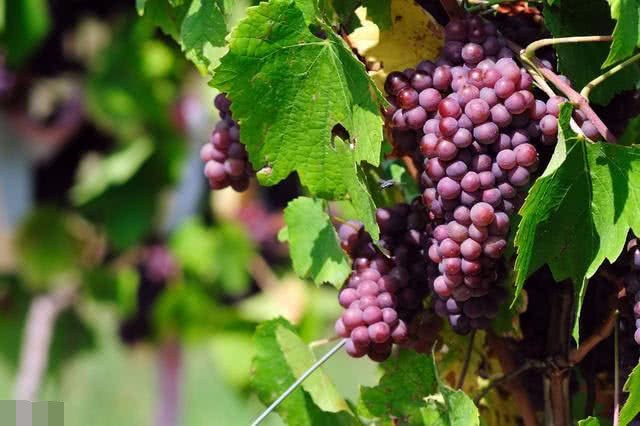
Kyoho grape
What fertilizer to apply?
In winter, grapes are in a dormant state and have very little demand for nutrients, but very little does not mean none, since plants still need to maintain life activities. Because they are not growing leaves, the demand for nitrogen fertilizer is very low, and excessive nitrogen fertilizer can also cause excessive growth the following year; however, phosphorus and potassium fertilizer is still needed, as it can improve the disease resistance of grapes.
Generally, farmyard manure is best, of course well-rotted farmyard manure. It contains the three major elements nitrogen, phosphorus, and potassium as well as many mineral elements, and can meet the growth needs of the plant. Of course, you can also consider organic fertilizer sold on the market. However, relatively speaking, the cost seems a bit higher.
If you choose chemical fertilizer, then it is recommended to consider only phosphorus and potassium fertilizer, such as potassium dihydrogen phosphate or a scheme of superphosphate + potassium chloride (potassium sulfate), and at the very least calcium fertilizer should also be applied. Ordinary grapes have a relatively large demand for calcium, so topdressing some superphosphate at this time is also very beneficial.
How to fertilize?
For organic fertilizer or farmyard manure, it is best to fertilize by deep plowing. If fertilizing on the surface, the nutrients are very difficult for the plant to absorb, and organic fertilizer or farmyard manure applied by deep plowing can also further decompose, accelerating the release of its nutrient elements and improving utilization efficiency. Grape roots are relatively deep, so it is recommended to fertilize somewhat deeper, which will be better.