How to deal with yellowing leaves on common indoor plants, so your potted plants stay green all year round
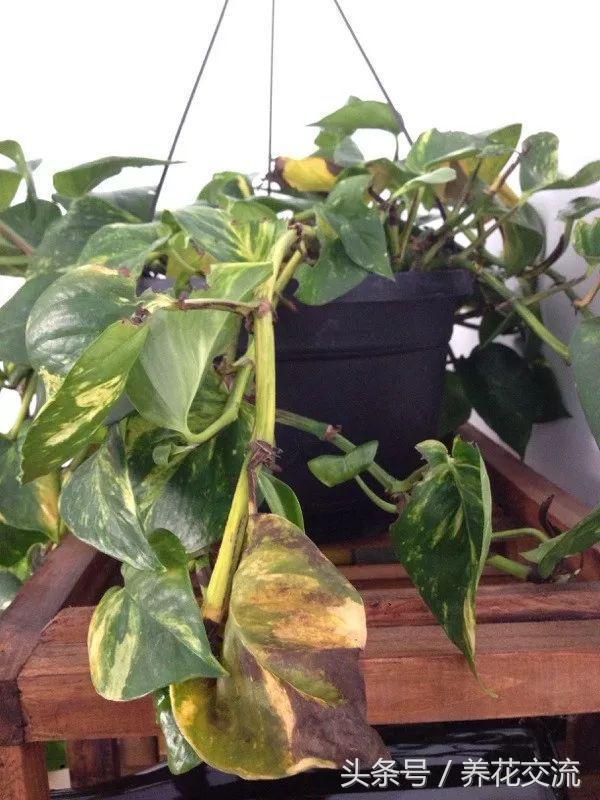
No matter how well you care for your plants, yellow leaves are unavoidable; all plants go through normal metabolism, and even a plant known as evergreen, growing especially vigorously, will still develop yellow leaves at the bottom. This is normal aging, the natural withering of plant leaves. For these old leaves at the base of the stems, you only need to remove them promptly, and it will not affect the health of the plant.
Below I will introduce several common indoor plants. If their leaves turn abnormally yellow, you must deal with it promptly. By analyzing the cause based on the state of the yellowing leaves, it becomes very easy to handle.
1. Yellowing leaves on pothos
Yellowing leaves on pothos are usually caused by an environment that is too dark or by overwatering.
Although pothos is very shade-tolerant, if you keep it in a place that is too dark, it will easily develop yellow leaves. At this point you need to promptly remove these yellow leaves and move it to a place with bright light, but it cannot be exposed to direct sun all at once, otherwise the leaves will easily get sunburned, and in severe cases the branches and leaves will wither.
Another situation in which pothos develops yellow leaves is overly frequent watering, or soil that stays dry for a long time. When the soil stays wet or waterlogged for a long time, new leaves easily turn yellow, and in severe cases it leads to root rot. At this point you need to place it in a ventilated spot with good light and let the moisture dry out promptly.
2. Yellowing leaves on spider plant
Spider plant is a shade-tolerant, drought-tolerant indoor plant. As long as it is cared for properly, it can stay green all year round and will keep producing trailing offshoots.
If the spider plant develops yellow leaves, you need to promptly improve the growing environment. If the leaf tips turn yellow, it is very likely due to insufficient air humidity or soil fertility that is too low. You can mist water around it and regularly add some organic fertilizer water to improve it.
If the leaves turn a tender yellow, that is caused by insufficient light intensity. You need to move it to a place with scattered light, avoid too much shade or frequent watering, and only water thoroughly after the soil has dried out completely.
3. Yellowing leaves on asparagus fern
When grown indoors as a potted plant, asparagus fern is especially prone to yellowing branches and leaves. If not dealt with promptly, it will keep dropping leaves and ruin its ornamental value.
The cause of yellow leaves on asparagus fern is usually insufficient environmental humidity or poor ventilation. When you notice yellow leaves on asparagus fern, deal with them promptly: cut off all the yellow leaves and dead branches, move it to a suitable spot with appropriate scattered light in the morning or evening; the light must not be too strong. Also make sure the environment is ventilated and lets light through, keep it appropriately moist, and mist water around it to maintain higher air humidity.
4. Yellowing leaves on peace lily
Peace lily is a relatively shade-tolerant and drought-tolerant plant. If its branches and leaves become wilted, you can restore it to health by the soaking method: prepare a basin of clean water, set the potted peace lily in it with the water level above the top of the pot, soak for about 5 minutes, then lift the potted peace lily out, let the water drain, and place it in a ventilated spot with good light. It will quickly return to a healthy, green state.
If the peace lily develops yellow leaves, you must promptly improve the environment and cut off the yellow leaves. The growing environment should stay bright, or give it appropriate scattered light every day, and avoid scorching sun or long periods of direct sunlight.
5. Yellowing leaves on lucky bamboo
A newly bought lucky bamboo may develop yellow leaves for many reasons. If the bottom leaves of the lucky bamboo you bought keep turning yellow and new roots have not grown out, then you need to remove most of the leaves at the bottom, leaving just a few leaves near the top, which is enough. Too many leaves consume an especially large amount of nutrients and will cause the leaves to keep turning yellow.