Three months after decapitating a clivia, 5 new shoots sprouted, growing vigorously and delightfully
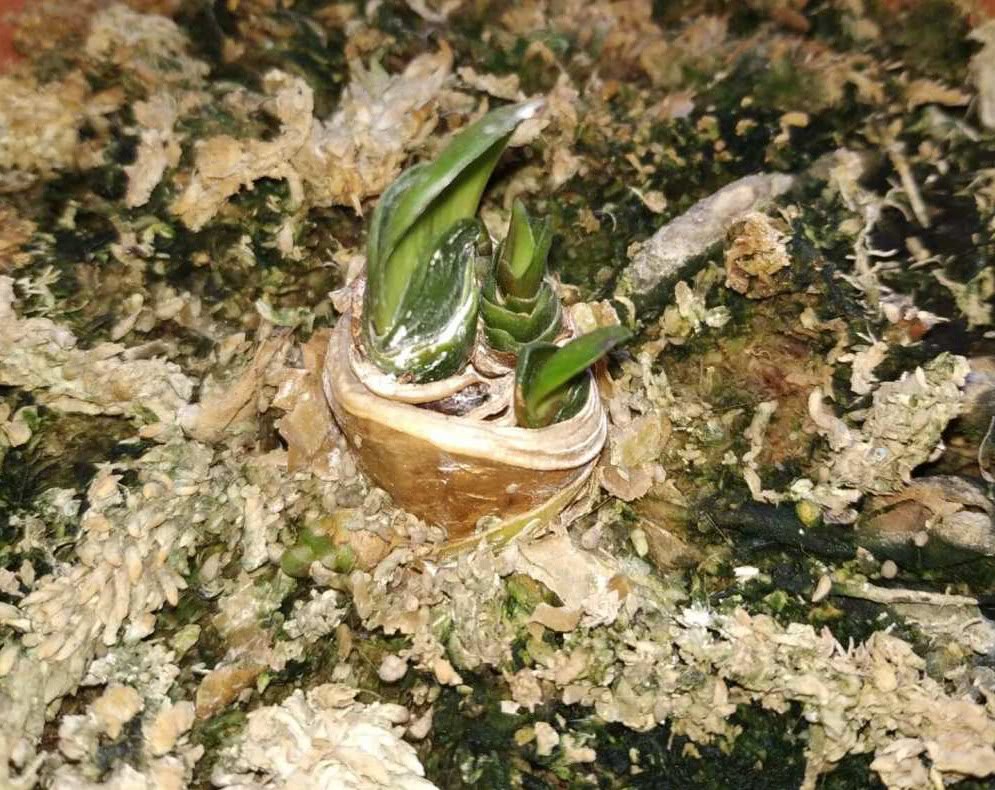
If I hadn't seen it with my own eyes, I really wouldn't have believed it: a clivia was decapitated, and 3 months later 5 shoots came bursting out. On October 22, the reporter saw at Uncle Wang's home a clivia that had sprouted 5 shoots, growing healthily and looking quite lovely.
According to Uncle Wang, he personally took a knife to this clivia and decapitated it in August, and counting the time, it has now been three months. Uncle Wang said he had also heard from fellow flower growers that clivias can be propagated by decapitation, so with a try-it-and-see attitude, he decapitated one of his beloved clivias, and unexpectedly it really worked. "One plant traded for five, worth it!" Uncle Wang said excitedly.
Which clivias need decapitation? First, clivias with rotted roots, rotted shoots, rotted crowns, or those that do not bloom; it is recommended to decapitate these. Second, clivias that have been in their pots for a relatively long time and are facing natural death, such as old clivia plants that have been potted for 20 or even 30 years, can be considered for decapitation. Third, clivias with irregular looks can be decapitated; in other words, clivias with narrow leaf bases and narrow leaves, that is, clivias whose leaves do not form a line when viewed vertically and do not form a fan when viewed horizontally.
The best time to decapitate a clivia. Generally speaking, avoid the dangerous high-temperature summer and choose late winter to early spring for decapitation, which is safer. Summer temperatures are high, and various root rots, pests and diseases occur frequently; the clivia is in a slow-growth or dormant period, making it the most difficult season to care for. Therefore, whether repotting or decapitating, do not choose summer.
How should a clivia be cultivated and managed after decapitation? Decapitating a clivia is a special and extreme practice, so its cultivation and management methods must also be handled specially. First, the growing medium must not use the common leaf mold soil; instead, sandy soil should be used for cultivation, such as river sand. Second, after decapitation, spray a potassium permanganate solution for disinfection, and keep it mostly in a ventilated place with sufficient light. It must not be too shaded or too wet; water only after it is 80% dry, and when watering, water thoroughly.
For a clivia after decapitation, once the young shoots grow to about 20 cm tall and it is confirmed that there are new roots, they can be divided into separate pots and planted separately. Uncle Wang said: "Decapitating a clivia is nothing to worry about; as long as you care for it properly, cut this one plant and you'll trade it for pots filling the window."