13 Flowers Suitable for Planting in Autumn, Filling Autumn with Fragrance
As summer gives way to autumn, flowers and plants have already begun another peak of growth. If you love growing flowers, have you started planning to plant a new season of flowers? Autumn is short, but it should still be filled with fragrance - only such a life is a "true life"! So, do you know which flowers are suitable for planting in autumn?
1. Hosta (Hosta plantaginea)
Sowing tips: Collect the seeds after they mature in autumn and dry them, then sow in March-April of the following spring. Seedlings grow slowly in the first year and need careful tending; they grow rapidly in the second year and begin to bloom in the third year. It is best to apply plenty of base fertilizer in the planting holes.
Growth habits: It prefers warmth and tolerates cold slightly, but dislikes extreme heat. In the North China region it can overwinter in a cold frame. It prefers well-drained, loose loam, is not drought-tolerant, and dislikes waterlogging.
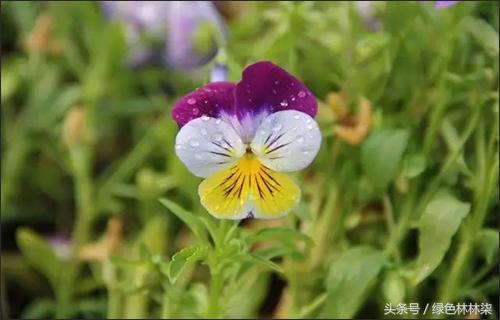
2. Pansy (Viola tricolor var. hortensis)
Sowing tips: Generally sow by broadcasting in early September. The soil in the seedbed or sowing pot must be well-drained. After sowing, cover with soil to twice the depth of the seeds, water thoroughly with a fine watering can, and place in a spot with ample light.
Growth habits: Fairly cold-tolerant, prefers cool conditions and sunlight, and develops well at a daytime temperature of 15-25°C and a nighttime temperature of 3-5°C. It dislikes high temperatures and waterlogging, and is cold-tolerant and resistant to frost.
3. Calendula (Calendula officinalis)
Sowing tips: It can self-sow and grows quickly, is fairly cold-tolerant, and is not particular about soil, though loose, fertile, slightly acidic soil is best. Autumn sowing is usually carried out after mid-to-late September.
Growth habits: It prefers a sunny, ample-light environment and is highly adaptable, tolerating low temperatures of -9°C, but fears hot weather. It is not particular about soil, though loose, fertile, slightly acidic soil is best. It can self-sow and grows quickly, is fairly cold-tolerant, and is not particular about soil. It tolerates poor, dry soil and shady environments, and grows well in sunny, fertile areas.
4. Campanula (Campanula spp.)
Sowing tips: The seeds are very small, so do not cover with too much soil. The optimum germination temperature is 20-24°C. It can also be propagated by division or cuttings.
Growth habits: It requires an environment that is warm in winter and cool in summer, with ample light and good ventilation. It is not tolerant of dry heat and is not strongly cold-resistant. It prefers deep, fertile, well-drained neutral soil, and can also grow normally in slightly alkaline soil.
5. Dianthus (Dianthus chinensis)
Sowing tips: Generally carried out in September. Sow in an open-field seedbed, keep the soil moist after sowing, and sprouts will appear 5 days after sowing, with seedlings emerging in about 10 days. The optimum temperature for seedling growth is 10-20°C. When the seedlings have 4-5 leaves, they can be transplanted and will bloom the following spring. They can also be direct-sown outdoors in September or sown in pots in a cold room in November-December, then planted out in the open field in April of the following year.
Growth habits: It is cold-tolerant and drought-tolerant, but not tolerant of extreme heat; in summer it often grows poorly or withers, so shading and cooling should be provided during cultivation. It prefers ample sunlight, dry conditions, ventilation, and a cool, humid climate. It requires fertile, loose, well-drained loam or sandy loam containing lime, dislikes waterlogging, and likes fertilizer.
6. Blue Sage (Salvia farinacea)
Sowing tips: After sowing, thinning is needed 1-2 times. When the seedlings are 15 cm tall, plant them into 10 cm pots and pinch off the growing tips. During the growing period, fertilize once every half month and keep the soil moist.
Growth habits: It prefers a warm, humid environment with ample sunlight. It is strongly cold-resistant but fears heat and dryness.
7. Snapdragon (Antirrhinum majus)
Sowing tips: It can be sown in either spring or autumn, but autumn-sown seedlings grow more robustly and bloom more profusely than spring-sown ones. Seedlings emerge 7-10 days after autumn sowing. If conditions permit, soaking the seeds in a 50-400 mg/L gibberellin solution can increase the germination rate.
Growth habits: It prefers sunlight but also tolerates partial shade. It is fairly cold-tolerant but not tolerant of extreme heat. It is suited to loose, fertile, well-drained soil and can also grow normally in calcareous soil.
8. Daisy (Bellis perennis)
Sowing tips: Grafting and sowing methods have high technical requirements and rather complicated propagation processes; without superb cutting and grafting skills, as well as the selection of good varieties and techniques such as artificial pollination, it is very difficult to propagate successfully. These two propagation methods are only used in nurseries when large numbers of seedlings are needed. For growing daisies at home, division and cuttings are generally used for propagation.
Growth habits: The daisy prefers a cool climate and dislikes heat. It likes light but also tolerates partial shade, and has no strict requirements for the soil of the cultivation site. The optimum germination temperature is 22-28°C, and the optimum growing temperature is 20-25°C. In the Southwest region, it is suitable to grow medium- and small-flowered single or semi-double varieties. Medium- and large-flowered double varieties grow weakly and set seed poorly.
9. Nasturtium (Tropaeolum majus)
Sowing tips: It can bloom all year round. A single flower can last 8-9 days. After flowering, watering should be reduced to prevent excessive growth of the branches. If watered excessively or drainage is poor, the roots are prone to rot from moisture; in mild cases the leaves turn yellow and drop, and in severe cases the whole plant wilts and dies.
Growth habits: It prefers a mild climate and is not tolerant of severe cold or extreme heat. The suitable growing temperature is 18 to 24°C. It can endure short periods of 0°C. It prefers warmth and humidity, and the overwintering temperature should be above 10°C.
10. Catchfly (Silene pendula)
Sowing tips: Propagated by seed, sown in early September, and transplanted before winter into a cold frame with cold-protection equipment. In the following spring it is transplanted into the open field. Because it is somewhat semi-prostrate, it should be planted in flower beds early.
Growth habits: Cold-tolerant, light-loving, and fertilizer-loving. It grows well in moist soil rich in humus and well-drained.
11. Cornflower (Centaurea cyanus)
Sowing tips: It can be sown in either spring or autumn, with autumn sowing being better. Cover with soil just until the seeds are no longer visible, press down lightly, cover with grass, water thoroughly, and keep the soil moist at all times. Remove the grass cover after germination.
Growth habits: It is highly adaptable, prefers ample sunlight, does not tolerate shade or dampness, is fairly cold-tolerant, prefers cool conditions, and dislikes heat. It prefers fertile, loose, well-drained sandy soil.
12. Wallflower (Erysimum cheiri)
Sowing tips: Autumn sowing is better, generally carried out in September. Seedlings usually emerge after about a week. After passing through the low temperatures of winter, it will bloom profusely in the following spring.
Growth habits: The wallflower prefers ample sunlight and a cool climate, tolerates cold slightly, and fears waterlogging and extreme heat. South of the Yangtze River basin it can overwinter in the open field, while in East China it can overwinter in a leeward, sunny seedbed with slightly added insulation measures.
13. Phlox (Phlox drummondii)
Sowing tips: Propagated by seed. When sowing, do not cover with too much soil; slight light exposure is best. The optimum germination temperature is 15-20°C. Phlox has a rich variety of flower colors, dense blooms, a long flowering period, and relatively extensive management, so it is a main planted variety for basic flower beds, and it also looks very good in pots.
Growth habits: It prefers warmth and tolerates cold slightly, but dislikes extreme heat. In the North China region it can overwinter in a cold frame. It prefers well-drained, loose loam, is not drought-tolerant, and dislikes waterlogging.
Get hands-on and create a refined life - even in the silent autumn, it can still be filled with fragrance!