Stop using these 2 kinds of water to water your flowers; they tend to wither and die as soon as you water them
Growing flowers is all about "three parts fertilizer, seven parts water," meaning that whether flowers grow well or not depends entirely on watering. If you use improper methods when watering, it can easily cause a whole series of problems for your flowers. For example, the common root rot, yellow leaves, dropped flowers, and even withering and death. Watering actually has the most rules to follow, so don't underestimate it. The reason many flower lovers can't keep their flowers alive, and the flowers die as soon as they keep them, is frankly all caused by improper watering. Next, I'll share with you the mistakes to watch out for and avoid when watering. Flower lovers can give it a quick read, and I hope it helps you.
These 2 kinds of "flower water" should no longer be used; the flowers wither and die as soon as you water them, so don't ignore this
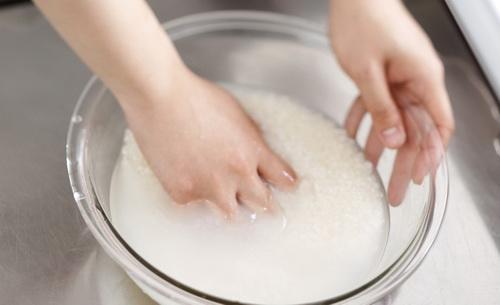
Many flower lovers, after seeing the picture above, might think that rice water can't be used to water flowers, right? Actually, that's not the case. Rice water, as everyone knows, contains quite a lot of nutrients and mineral elements (potassium), and using it to water flowers instead of tap water is very suitable. However, you need to understand the tricks of watering flowers with rice water. There is one kind of rice water that cannot be used to water flowers, otherwise the moment you water, the flower's roots will be burned to death, until the flower withers and dies. That kind of rice water is rice water that has not undergone "fermentation." Simply put, it's rice water that hasn't been sealed and left to sit. When unfermented rice water is poured into the flower pot, it will ferment in the soil, naturally releasing heat. The soil temperature instantly rises, and the flower's roots won't survive.
Leftover expired milk, expired soy milk, and the like from daily life cannot be used to water flowers
There are many things in daily life that feel like a waste to throw away, so people just use them to water flowers. For example, the common expired milk, or expired soy milk, overnight tea, and so on. Actually, doing this is very wrong. Especially some older flower lovers, who think these things contain rich nutrients -- for example, expired milk has at least calcium, zinc, and various other elements, plus rich protein. Using them to grow flowers is surely making use of waste, right? If you do it this way, the potted flowers won't survive for long. If you really want to use them, then wait until they've finished fermenting, and further dilute them before use!
Above I only talked about 2 kinds of water that can't be used to water flowers. Of course, there are many more, but I won't share too much about them here. However, the tricks of watering flowers must be kept in mind. For example, when watering flowers you cannot fertilize them at the same time; the two need to be spaced apart, otherwise it will also burn the flower's roots. There's one more point: a reminder to flower lovers, in every season, even for the same kind of flower, watering is different. For example, in summer, when temperatures are high and water evaporates quickly, you need to water frequently, while in late autumn, or winter, you need to water less, following the rule of "don't water if it's not dry, and when you water, water thoroughly."
That's all for the content shared about watering flowers. Flower lovers, be sure to remember it. If you have any other questions you need answered during the process of growing flowers, you're welcome to leave a comment below, and I'll reply to each of you one by one. You can also follow Potted Plant Stack, so you can get some new little flower-growing tips every day. Thank you for reading!
Remember to like and share~