The construction of Chinese bonsai gardens requires clear functions and rational layout
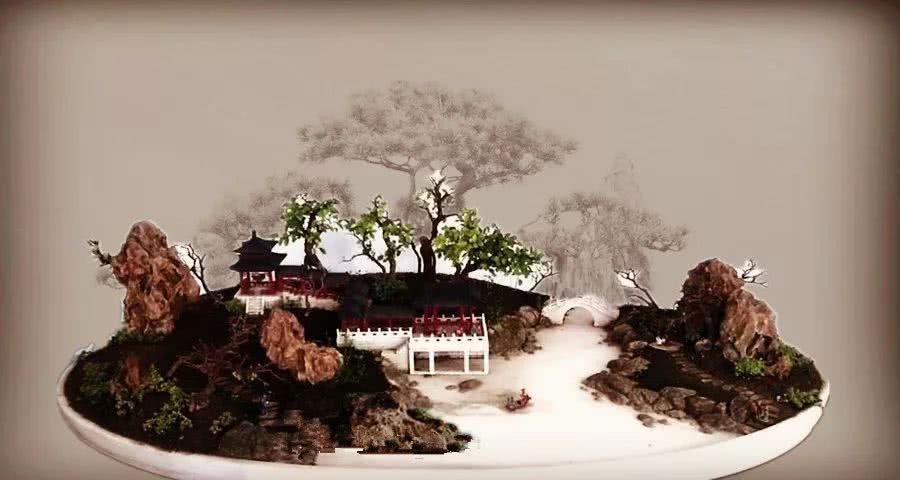
Based on the characteristics of Chinese bonsai art, this discusses how bonsai gardens use garden-making artistic techniques to create a specialized garden that facilitates research, creation (production), collection and exhibition of bonsai, "creates a suitable environment for the care and management of bonsai, for visitors or garden owners (private bonsai gardens) to appreciate bonsai. When building a bonsai garden, it is necessary to clarify its functions, lay it out rationally and build it carefully, so as to build Chinese bonsai gardens into specialized famous gardens with distinctive national characteristics, an elegant artistic style of bonsai, and famous gardens that bring out the best in each other.
Bonsai originated in China. Using trees, rocks and other materials as its medium, and through artistic treatment and careful cultivation, it is an artwork that intensively and typically reproduces the spirit of nature in a pot. Bonsai is hailed as "silent poetry, three-dimensional painting." Call it poetry, yet its meaning lies within hills, valleys, forests and springs; call it painting, yet it is full of life and ever-changing with the four seasons. This kind of artwork, which originates from nature yet rises above nature, and integrates tree and stone, pot and stand as a trinity, has been carefully carved by bonsai artists through the generations and has become a treasure in China's art treasury, renowned worldwide for its distinctive national characteristics and elegant artistic style.
To research, create (produce), collect and exhibit Chinese bonsai, garden departments across the country and entrepreneurs infatuated with bonsai have built state-owned or private bonsai gardens one after another. For example, the Bonsai Garden of the Humble Administrator's Garden in Suzhou (1954), Liuhua West Garden in Guangzhou (1956), Duojing Garden of the Hangzhou Flower Garden (1958), Wenzhou Bonsai Garden (1958), Yangzhou Red Garden (1958), Taizhou Bonsai Garden (1958), the Bonsai Garden of Du Fu Thatched Cottage in Chengdu (1982), the Bonsai Garden of Shanghai Botanical Garden (1978), Wanjing Villa at Tiger Hill in Suzhou (1982), the Bonsai Garden of Baihuatan Park in Chengdu (1983), Yangzhou Bonsai Garden (1984), Xuzhou Fruit Tree Bonsai Garden (1988), the Bonsai Garden of Guanshang Park in Kunming (1989), Tianjin Bonsai Garden (1991), the Bonsai Garden of Beijing Botanical Garden (1995), Shenzhen Bonsai World (1997), the Bonsai Garden of Kunming Expo Garden (1999), Jiangyin China Township Bonsai Museum (1999), Jingjiang Bonsai Garden (2000), Nantong Bonsai Garden (2000), the Bonsai Garden of Wuhou Shrine in Chengdu (2001), Jiangdu Longchuan Bonsai Art Garden (2003), as well as private bonsai gardens such as Wujing Garden in Yangzhou (1982), Yiran Garden in Hangzhou (1993), Tianwaitian Bonsai World in Zhanjiang (1994), Shengdong Garden Bonsai Garden in Chengdu (1996), Liang Garden in Taizhou (2000), Yicui Garden in Fangcun, Guangzhou (2000), Bao Family Garden in Huangshan (2001), Liu Chuangang Bonsai Art Center in Haikou (2001), Yiying Garden in Guangdong Shunde Flower World (2001), Shengshida Bonsai Garden in Changzhou (2001), Huancui Garden in Quanzhou (2003), and so on.
Looking at the state-owned or private bonsai gardens built above, although each has its own merits in function, layout and construction, none is perfect. Especially driven by the "bonsai craze," bonsai gardens of varying scales are being planned and built across the country. When building them, we should, on the basis of summarizing the experience and lessons of already-built bonsai gardens, clarify functions, lay them out rationally and build them carefully, so as to build Chinese bonsai gardens into specialized famous gardens with distinctive national characteristics.
In-depth reading