Methods and Techniques for Repotting and Changing the Soil of Stump Bonsai
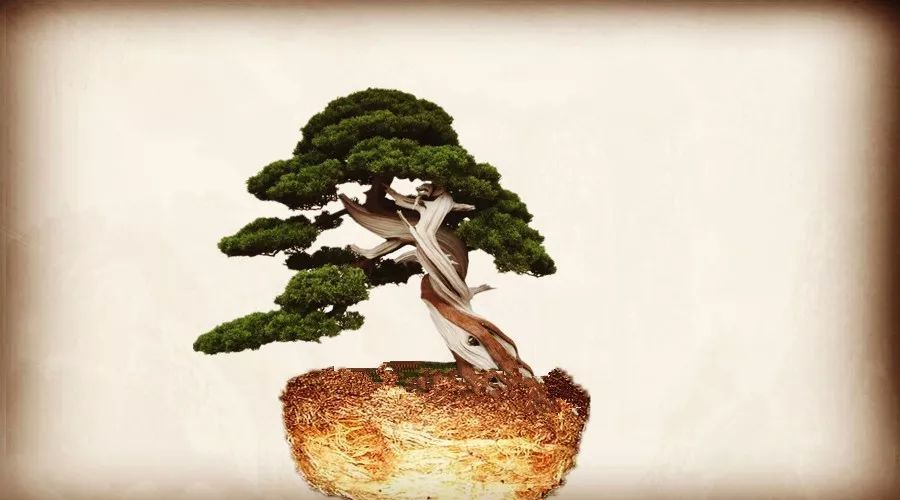
After a stump bonsai has grown for a period of time, its root system fills the pot soil, crisscrossing to such an extent that its ability to absorb fertilizer and water weakens, and at the same time the nutrient elements in the pot soil become fewer and fewer, which is unfavorable to the growth of the stump, making repotting and soil changing necessary.
Repotting is generally carried out in September in autumn or from early spring to Qingming. For tree species with fast root growth, such as pomegranate and trident maple, repot once every 1-2 years; for slower-growing species, such as pines and cypresses, repot once every 3-4 years.
The raw material for pot soil is generally leaf mold, which can be made by composting mountain soil, garden soil and fallen leaves. The specific method is: after the trees shed their leaves in late autumn, dig a pit 1 m deep in an open and convenient place, pile up the fallen leaves and mountain soil or garden soil in layers, and pour on some human feces and urine. Pile it 20 cm high, seal it all around with mud, and let it ferment. Turn the pile once about every 1 month, and after 3 months the leaves have rotted and it can be sifted for use as pot soil.
When repotting, generally only the pot soil is changed and not the pot. Take the stump bonsai out of the pot and remove the old soil around the soil ball. For tree species that root easily, such as Vitex and elm, about 50% of the old soil can be removed; for pines and cypresses, which root with difficulty, only 20%-30% of the old soil is removed. If the root system is not well developed, the new roots are poor, and the fibrous roots have not covered the bottom surface of the soil ball, remove little or none of the old soil, and cut off a portion of the old roots and rotten roots, with the cuts kept smooth.
After repotting, when putting the plant into the pot, use the "deep pot, shallow planting method" (if using a shallow pot, this method can better shorten the recovery period). That is, add a layer of rigid plastic ring 4-6 cm high at the pot rim. In this way, more broken tiles and coarse potting soil can be added at the bottom of the pot, raising the pot bottom and prompting the positioned tree roots to rise. Then, using the conventional potting method, fill in new potting soil up to 1-2 cm from the opening of the plastic ring, and after new roots have grown and the growth vigor has recovered, remove the plastic ring. Later, through watering and rain washing, the soil above the pot surface gradually falls away, achieving the purpose of naturally exposing the roots.
Watering can be done right after repotting is finished. Because the newly changed soil is relatively loose, a watering can may be used for sprinkling, but the first watering must be sufficient and thorough (for home flower growing, the "pot soaking method" can be used for watering). Place it in a semi-shaded spot, and afterward do not water unless it is dry. Because at this time the potted tree's water absorption capacity is weak, watering too much can easily cause root rot. For evergreen species, water can be sprayed on the leaves more often to increase the relative air humidity and reduce evaporation of water from the leaf surface. After the potted tree has sprouted new roots and its growth vigor has recovered (about 20 days), normal watering can be resumed.
In-depth reading