5 great tips for autumn and winter care, flower spikes shoot up fast and buds keep blooming
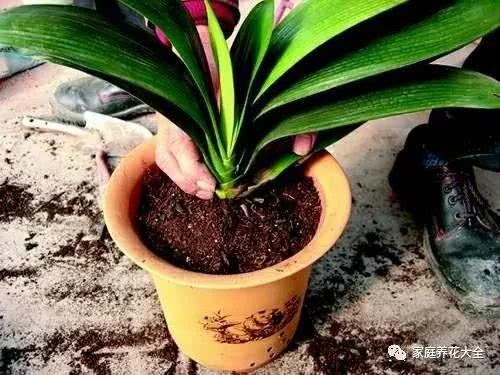
NO.1 Soil that is airy yet water-retentive, thick white roots come pushing out!
To make your clivia grow strong, the first thing is to keep the root system healthy; the soil must be airy and water-retentive so the roots can exchange gases with the outside and grow healthy thick white roots! For the soil, it is recommended to mix it in the ratioleaf mold : pine needles : coarse sand : base fertilizer = 5:3:2:1. If you have just repotted or planted it, you can put broken bricks, tile pieces and so on at the bottom, then add the prepared soil, place the clivia into the pot and fill it with soil, tap the pot wall so the roots make full contact with the soil, and press the surface soil down with your hand.
NO.2 Proper light during the flowering period, flower bud differentiation is twice as fast!
Light during the flowering period is very important for clivia. Although clivia likes a low-light growing environment, before it enters the flowering period it needs plenty of light, especially in winter; sufficient light can promote flower bud differentiation in clivia,keep the light duration at 4 hours per day, and move it to a south-facing balcony. Because clivia grows opposite leaves, you must let it receive even light, otherwise the leaves will end up uneven and misaligned! So we should regularly adjust the position of the leaves receiving light! With light like this, the clivia's leaf shape is not only beautiful, but flower bud differentiation is twice as fast!
NO.3 Control water during budding, more and bigger flower buds open!
There is a very strict saying about watering clivia: "whether it lives or dies is in the water," so watering clivia in autumn is key. So how should we water it? First, autumn is the growing season for clivia and also the key period for bud formation, at which time it needs a sufficient water supply, but you should not water too much; keeping the potting soil moist is enough. By all means do not wait until the potting soil is completely dry before watering, as this easily causes bud drop, so it is best tokeep the soil at 30-40% moisture. After winter arrives, watering must be done at noon, to avoid freezing the roots because the water temperature is too low and affecting plant growth!
NO.4 Give enough fertilizer, leaves are strong and blooming is vigorous!
"Whether it is strong or not is in the fertilizer," so if you want your clivia to grow strong, you must usually give it plenty of nutrients. After autumn and winter arrive, control nitrogen fertilizer and increase phosphorus and potassium fertilizer; during the budding period you can apply more phosphorus fertilizer to promote bud formation, and after pollination apply more potassium fertilizer so the flowers bloom vigorously. Fertilizing must follow the principle oflight fertilizer applied frequently. You can make organic fertilizer at home yourself, such as decomposed plant ash, bone meal and other fertilizers. If you find that troublesome, you can apply 20g of microbial flower fertilizer every 10 days; the microbial metabolites release phosphorus and potassium, help improve soil fertility, and will not burn or rot the roots. It can be used all year round and is very safe!
NO.5 Control the temperature difference well, flower buds bloom extremely vigorously!
If you want your clivia to bloom vigorously, you must reasonably control the temperature difference. During the day the temperature is higher and photosynthesis is strong, so the plant accumulates more organic matter and nutrients, while at night the temperature is low and the plant consumes less energy, which benefits the growth and development of clivia. So how should the temperature difference be controlled? During the day, keep the temperature at 18-25°C, and at night keep the growing temperature at 10-15°C,try to keep the day-night temperature difference at 8-12°C, which is best, and most favorable for clivia growth. Before winter arrives, place the clivia in a 5°C environment for low-temperature treatment for about 10 days, then reasonably regulate light, water and fertilizer; do this and it will definitely bloom in winter!