How do you grow orchids? An old gardener teaches you 3 guidelines to avoid detours and get blooms in clusters
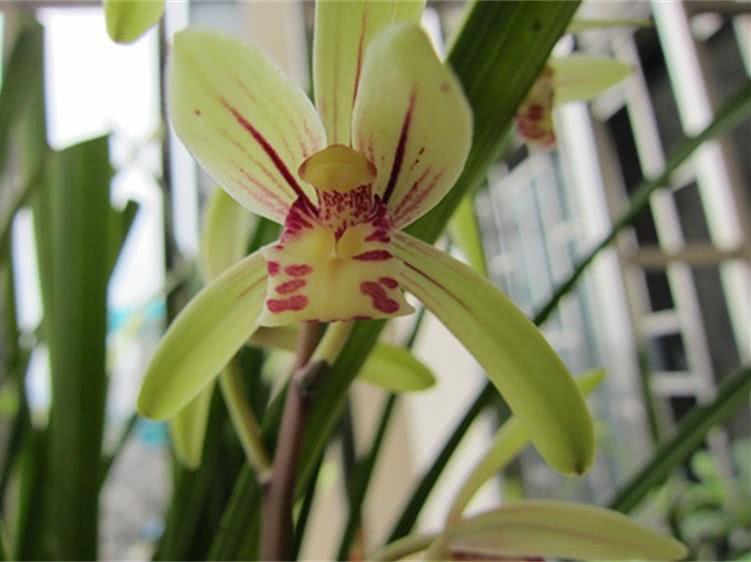
Orchids are the gentlemen among flowers, precious and delicate, and growing them well takes some effort. A few days ago, Xiaoye learned some orchid-growing basics from an old gardener and is sharing them with everyone. Do the following three things well, and I believe your orchids will have absolutely no problem blooming.
Growers should be good at identifying when selecting and buying:
Good orchid seedlings should have roots that are grayish-white and relatively intact, with no serious shriveling, shrinking, rotting or breaking, and no semi-transparent water-soaked appearance after being frozen. The leaf cluster should be fresh green and glossy, with no serious yellowing or black spots. Those with several pseudobulbs connected into one large clump are better, as they easily sprout new leaves after surviving.
Growing orchids - watering section
Can orchids be watered a lot?
Orchids like cool, shady and moist conditions, but moist only means keeping the soil moist; do not water too much. When the weather is dry, use a fine-nozzle watering can to water the leaves and potting soil until slightly moist, and never let water accumulate at the roots of the plant. In summer when the weather is dry, spray water on the leaves, preferably 2~3 times a day. In winter, if the potting soil is not too dry, there is no need to water. So Cymbidium goeringii (Spring Orchid) is best planted in a shady place not far from ponds and woods; this kind of environment has relatively high air humidity and is suitable for the growth of Cymbidium goeringii.
What kind of water should be used to water orchids?
The water used for watering flowers is best pond water. If only tap water can be used, then first put the tap water into a container and store it for 1 day before watering. In winter or early spring when the weather is colder, if watering is needed, water with lukewarm water of around ten-plus degrees Celsius, and do not water with water much lower than the potting soil temperature, otherwise Cymbidium goeringii will be damaged.
Growing orchids - fertilizing section
Orchids like fertilizer, but they cannot tolerate too much fertilizer. If using inorganic fertilizer (chemical fertilizer), it should be diluted, and it must not be applied too much. Rice-washing water stored for several days until fermented can be used for watering (do not pour it on the leaves); its nutrient content is enough to meet the plant's needs. Watering flowers with water in which peeled apple skins and cores have been soaked for one or two days is also quite suitable, because this water is not heavily concentrated in fertilizer, contains a variety of nutrients, and has a certain acidity, which suits the orchid's taste.
If gardening friends find it troublesome, they can also buy fertilizer to apply, but they should pay attention when choosing fertilizer. Some people use granular fertilizer for a long time, causing the soil to become compacted, and the fleshy root system then has difficulty breathing, leading to suffocation and death. Orchid friends recommend a microbial inoculant fertilizer specially for orchids; it is non-irritating, promotes orchid growth, and makes it easier to have luxuriant branches and leaves. It only needs to be used once every 10 days.
Growing orchids - lighting section
Orchids like shade and should not be exposed to too much sun, but if they grow in dark places for a long time, too little organic matter accumulates, which cannot meet their growth needs, and they will find it difficult to bloom.
It is recommended that orchid friends, in the three seasons of spring, autumn and winter, move them into the sun from 8~10 a.m. to sun them for 2~3 hours, and in summer let them sun for about half an hour at around 8 a.m. Such lighting is beneficial to orchids.
The above is the basic orchid-growing knowledge Xiaoye has shared with you, and I hope it is helpful to you. If you encounter problems while growing orchids, you can leave a comment below!