Pennywort looks like a lotus and is common and easy to grow
Pennywort also knows how to be grateful, and it has won many people's affection through its own efforts. Pennywort also produces fruit, and its berries contain seeds used to propagate the next generation of seedlings
What everyone often sees, looking just like a lotus, and being both simple and convenient to grow, is pennywort
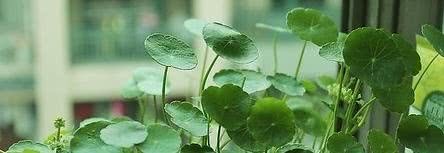
Pennywort is an aquatic ornamental plant that looks very much like a lotus leaf but is much smaller than one. The leaves of pennywort, just as its name suggests, look especially like one copper coin after another. Pennywort is also a plant that can be grown all year round. Not only does it always have emerald green leaves, but it also produces clusters of small flowers. Its cultivation process is both simple and rough-and-ready, so it is very easy to grow and is not at all fussy about its environment. It is quite suitable for people who are busy with work and have no time to care for plants. Keeping one or two pots at home can also have the effect of purifying the environment.
The stems of pennywort are generally about 10 to 15 cm long, and the stems are very thin and will snap with a light pinch. Pennywort produces new plants from the base of its stems, and the tips of pennywort stems are generally brown. Its leaf veins generally number 15 to 20 and are arranged in a radial pattern, and the main part of its stem is grass green. Pennywort also blooms. It generally blooms between June and August, and its flowers, as just mentioned, are clusters of small white flowers that look somewhat like little stars dotted among green copper coins, clean and lovely.
Long ago, pennywort grew in Europe, which has both tropical and subtropical regions, and now it is often seen in the areas south of the Yangtze River in our country. Because pennywort grows abundantly in the wild, this has enabled it to survive tenaciously in all kinds of environments. But because most people now grow pennywort as an ornamental plant, it has also been given a much better growing environment than before. Pennywort also knows how to be grateful, and it has won many people's affection through its own efforts. Pennywort also produces fruit, and its berries contain seeds used to propagate the next generation of seedlings.
Pennywort is mainly propagated by the daughter plants it produces at its roots, but it can also be propagated by sowing its seeds, or by the cutting method. The best season for transplanting pennywort is between March and May each year. Its planting method is very simple. As long as you plant it in nutrient-rich soil and give it enough water, spraying it every day, it will quickly grow roots and sprout. When mixing the soil for pennywort to grow in, you can blend soil containing rotten leaves with the wet mud from river water plus soil from the fields, and that will be enough to meet the nutrients pennywort needs. Pennywort is a very easily satisfied plant. It has no excessive demands about its living environment. Even if you just put it in clear water, it can survive for a very long time.
When it comes to growing pennywort, there is no need to deliberately do anything special to care for it. You only need to let it receive sunlight and give it plenty of water, and it will grow very quickly. If you keep pennywort in a cool indoor place, you can use household lighting to replace the effect of sunlight, and the result will be the same. Pennywort will also have leaves that wither, but you do not need to worry that it will die, because pennywort's growth rate far exceeds the withering rate of its leaves. So when you see yellowed, withered leaves, just pull them off.
The usual way to cultivate pennywort is to grow it in water. For the water, ordinary tap water will do. Leave the tap water standing for one or two hours to remove the impurities in it, and then it can be used as the growing medium for pennywort. Also, when pennywort is first being grown, it is best to plant it in soil, because after all, the nutrients rich in soil are far greater than those in tap water.
Although pennywort has few demands about the environment it grows in, there is one thing that can be called fatal to it, and that is cold. What pennywort can least tolerate is the cold winter, especially winter in the north. With one moment of inattention, pennywort will fall under winter's coercion. At this time, you must promptly move pennywort indoors to a warm place to grow it. Growing pennywort indoors also has many benefits: like most green plants, it can purify the air and make the air more fresh and clean. Once winter has passed, choose a time when it is warm but the sunlight is not too harsh, and move pennywort outdoors to let it absorb sunlight, as this is what benefits its vigorous growth.