Crab Claw Cactus (Schlumbergera truncata): Do These 4 Things in Early Autumn and Its Stems and Leaves Will Be Thick and Sturdy, Making Winter Easy
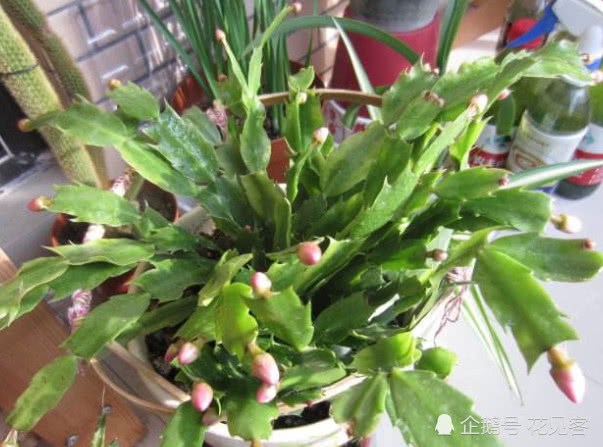
Crab Claw Cactus (Schlumbergera truncata) is a plant loved by many flower growers. It is shrub-like, with many branches and no thorns, and its flowers are borne singly at the tips of the branches, giving it high ornamental value.
After the arrival of autumn, many flower growers notice that their Crab Claw Cactus has become wilted and slightly soft, and its stems and leaves seem to have shrunk a lot. In fact, growing Crab Claw Cactus still requires certain secrets. Do these 4 things well, and its stems and leaves will be sturdy and thick, making winter easy!
1. Control the light
Crab Claw Cactus is a short-day plant. After the arrival of autumn, the intensity of sunlight becomes less strong, so it can be exposed to light for a longer time, with about 10 hours a day being most suitable. It can be moved to a spot slightly closer to a sunny area, which is more conducive to growth, speeds up photosynthesis, and makes the leaves thicker and sturdier.
2. Water appropriately
Crab Claw Cactus is a stem-and-leaf plant with strong drought tolerance. After the arrival of autumn, temperatures drop and the activity of Crab Claw Cactus decreases. Also, because its root system is not particularly well developed, watering should be appropriate, keeping the potting soil suitably dry, which is more conducive to growth. Follow the principle of watering when dry and stopping when wet, and avoid waterlogging.
3. Apply more phosphorus and potassium fertilizer
After autumn comes winter, and temperatures will get lower and lower. Some stems and leaves of Crab Claw Cactus have low resistance and are easily affected by low temperatures, causing the stems and leaves to wilt and dry out. Therefore, to improve the plant's resistance, more phosphorus and potassium fertilizer should be applied. Each month, diluted fish intestine water can be used to water it 2-3 times to increase phosphorus and potassium fertilizer, promoting thicker and greener stems and leaves and helping it get through winter better.
4. Prune reasonably
Some flower growers cannot bear to prune when they see their Crab Claw Cactus growing especially luxuriantly. The final result is problems such as poor ventilation and excessive loss of nutrients, which lead to poor growth of the plant's stems and leaves, loss of luster, and an inability to get through winter well.
Therefore, some overly dense parts should be pruned reasonably, which can increase ventilation and reduce nutrient consumption. Some flat stems, weak stems, and the like should also be pruned away to increase the plant's ornamental appeal.
That is all for the care of Crab Claw Cactus. If you have other additions, flower growers, you can share them with everyone in the comment section below. If you want to learn more about flower-growing knowledge, you can follow Huajianke!