Straw return is not perfect: a discussion of the problems that exist
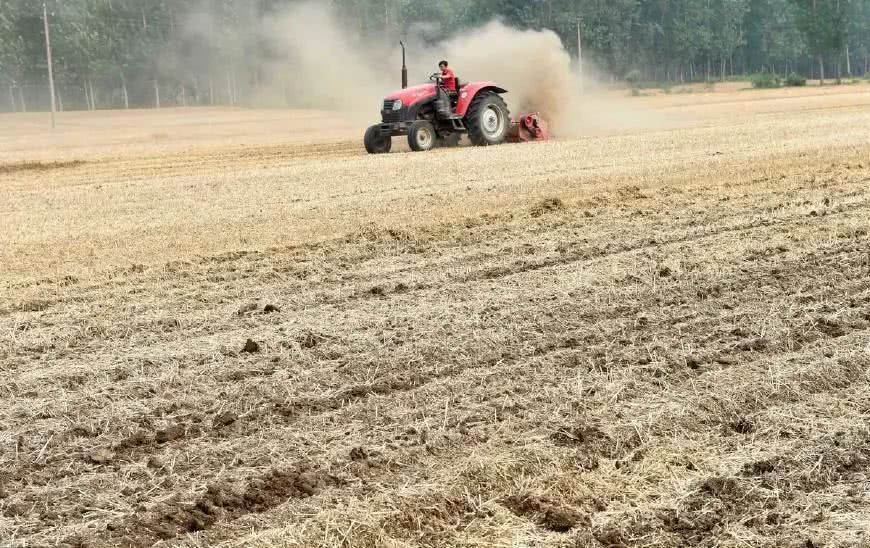
Summary: Is straw return really good? There is no perfect method in the world
Straw return is a good way to handle straw in rural areas today. Vigorously promoting straw return also helps reduce straw burning in farm fields, and at the same time can greatly improve farmland soil fertility. Whether from the perspective of individual farmers or society as a whole, it can be said to be a win-win result.
However, straw return does indeed breed some problems. For example, increased field pests, worsened diseases, effects on current wheat sowing, and shallower plough layers may all appear in straw return, but to a large extent these are all due to straw not being properly treated. Below, the effects of straw return on wheat stubble are introduced one by one.
Increased pests and diseases
Straw return causes increased pests and diseases for two reasons. First, straw is organic matter and easily breeds pests; second, straw itself carries pathogens and insect eggs, which may harm the following crop. Both of these situations are actually due to straw being directly deep-ploughed and buried underground without being decomposed. The way to solve this problem is to buy some fermentation powder that accelerates decomposition. After the field straw is crushed and collected, fermenting it for ten days to half a month is basically enough. In this way, through fermentation, on the one hand the organic matter is fully released, and on the other hand the pathogens and insect eggs carried by the straw are also eliminated.
Effects on the sowing of the following wheat crop
Because the field straw crusher does not crush thoroughly, quite a lot of longer straw remains in the field, and such straw has a very large impact on the following crop. If straw remains in the wheat sowing furrows, it may cause sowing blockage and make it impossible to sow seeds. Such a situation is naturally not what we want to see. The way to solve this problem is, on the one hand, to decompose the straw, and on the other hand, to bury it through deep loosening and ploughing. This not only improves soil fertility but also solves the problem affecting sowing.
Shallower plough layer
After straw return, farmers generally use rotary tillage for cultivation, which also makes the soil plough layer too shallow. The plough pan becomes compacted and cannot be broken through, resulting in poorer water storage and fertilizer retention capacity. In addition, straw can also create voids, making soil gaps too large, so wheat seeds cannot closely contact the soil, affecting germination or causing dead seedlings. In response to this situation, we still recommend using deep loosening and ploughing.
In summary, straw return still has certain problems at present, but no technology is perfect. While we worry about the above problems, we should also understand that straw return does indeed increase soil organic matter content, and correct straw return still largely avoids the above problems.