What to Do When Indoor Potted Plants Get Root Rot? One Trick to Help Them Quickly Recover to Health
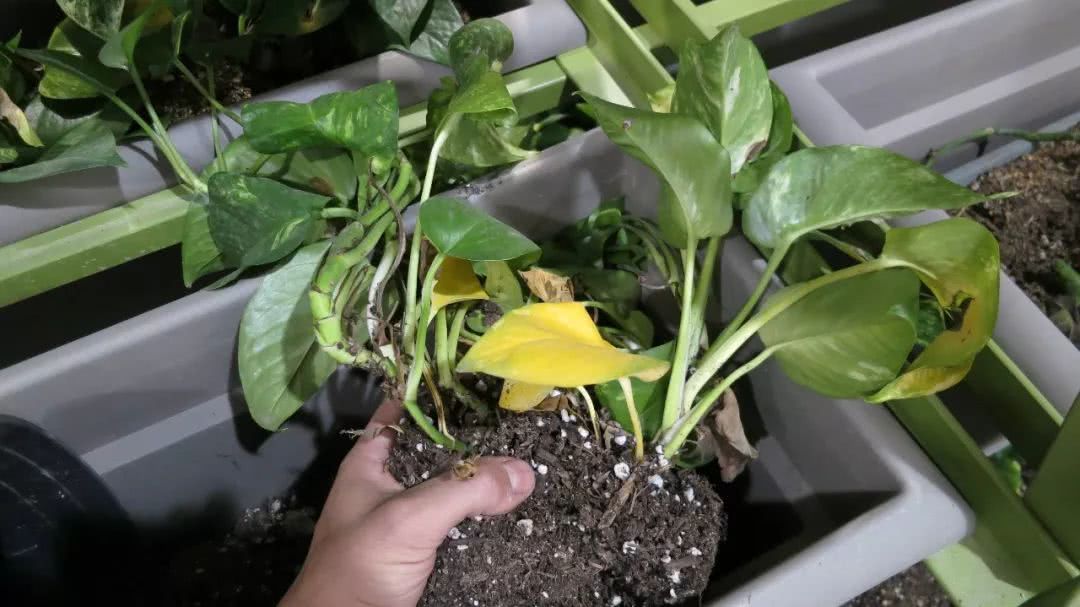
For beginners caring for potted plants, the most common problems are yellow leaves and root rot. Indoor potted plants develop root rot usually because of overly frequent watering or waterlogged soil; it can also be caused by water accumulating in the saucer and not being poured out in time, which keeps the soil constantly very wet, eventually leading to root rot.
When gardening beginners see root rot in their potted plants, they usually just throw the plants away, because they do not know how to deal with it and do not improve the conditions in time, so eventually the whole plant rots and turns black. For the following common indoor plants, if root rot occurs, these methods can be used to solve it.
1. Root rot in pothos
Pothos is the most common indoor potted foliage plant. It likes a warm and humid environment all year round, but too much watering easily causes root rot. The first sign is yellowing leaves; if the water in the soil is not dried out in time, root rot will follow.
If a pothos with root rot is not dealt with in time, the rotting part will keep spreading, eventually causing the whole plant to decay.
If you notice the leaves of your pothos turning yellow, check promptly whether the roots and stems are rotting and whether the soil stays wet. If you find root rot, promptly lift the pothos out, clean it, and cut off the rotten roots and decayed stems.
The remaining healthy pothos stems can be directly cuttings placed in water to root; the lower leaves must be removed and must not be submerged in water. They can also be transplanted into new potting soil to propagate.
2. Root rot in spider plant
If a spider plant develops root rot, deal with it promptly. Spider plants have very large root systems with tuberous roots. If the soil is waterlogged or wet for a long time, root rot easily occurs, and it should be repotted in time, cutting off only the rotten parts. If the root rot is too severe, it is very difficult to save.
When keeping spider plants indoors, also avoid waterlogged or constantly wet soil. If you find root rot, use sharp scissors to cut off the rotten parts, soak the remaining stems in potassium permanganate solution for 5-10 minutes, and then plant them in new potting soil.
3. Treating root rot in money tree
The money tree (Pachira aquatica) is a common indoor plant that is very easy to care for and does not need frequent watering. Indoors, you can mist it regularly to maintain some air humidity, but the soil must not stay wet for long, otherwise root rot easily occurs.
After a money tree gets root rot, you can directly cut off the rotten parts, and you can saw them off with a saw. Slant-cut the bottom of the remaining healthy stems, dip them in a little rooting powder, and then insert them into loose, breathable, well-drained sandy soil, keeping the soil moist, the environment ventilated, and the air humidity appropriate.
4. Treating root rot in ZZ plant
The ZZ plant (Zamioculcas zamiifolia) is a very drought-tolerant indoor plant. During care, you must wait until the soil is completely dry before watering thoroughly. Kept indoors, if the soil is wet or waterlogged for a long time, or if the temperature is too low, root rot easily occurs.
The ZZ plant has some tubers at the base of its rhizomes. If the soil stays wet for a long time, root rot easily occurs, so it should be repotted in time, cutting off the rotten parts directly, soaking them in diluted potassium permanganate solution, and after sterilizing and disinfecting, cultivating them in new sandy soil.
During cutting propagation, keep the soil moist, the environment ventilated, and provide a little scattered light; generally, roots and shoots will form in two to three weeks.