Planting flowers in autumn requires good fertilizer. How should you fertilize to get twice the result with half the effort?
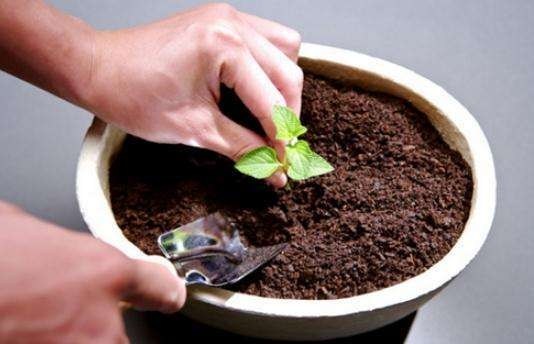
By October, plants also need to "put on autumn fat." There is a folk saying about"Autumn application is gold, winter application is silver"for fertilizing. Plants are about to enter their winter dormancy period, and how many nutrients they store directly affects their growth and flowering the following year. What is the difference between autumn fertilizing and spring fertilizing? What is the best fertilizing plan? What kind of fertilizer should be applied?
1. What is the difference between autumn fertilizing and spring fertilizing?
The difference between spring and autumn fertilizing lies in whether the results are good or bad. Spring fertilizing often works less well than autumn fertilizing, and sometimes even backfires. In winter and spring, temperatures are low and fertilizer decomposes slowly. If organic fertilizer is applied during this period, the fertilizer cannot fully perform its role.
Fertilizing in October helps increase the storage of plant nutrients. Autumn is the last peak growth period of the root system in the year, when its life activities are vigorous and its ability to absorb nutrients is strong.
2. Combining organic fertilizer with inorganic fertilizer is the best fertilizing plan
Fertilizers can be simply divided into two types: organic fertilizer and inorganic fertilizer.
Organic fertilizer is fertilizer containing a large amount of organic matter. It mainly comes from plants or animals, is processed from animal and plant waste and plant residues, and is rich in organic matter and nutrients such as nitrogen, phosphorus and potassium.Simply put, organic fertilizer is what we often call chicken manure, bone meal, sheep manure and so on. In form, it is solid fertilizer and belongs to slow-release fertilizer.
Inorganic fertilizer, on the other hand, is what we call chemical fertilizer, namely the common slow-release fertilizer and liquid fertilizer. Its active ingredients are high, most are easily soluble in water,and easily absorbed by plant roots. Its fertilizer effect belongs to quick-acting fertilizer.
We now have a general understanding of organic fertilizer and inorganic fertilizer, but there are so many types of organic and inorganic fertilizers. Which one should be chosen?
3. Which organic fertilizers should be chosen, and how should they be used?
If your flowers and plants are at the sowing or transplanting stage, this stage is the time for organic fertilizer to show its talents.
1. Chicken manure
Chicken manure is most suitable for woody flowers. Jasmine, gardenia, osmanthus, camellia, rhododendron, Chinese rose and so on are all no problem. It can be regarded as a high-quality organic fertilizer, but the chicken manure must be fully decomposed before use. Its nutrient content is very rich, and its nitrogen, phosphorus and potassium content is very high,equivalent to 5~6 times the content of cow manure, so although chicken manure is little, its fertility is not small.
To use chicken manure, you can scatter a thin circle along the edge of the pot or spread it directly on the surface of the potting soil. Do not let it touch seedlings. For a large pot and large seedlings, put in an appropriate larger amount; for a small pot and small seedlings, put in less. Apply thin fertilizer frequently, about once every one and a half months. If you are not very experienced in controlling the amount, it is best to apply a little less each time, especially for small and medium-sized potted seedlings. Be sure to be cautious and careful.
2. Bone meal
Bone meal is suitable for flowers and plants with taller plant forms, such as peony, crabapple, honeysuckle and so on. Bone meal comes from byproducts of the animal-derived food industry, obtained after steaming and crushing. It is mainly used to increase the phosphorus content in soil and can make flowering plants produce larger and more vivid flowers and larger fruit with better taste.
Special note: in addition, bone meal is not suitable for flowers that prefer acidic soil.Bone meal will balance the high nitrogen in acidic soil, making the soil slightly alkaline and helping soil repair. Therefore, it is best not to use bone meal for acid-loving soil, otherwise it will cause poor plant growth or even death.
To use bone meal, buy it directly. It is cheap, just a few yuan per packet, and enough for home flower growing. Applying it once a year is enough. It can be applied in autumn and winter, and after being mixed with soil until moist, it can be placed directly at the edge of the pot. Likewise, do not let it touch flower seedlings.
3. Sheep manure
Sheep manure is suitable for melons, fruits and vegetables and cash crops, and its fertilizer effect lasts a long time.Sheep manure cannot be applied directly and must first be composted. Place it in a sealed container, then fill it with water and put it in a sunny and ventilated place to ferment. In summer, fermentation is completed in about 30 days; in winter, it takes about three months. Use it after fermentation is complete, and it will not cause root burn or the death of flower seedlings.
Try to use sheep manure in winter. When fertilizing, be sure not to sprinkle it on the surface of the potting soil, as it too easily attracts insects, so you must dig a hole at the edge of the pot and bury it. Use it every winter, once a year.
4. What inorganic fertilizers are there, and how should they be used?
If your flowers and plants are at the growth and flowering stage, this stage is the time for inorganic fertilizer to appear.
1. Liquid fertilizer
Liquid fertilizer, as the name suggests, is made by chelating and compounding various elemental organic substances and mixing them with water, then directly spraying them on plant leaves or roots so they can be quickly absorbed.
Unlike traditional chemical fertilizers, which only contain nitrogen, phosphorus and potassium and have a single function, liquid fertilizer also contains adjuvants that aid absorption, giving liquid fertilizer high biological activity and making it less likely to cause soil pollution or the death of beneficial microorganisms.
In addition, liquid fertilizer belongs to pollution-free water-soluble fertilizer,and its safety factor for home gardening use is high.It is non-toxic and harmless to humans, but it must not be eaten. It also causes no pollution to the environment and has advantages unmatched by any other chemical fertilizer.
Liquid fertilizer's quick dissolution and uniformity are also advantages that cannot be ignored. Combined with water and applied once every ten days, it can not only be used to water the roots but also sprayed on leaves.
2. Slow-release fertilizer
Slow-release fertilizer is especially suitable for small potted flowers, butslow-release fertilizer must never be used as a base fertilizer!The effect of nitrogen, phosphorus and potassium released when placed at the bottom of the pot is far inferior to that of organic fertilizer. Slow-release fertilizer cannot be used as a base fertilizer, but rather as a top dressing or when preparing substrate, so that it can produce its best effect.
Slow-release fertilizer releases nitrogen, phosphorus and potassium and other trace elements according to temperature changes. Put simply, as temperature rises, the release speed accelerates, the coating of the slow-release fertilizer decomposes faster, and more fertility is released.
Slow-release fertilizer can last 8-9 months. Apply it once a year, when repotting in late winter and early spring, using 1/4 of the potting soil amount. In autumn, when fertility is slightly insufficient, apply some granular compound fertilizer as top dressing as appropriate, once a month. After about 2 or 3 applications, it can basically be stopped, because autumn flowers have finished blooming and are preparing for dormancy.
Welcome to follow Plant Fanatic. Squirrel Jun chats about flowers and plants with you!
Past reviews
The plants in the flower market are raised so well, why do they turn on you as soon as you buy them back?
I originally wanted to give up autumn sowing, but when I think about flowers blooming continuously, I really itch to try it!
Red clay pots are a paradise for watering enthusiasts. One summer of watering and your hands are worn out!