Flowers: repot them before November, water with a little homemade solution for thick leaves and strong roots to get through winter
Many gardeners find their flowers stop growing roots in autumn, with leaves turning yellow, and some may even show signs of root rot! In fact, autumn is the growing season for most flowers, so if these problems appear, you need to figure out what is wrong. Many gardeners are actually not repotting their plants, which leads to poor drainage in the potting soil, poor aeration, water that cannot drain away, and fertilizer that cannot get in, so the plants grow worse and worse. You can repot your flowers before November to help them get through winter. Let's take a look!
“
Repotting flowers
-Repotting snake plant-
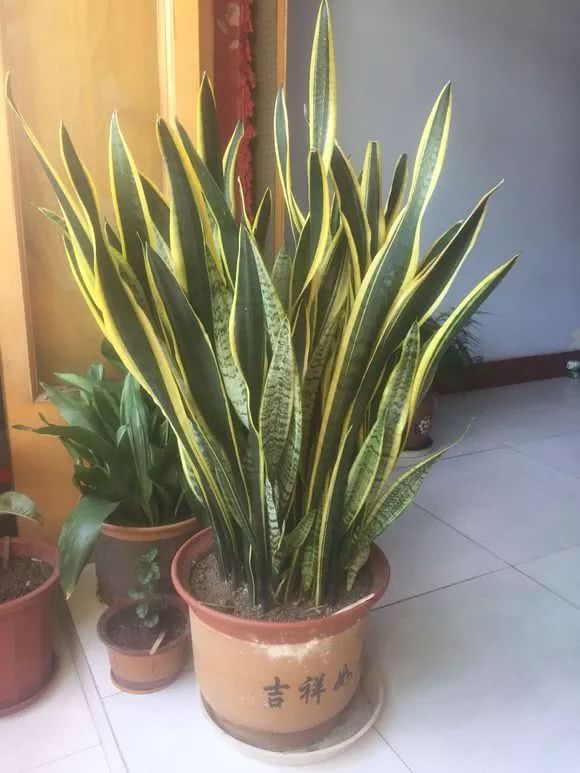
Snake plant (Sansevieria) roots are relatively weak and not tolerant of moisture. If not repotted for a long time, the potting soil easily becomes compacted and airless, causing root rot in snake plants. In addition, after snake plants have been grown for many years, many small shoots grow from the roots, making the whole plant crowded and poorly ventilated, which more easily leads to root rot and rot at the core. In autumn, you can repot the snake plant to help it get through winter.
This snake plant has already filled the pot, with quite a few small shoots at the bottom, and there is not much space left for growth. If it continues this way, it will affect the normal growth of the snake plant.
First stop watering for a few days to let the snake plant's potting soil dry out, then poke along the edge of the pot a few times with chopsticks, and the snake plant will come out of the pot more easily.
If the new pot is relatively large, you do not need to remove the plant from the pot; after trimming off the rotten roots, the snake plant can continue to be used. But if the pot is one size smaller, it is best to divide the snake plant into 2-3 parts and then plant them.
Use a small knife to cut apart the small shoots of the snake plant, dividing them reasonably according to the size of the pot, then apply plant ash or carbendazim powder to the wounds, trim off the dead roots and rotten roots, and peel off a little of the old soil around the outside. Place in a cool, ventilated place to let the wounds dry.
Now place a few pieces of tile at the bottom of the pot to help with drainage. You can put some crushed bones or eggshells at the bottom of the pot, which will make the snake plant grow stronger and sturdier. Then place the snake plant in, fill in the soil, and put it in a cool, ventilated place. Water again after a week, and then just care for it normally.
After repotting, the snake plant grows very quickly, with small shoots sprouting rapidly, and it soon becomes several sizes bigger.
-Repotting pothos-
Pothos (Epipremnum aureum) grows quickly, and its roots easily fill the pot, becoming a full pot in just one year. If you do not pay attention to repotting, the pothos roots not only struggle to breathe, but water also has trouble draining through. When the weather turns cold, root rot and yellow leaves become more likely. Generally, repotting once every 1-2 years is best, so pothos can grow quickly and the roots can stay strong.
Although pothos is easy to grow, you also need to pay attention to the choice of potting soil. Generally use leaf mold, or use coconut coir and perlite as potting soil. It is not suitable to use too much sticky garden soil. In loose, breathable potting soil, pothos grows very quickly, is less prone to root rot, and is very simple and convenient to care for.
Some gardeners use this kind of sticky soil to grow pothos, and it barely grows a few leaves in a year, with very poor growth.
Stop watering the pothos first, grab the base of the pothos with your hand, and tip it downward, and the pothos will come out.
The pot should be slightly larger than the original one, or 3-6 cm larger than the pothos root crown; too large is also not good. For older pothos, first cut off the old roots and rotten roots, keep 2/3 of the potting soil, then place it into a new pot containing a thin layer of soil, fill in the soil, water thoroughly, and place in a cool place. After about 1-2 weeks, normal care can resume.
After the recovery period ends, the pothos begins normal growth. If the temperature has not yet dropped below 10°C, you can also water the pothos with a little homemade rice-washing water fertilizer. Collect the rice-washing water, put it in a plastic bottle, add a little orange peel, and place it in a sunny spot. After a few days, dilute with water 10 times and water the pothos with it, and it will grow very quickly.
-Repotting kalanchoe-
Many gardeners find their kalanchoe blooms are few, or it does not bloom at all, which is also related to not repotting for a long time. With no space for the roots to grow and a lack of nutrients, even the kalanchoe cannot do the impossible. Autumn is the season when kalanchoe flower buds differentiate. At this time, it is best to repot by moving the original soil from a small pot to a larger pot, which will not affect the kalanchoe's growth or subsequent blooming.
Stop watering the kalanchoe for a few days, then take it out of the original pot. If it already has flower buds, do not disturb the roots; just cut off some rotten roots and dead roots. If it does not yet have flower buds, you can cut off a layer of soil from the outer edge and keep 2/3 of the soil.
Prepare a new pot, put a little pebbles or expanded clay at the bottom of the pot, place the kalanchoe in, fill it with soil, water thoroughly, and put it in a cool, ventilated place. After about 3-4 days, move it to a place with plenty of sunlight for care.
After repotting, it looks full of vitality.
After normal care, if the kalanchoe should be forming flower buds but no buds appear for a long time, what should you do? We can create an environment for flower bud differentiation.
Kalanchoe is a short-day plant and needs short-day conditions, that is, an environment with 8 hours of daylight, to differentiate flower buds. Find a large cardboard box, cover the kalanchoe with it, take it out at 9 a.m., and put it back in at 5 p.m., and you will soon see flower buds!
(Source: Sun Moon Stars 111)
-Repotting spider plant-
Spider plant (Chlorophytum comosum) grows rapidly, and its tuberous roots can quickly fill the bottom of the pot. Because the nutrients in the potting soil are used up, it grows rather weakly in the second year, and there is no more room for the roots to grow, which is also bad for subsequent growth.
Stop watering 3-5 days before repotting, so the potting soil is slightly dry and easier to remove from the pot. Choose a suitable pot, put expanded clay at the bottom, scrape off a layer of the old soil around and inside the original soil, cut off dead roots, old roots, and rotten roots, fill the new pot with fresh growing medium, and plant the spider plant into it.
Soybeans are rich in protein and are a very good nitrogen fertilizer. The calcium, magnesium, and phosphorus components in soybeans are all very helpful for the growth of flowers and plants, so some spoiled soybeans, or soybeans with insects, can be used as fertilizer. Using soybeans as fertilizer does not burn seedlings and is very good for the growth of flowers and plants. Spider plants like nitrogen fertilizer. After the nitrogen decomposed from soybeans is absorbed and used by the spider plant, the leaves grow even more vigorously.
-Repotting clivia-
After clivia (Clivia miniata) grows larger, if the pot is too small and can no longer accommodate root development, it needs to be repotted. Clivia generally needs repotting once every 1-2 years, which is good for its growth and development.
Stop watering the clivia for 5-10 days first, so the potting soil is relatively dry. This can reduce root damage and allow faster recovery. Cut off some old roots, rotten roots, and hollow root branches; healthy roots should be kept.
Place drainage tiles at the bottom of the pot, put in some large pieces of leaf mold and base fertilizer, stuff the gaps between the roots with growing medium, place it into the pot, fill it with soil and press it firm, then water thoroughly. Keep it in a cool place for 1-2 weeks. After it regains vitality, it can be moved to a normal place for care.
Clivia likes fertilizer. When repotting, you can fry soybean cake, castor seeds, soybeans, hemp seeds, and other oil crops until cooked, and sprinkle a little as base fertilizer or side fertilizer, which helps clivia have glossy leaves and bloom more.
-Repotting money tree-
Money tree (Pachira aquatica) has a good symbolic meaning, but it is not easy to grow, and it often dies from yellow leaves and root rot. The money tree has weak roots, and the soil used to grow it must be loose, breathable, and well-draining, otherwise it easily suffers root rot. When gardeners go to the flower market to buy flowers, they should look at what the potting soil is like. If it is as hard as stone, do not buy such a money tree; after buying it and taking it home, it will not live long.
If you accidentally buy a money tree with this kind of soil, repot it in time. When growing money trees, you generally also need to repot once every 1-2 years to prevent the soil drainage and aeration from deteriorating, which leads to root rot in the money tree. During the care of the money tree, if root rot is found, it is also necessary to remove it from the pot in time and deal with the rot, so as to prevent it from spreading further and causing the money tree to die.
Stop watering the money tree for a week first, remove the top layer of soil, and be careful not to damage the roots. But if there are rotten areas, cut off the rotten areas and sprinkle on carbendazim powder. If the area is very large, cut off all the rotten roots and soak them in potassium permanganate or carbendazim solution, then let them dry before potting.
When growing a money tree, do not use pure nutrient soil; add some granules, such as coarse sand or volcanic rock, to make the potting soil drain better. At first, do not plant it too deep; when potting, it must be planted shallowly, and do not bury all the roots in the soil. After it has recovered well, gradually add more soil. After repotting, do not water immediately; keep it in a cool place for a few days before watering. After potting, pay attention to ventilation and keep it in a semi-shaded place for care.
-Repotting asparagus fern-
Asparagus fern (Asparagus setaceus) is best repotted once every one to two years. Repotting can be done in spring or autumn, and cloudy days or sunny evenings are the best times to repot. It is best to stop watering 2-3 days before repotting, to make it easier to remove from the pot.
The new soil for growing asparagus fern does not need too much fertilizer. Mix leaf mold and fine sand and gravel together as base fertilizer. To make the soil more breathable, you can place tiles or stones at the bottom of the pot.
The roots of asparagus fern are tightly combined with the soil, so when repotting, be careful not to damage the roots. Use a small wooden stick to slowly insert into the soil along the edge of the pot, then go around the pot so the soil and roots separate from the pot.
Cut off old roots and rotten roots, and move the "soil ball" formed by the roots and soil together into the old pot or a new pot. If using the old pot, just change the soil. If switching to a slightly larger pot, it only needs to be about 1/3 larger than the old pot.
After planting, trim off some old leaves, water thoroughly, and place in a cool, ventilated place.
-Repotting rain lily-
Rain lily (Zephyranthes) has beautiful flowers, is simple and easy to grow, and has strong adaptability. It can grow well with little care. However, rain lily roots grow vigorously, and the side bulbs can quickly fill a pot. If not repotted for one or two years, it becomes very crowded and there is a risk of bulb rot, so it is best to repot once every 1-2 years, and repotting can be done in spring or autumn.
Stop watering the rain lily for a few days first, then remove it from the pot and remove some of the original soil. If there are too many bulbs, you can divide them and repot them separately. Generally, for a 20-30 cm pot, about 5-6 bulbs are enough. This way it will not be crowded, and it can continue to produce side bulbs and fill the pot later.
Repot these flowers
Let them store up nutrients
Tomorrow the balcony will be full of blooms
Share it with gardeners who need it too!