Although straw burning is light, it must still be banned; industrial pollution, though heavy, is not banned
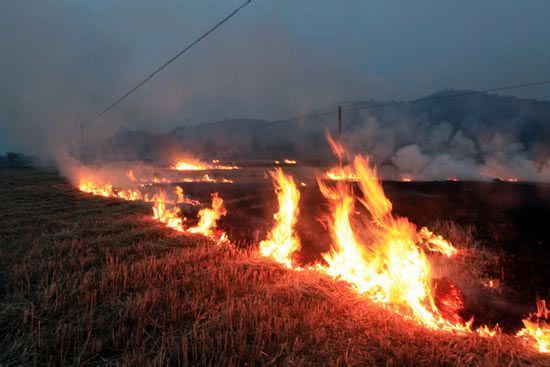
Summary: Urban industrial pollution, though heavy, is not banned, while straw burning pollution, though light, must be banned
Obviously industrial pollution is more serious! After all, straw is limited and is concentrated only in May, June, September and October each year; the rest of the time there is basically no straw burning. By comparison, however, the degree of industrial pollution is much greater; it can be said to continue every day of the 365 days a year, and the exhaust gas and dust produced by factory processing are large in volume, with pollution many times higher than that of straw.
That being the case, the question arises: why ban straw burning but not our country's industry? This is not to say that industrial production is not banned; if industrial production were banned, then our country's economy would probably also grind to a halt. For our country's high-energy-consuming enterprises, our country has implemented pollution control, and since last year has also begun implementing an environmental protection tax. Some high-energy-consuming and polluting enterprises are also gradually phasing out production capacity. This series of measures is also for the sake of making our environment cleaner and tidier.
As for the issue of straw burning, Science and Agriculture has also discussed it many times. One major reason for straw burning is still the current lack of rural labor in our country and the absence of suitable outlets for straw. From the farmers' perspective, the reason for burning straw is very simple: it is merely to reduce labor intensity. If the straw is not burned, how should the straw in the fields be handled? It has to be loaded onto carts, hauled, and unloaded, and in the end it is still unclear how it will be used, which makes them feel it is laborious.
In the past, many farmers also used straw to make farmyard manure, but today most young people hope to finish the field work as quickly as possible and then go out to work as migrant laborers. However, hauling straw in the fields delays them for a day; if they went to work instead, how much would they earn? In other words, farmers all feel it is not worthwhile.
However, Science and Agriculture still supports banning straw burning. Straw burning is not only a matter of the environment; when straw is burned, the diffuse smoke also obstructs visibility on highways near farmland, causing traffic accidents. Moreover, because of straw burning, farmland fertility also declines, and once the fire is not controlled well, it can also lead to hidden disaster risks across hundreds of mu of contiguous land and cause fires! In addition, because straw is excessively damp when burned, the burning generates large amounts of carbon monoxide, seriously polluting the air, and dust particles rise substantially, which is also a threat to the health of local people.
Therefore, although rural straw burning pollutes less than urban industrial pollution, from a social perspective it is still necessary to control rural straw burning. It is believed that in the future, discussion of returning straw to the field or straw treatment technology will more effectively control straw burning.