Peony bonsai is hailed as a national treasure, fully displaying the beauty of traditional flowers
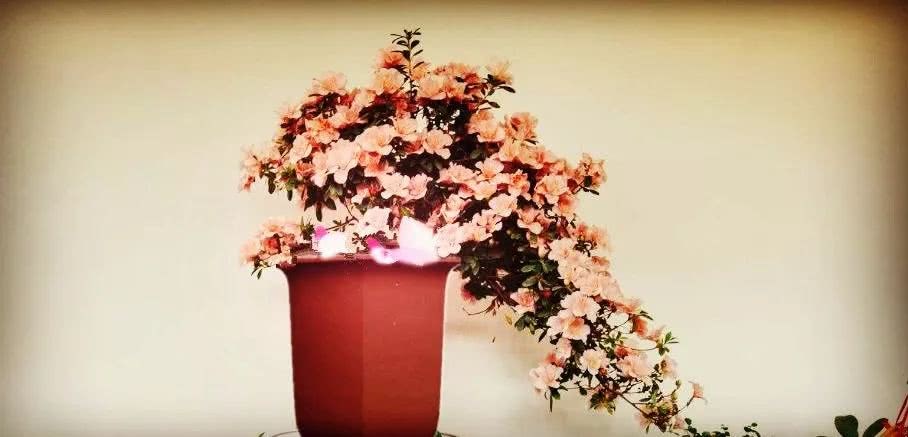
Bonsai is a unique and exquisite treasure of Chinese garden art, with a history of 1500 years in our country. It is a clever combination of pot cultivation techniques and plastic arts, an organic unity of scenery, pot, and stand, ranking alongside painting, calligraphy, sculpture, music, and other traditional arts. It is called "silent poetry, three-dimensional painting."
Peony bonsai is an emerging flowering type of bonsai. It combines the magnificent peony with the rustic and elegant art of bonsai, forming an artistic form with a unique Central Plains local style, and has been praised by experts and scholars in China's bonsai circles. Chinese bonsai master Chen Sifu praised it: "Peony bonsai displays the charm of bonsai and the poetry of painting." Chinese bonsai artist He Quansun said: "Looking at peony bonsai works comprehensively, they reflect beautiful forms, appropriate material selection, suitable and harmonious arrangement and unity. For example, 'Fragrance' has appropriate stone pairing, complementing hardness and softness; 'Competition' has ancient branches and trunks, with proper tension and relaxation; 'Hometown' has contention and response, full of wild charm; 'Tang and Song Legacy' has complete composition, elegant and luxurious; 'Withered Wood Meets Spring' has both withering and flourishing, interdependence of emptiness and substance, and so on. It reflects the artistic attainments of these peony bonsai. It is the sublimation of the artistic beauty of peony cultivation." Chinese bonsai artist Meng Lanting called peony bonsai "an unprecedented pioneering creation..."
Appreciation of peony bonsai is roughly the same as other bonsai. For example, first appreciate the scenery (the trunk scenery), second appreciate the pot, third appreciate the stand, fourth appreciate the scenery name (title), etc.
Appreciating the Trunk Scenery
Peony trunk scenery can be appreciated in all four seasons. In spring and summer, appreciate the flowers; in summer and autumn, appreciate the leaves; in winter and spring, appreciate the buds; in winter, appreciate the trunks. This provides richer appreciation content than ordinary peonies, breaking the centuries-old habit of only appreciating flowers.
Appreciating the Trunks:Peony branches and trunks are thick and sturdy, with grayish-brown or blackish-brown mottled bark. After plastic art treatment, they have the posture of a thousand-year-old pine, the bone of a century-old plum, either upright, suspended, lying, or slanting, "having the meaning of hiding the sky and covering the earth, with the momentum of a coiled dragon a hundred feet long."
Appreciating the Flowers:Peony bonsai is mainly for flower appreciation. Its flower forms are varied, and flower colors "red, orange, yellow, green, cyan, blue, purple" are all available, with fragrance overflowing. A pot with several graceful and charming peony flowers will leave you with endless aftertaste.
Appreciating the Leaves:Peony leaves are strangely beautiful, being pinnately compound leaves. In spring, the leaves are emerald green; after autumn frost, they turn yellow, red, purple, and other colors, very beautiful and eye-catching, with the charm of "layers of forest all dyed."
Appreciating the Buds:Appreciated from after leaf fall to early spring, the bud shapes and colors vary. Bud colors are red, pink, purple, etc.; bud shapes include torch type, eagle-beak type, narrow and long pointed type, etc., which can make people imagine endlessly.
Appreciating the Fruit:Its fruit is a strange fruit type, that is, about five oval fruits arranged in a radiating wheel shape. Seen from a distance, they look like "starfish" in the sea or the "five-pointed star" on a national flag.
Appreciating the Roots:After "root exposure treatment," people can directly appreciate the intertwined peony roots. This gives a strong sense of force and natural beauty, satisfying people's desire to return to nature.
Appreciating the Pot
The pot used for peony bonsai is very particular. It must use the pot as a "background color" to set off the "peony" painting. Whether using Jingdezhen colored porcelain or blue-and-white porcelain landscape pots, or selecting Yixing-produced purple clay pots, all must reflect the peony's elegance and luxury. The best are old famous pots with simple and elegant colors and diverse styles, with those from the Ming and Qing dynasties being the finest.
Mostly choose round shallow pots, ancient square seal pots, round Peng pots, and cylindrical pots. The most beautiful colors are antique bronze, agarwood, black-green, sesame, vermilion metallurgy, and grape purple. The best are those with "calligraphy" related to peonies carved on the pot body.
Appreciating the Stand
The placement of peony bonsai must be very particular. It is to elevate the spatial status of the bonsai, separate the bonsai from the ground and surrounding environment, make it prominent and eye-catching, and further set off the peony bonsai. The stand itself is a work of art. Nowadays, imitations of Ming and Qing styles are mostly used. Ming style is concise and generous, simple and vigorous; mostly made of yellow rosewood and red sandalwood, with lighter color and obvious wood grain. Qing style is finely carved and gorgeous, mostly using red sandalwood and mahogany. Both Ming and Qing craftsmanship achievements are relatively high.
Modern ones are mostly made of mahogany, red sandalwood, and boxwood, with fine and hard wood texture and bright and smooth color. In addition, imitation mahogany and red sandalwood are also used. Because of the fine craftsmanship, the ornamental effect is also good. Styles include "scroll stand," "fret pattern stand," "curio shelf stand," "small qin table stand," as well as "root carving stand," "Tang Sancai drum stand," etc. The best are those with peony patterns carved on the stand.
Savoring the Scenery Name
In bonsai appreciation, the title is very important. It can increase the ideological and artistic quality of the work and further express the artistic conception. Chinese painting stresses the artistic effect of the four-in-one integration of poetry, calligraphy, painting, and seal, and the title of peony bonsai, like the scenery, pot, and stand, is an indispensable part. Use concise and summarizing words and phrases to express the content and spirit of the work, playing the role of adding the finishing touch. You can use "National Beauty and Heavenly Fragrance" to reflect the position of peony in the hearts of Chinese people; you can express the beauty of peony and the beauty of bonsai at the same time; you can use "Tang and Song Legacy" to express the ancient history of peony, making people observe the present and trace the past, seeking endless flavor. In short, through the limited landscape in the pot, unlimited associations are produced, leaving the viewer with endless aftertaste.
In addition, the decoration of the pot surface is also very important, such as stone pairing, moss dotting, planting small turf, and treatment of terrain and landforms, placement of various accessories (pavilions, terraces, towers, attics, pagodas, waterside pavilions, rafts, bridges, figures, and various animals), etc.
Peony stone pairing is very particular. In Chinese painting, there is the "Peony and Stone Picture." Peonies are commonly seen accompanying Taihu stones, Ying stones, and bamboo shoot stones, making the landscape vivid and varied, the composition more perfect, and more full of mountain wilderness charm. Laying moss or grass makes the pot surface verdant, full of vitality, and closer to natural landforms. The placement of accessories makes the picture more poetic and picturesque.
In-depth Reading