Detailed Guide to Making a Peach Bonsai: Methods and Steps
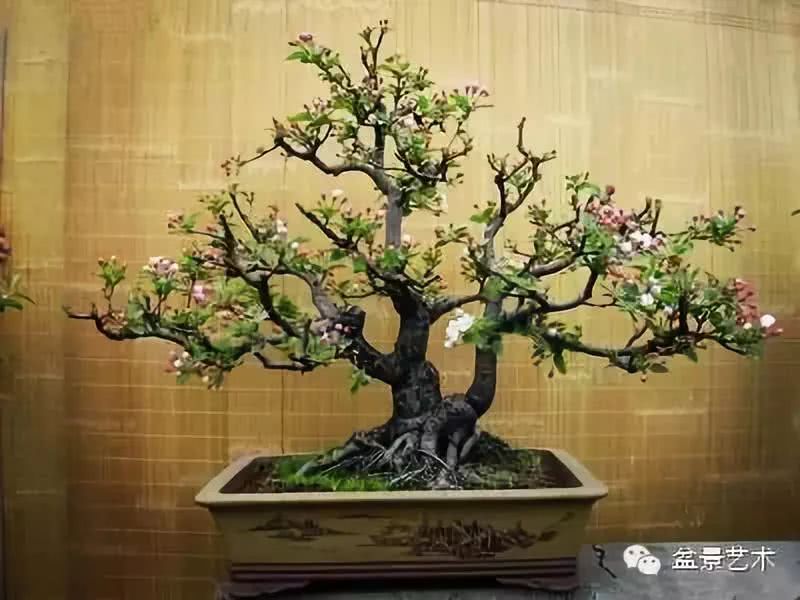
Peach is a deciduous small tree of the genus Prunus in the rose family (Rosaceae). The flowers are solitary, pink, blooming from March to April, opening before the leaves. The fruit ripens from June to September. Peach trees love sunlight, tolerate drought, and prefer fertile, well-drained soil. They are not tolerant of waterlogging; if soaked for 3-5 days, they may drop their leaves in mild cases or die in severe cases. Alkaline soil and heavy clay soil are both unsuitable for peach tree growth. Peaches enjoy high summer temperatures and have a certain degree of cold hardiness, but fear late frosts. They are best planted in a sunny location. The methods for making and cultivating a peach bonsai are as follows:
I. Seedling Sources
There are many varieties of peach. For bonsai, choose varieties with large fruit, good color, a dwarf habit, good natural form, late maturity, and a long ornamental period. Common ones include Shouxing Tao (dwarf peach), flat peach (Pan Tao), and snow peach (Xue Tao). Peach bonsai seedlings are usually obtained through grafting. Common rootstocks include mountain peach, wild peach, and Nanking cherry.
II. Shaping
(1) PottingPeaches have very strong sprouting ability. Generally, one-year-old seedlings potted up will bloom the same year. By the second year, they can bear fruit for viewing. For the pot, you can choose a plain glazed pot, a purple clay (zisha) pot, or a wooden pot. The potting soil should be loose, airy, and slightly acidic or slightly alkaline with a pH of 4.5-7.5.
(2) Shaping
First, you need to understand the physiological characteristics of the peach. In North China, the flower bud differentiation period for potted peaches is around early July. The flower buds are pure flower buds, growing in the leaf axils, and are larger in appearance compared to leaf buds. If they are compound buds, that is, when two or more buds grow side by side, the middle one is a leaf bud and the ones on either side are flower buds. Leaf buds that sprout in the same year are called secondary shoots or tertiary shoots. Usually, the flower bud quality on primary shoots is good, while that on secondary and tertiary shoots is inferior. You must have a good grasp of these characteristics to effectively preserve flowers and fruit.
Second, shaping and pruning. Shaping and pruning include winter pruning, summer pruning, and flower and fruit thinning. The main purpose of winter pruning is to maintain the tree shape, prevent it from becoming too sparse or growing too large, and determine the fruiting branches; the pruning amount often reaches more than half. Common techniques include renewal pruning (suo), thinning (shu), and heading back (jie). The purpose of summer pruning is to prevent excessive growth and promote flower bud differentiation. Common methods include bud removal (removing competing shoots and buds, latent buds, and one of the double buds sprouting at a node), pinching (suitable for vigorous trees and shoots, and can be done multiple times depending on growth), bending and twisting shoots (suitable for strong, vigorous upright shoots), girdling, and root pruning. Flower and fruit thinning is mainly for overly dense flowers and fruits. Potted peaches produce a large number of flowers; without thinning, nutrient consumption will be excessive, tree vigor will weaken, causing flower and fruit drop, and even flowers with no fruit.
III. Care and Management
(1) Location
Peach trees are a light-loving species. When light is insufficient, branches and leaves tend to grow leggy, flower bud quality is poor, and flower and fruit drop is severe. Therefore, peach bonsai should be placed in a location with sufficient light. It is best to raise the pot slightly to avoid water accumulation inside the pot, which can cause root rot.
(2) Watering
Peach trees have a relatively high water demand during the growing season, so water should be supplied adequately while ensuring no water accumulates in the pot. In mid-to-late July, potted peaches should undergo drought treatment to promote flower bud differentiation. The method is to control watering until the branch tips wilt, then water again, repeating for 7-15 days.
(3) Fertilizing
The amount of fertilizer applied should depend on the growth condition of the potted peach. For potted peaches that have not fruited or have fruited little, control the amount of nitrogen fertilizer, while for weaker trees, increase the amount of nitrogen fertilizer applied. Before flowering, apply 1-2 rounds of fertilizer solution. During the fruiting period, increase the application of potassium and phosphorus fertilizers.
(4) Preserving Flowers and Fruit
To reduce flower and fruit drop in potted peaches, attention should be paid to pollination and flower and fruit thinning. Borax can be sprayed during the flowering period. During the fruiting period, spray naphthaleneacetic acid (NAA) to improve the fruit-setting rate.
(5) Pest and Disease Control
Main attention should be paid to controlling peach bacterial shot hole disease, aphids, peach fruit borer, and oriental fruit moth.
Further Reading