Detailed Explanation of Cypress Bonsai Care and Management Methods
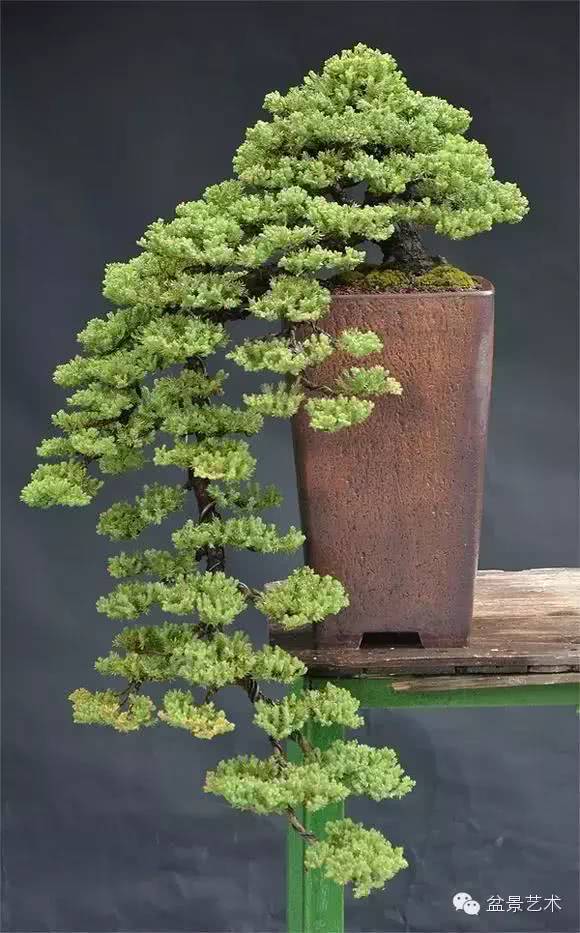
Cypress mainly refers to Platycladus orientalis, also known as Oriental arborvitae or Chinese arborvitae, belonging to the Cupressaceae family, genus Platycladus. It is an evergreen tree. Cypress varieties include the Thousand-Head Cypress: shrub-like with clustered growth, no obvious main trunk. Golden-Leaf Thousand-Head Cypress: a dwarf, compact shrub with golden-yellow foliage year-round. Spotted-Gold Thousand-Head Cypress: foliage is pale green.
The cypress has slender, gnarled branches and a majestic bearing, with an uneven crown and drooping branches and foliage. It stays green through all four seasons like a jade canopy. With its long lifespan and beautiful form, it is an important material for bonsai.
Cypress is native to China and is a temperate tree species. It prefers light but has some shade tolerance. It likes warm, humid climates but also adapts to dry-cold and warm-humid conditions. It is resistant to severe cold and can grow at -25 degrees, though its foliage turns brown under cold conditions. It is not demanding about soil and can grow in acidic, neutral and alkaline conditions. It has very strong salt tolerance and can grow in soil with a salt content of up to 0.2%. It is drought-tolerant and tolerant of poor soil, and can even grow in mountain rock crevices. However, it also has a certain tolerance for moisture. Its root system is well developed with many fibrous roots, and it tolerates transplanting. It has a long lifespan and grows slowly. The first foliage that cypress produces is needle-like, later it produces scale-like foliage, and after 2 years all foliage becomes scale-like. Generally, it grows relatively fast in the juvenile and young stages, grows at a medium to somewhat slow rate after maturity, and old trees grow even more slowly.
The making of cypress bonsai is divided into the following steps:
(1) Material selection:
The sources of cypress bonsai material are, first, the sowing method, starting cultivation and shaping from seedlings. Since young seedlings tolerate transplanting and are easy to shape, they can be gradually processed and styled according to design requirements. Although it takes a long time, the resulting bonsai is relatively ideal. Another method is collecting from the wild.
In nature, some old cypress stumps, after years of wind and rain, lightning strikes, and damage by animals or humans, form bizarre and varied shapes. Some are broken, some are hollow, some have exposed roots, and some have dead trunks. These are all ideal materials for making bonsai. Cypress has a well-developed root system, especially abundant fibrous roots. When digging, the main root can first be cut and the fibrous roots retained. The above-ground part should have the branches and trunk shortened, and the messy branches and foliage clustered on the branches and trunk should be cut off first, as well as long stalks and parallel branches, while taking care to retain dead trunks.
Because cypress grows relatively slowly, as many branches as possible should be retained. The best time for digging is after early winter and before early spring before buds have sprouted. When transplanting, a soil ball should be kept to protect the roots. When it is impossible to keep a soil ball, every effort should be made to keep the fibrous roots intact, and measures such as spraying water and shading should be used. It should be potted as soon as possible to reduce the time out of soil. Bare-root transplanting can be done during the rainy season.
(2) Examining the tree and determining the style:
Cypress does not fear severe cold; even under snow and freezing, it remains green as usual, hence the praise of "evergreen pine and cypress." In making cypress bonsai, the characteristics of ruggedness, uprightness and majestic momentum are often emphasized. Some old cypresses have bark that has already split, or are hollow, yet still have luxuriant branches and foliage and undiminished majestic appearance. Such old cypresses can be made into the dead-wood trunk style.
Some trunks naturally lean, and the mottled bark is extremely rich in an air of antiquity, so they can be made into the slanting trunk style, and depending on the condition of the branches and trunk, a single trunk or double trunk can be determined.
Some old cypresses grow on cliffs, in mountain streams or in rock crevices, with the trunk bending greatly from the root crown, like a waterfall plunging straight down with magnificent momentum, and can be made into the cascade style.
Some cypress stumps have twisted branches and trunks, bending left and coiling right like a swimming dragon, with peculiar and natural forms, and can be made into the lying trunk style or the coiled trunk style. Some have exposed or suspended roots, with old roots crisscrossing, and can be made into the exposed-root style bonsai. In short, according to the natural form of the cypress stump, one should follow its posture, capture its spirit, and highlight its inner nature.
The main pests and diseases of cypress include rust disease, cypress tussock moth and red spider mite.
Rust disease: The pathogen invades young twigs and overwinters on them. Galls form in strings on small branches, and the foliage clusters gradually turn withered yellow, then the small branches die. Control method: from July to August, spray 100-times Bordeaux mixture of equal proportions on the trunk, spraying once about every 10 days, for 3 consecutive sprays. In March to April, 1-3 degree lime sulfur mixture can be used.
In-depth reading