Current Soybean Price Market and Future Trend Analysis
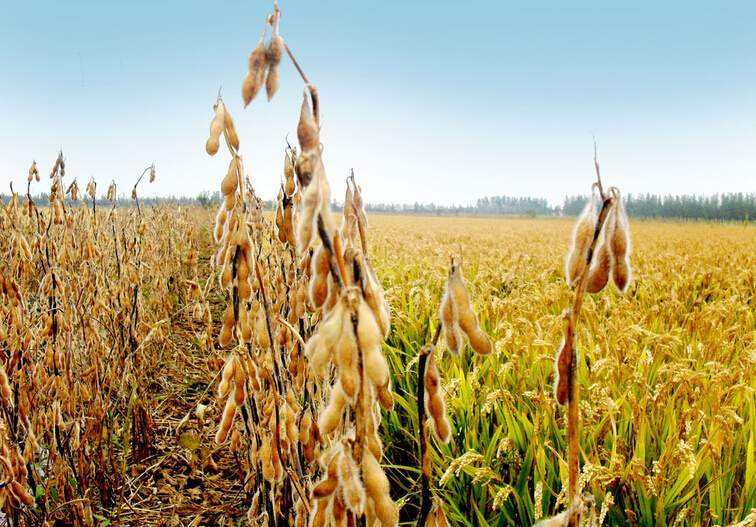
Summary: Analysis of the current soybean price market and trends
Judging from the current market situation, soybean prices in China are basically stable between 1.7-2.1 yuan per jin, with soybean prices in Northeast China relatively slightly lower, while prices in the Huang-Huai region and some soybean-producing areas in southern China have already exceeded 2 yuan per jin. Affected by this year's domestic soybean supply and demand situation, soybean prices overall opened low and moved high, and there may still be a slight room for increase, but do not get your hopes up too high. At the current price level, the room for increase is already very narrow.
Soybean prices in various regions
The local soybean purchase price in Lantian, Xi'an, Shaanxi is 2.15 yuan/jin, protein 42, moisture 12.5; the purchase price of new-season soybeans in Shigong, Guoyang, Anhui is 2.20 yuan/jin, cleaned grain, moisture 14, protein 42-43; the purchase price of Zhonghuang soybeans in Makou Town, Hanchuan, Hubei is 2.00 yuan/jin; the purchase price of local new-season large-particle protein soybeans in Dandong, Liaoning is 1.70-1.75 yuan/jin, moisture 13; the soybean purchase price in Baishan City, Liaoyuan, Jilin is 1.75 yuan/jin, unprocessed grain; soybeans in Binxi Town, Harbin, Heilongjiang are 1.84 yuan/jin.
From the overall price level, the pattern of high in the south and low in the north is very obvious. This is also closely related to the fact that northern China is the main soybean-producing area. Northeast soybeans account for half of China's soybean output, and supply is relatively sufficient, while the southern provinces still need to transfer grain from Northeast soybeans, so it is not surprising that the above situation has emerged.
Soybean supply and demand are tight, and there is still room for upward movement
As is well known, China is a major soybean importer. According to statistics, 30 percent of the world's soybeans flow into the Chinese market. However, this year, because U.S. soybeans have difficulty entering the Chinese market, a large reduction in supply is unavoidable. According to the latest data from China Customs, in September 2018 China's soybean imports amounted to 8.012 million tons, a month-on-month drop of nearly 13%. Moreover, in the coming months, soybean imports are likely to remain difficult to increase, and according to estimates by multiple media outlets, China's total soybean imports this year will shrink by 10 million tons. Although China's total soybean production has increased this year, it is still difficult to make up for such a large gap, and an upward movement in soybean prices is likely unavoidable.
Limited room for upward movement
It should be said that China's current soybean prices are already not low. Of course, "not low" here means compared with international soybeans. The price of imported soybeans is currently roughly 3,200 yuan per ton, while the price of imported U.S. soybeans is 3,600 yuan per ton. In other words, if China's current soybean prices continue to rise, then importing U.S. soybeans to make up for the domestic soybean supply shortage will become an inevitable event. In addition, this year Northeast China's soybeans suffered frost damage, and quality generally declined, with many cases of green-colored soybean kernels mixed in. In terms of quality, it is also difficult to support excessively high prices.
In summary, soybean prices now are actually still acceptable. If they can reach two yuan per jin, it is actually worth considering selling. Of course, based on China's domestic soybean supply situation this year, holding grain while waiting for prices to rise is also a good choice, and this year the room for soybean prices to fall is really very small, and the probability is really not high.