Is an orchid with stem rot beyond saving?
I am Haoshe Farmer, a farmer who loves wild orchids, telling things through my own practice and examples. If you like it, give it a thumbs-up and leave your comment.
Orchids have three rots: soft rot, root rot, and stem rot. Relatively speaking, stem rot is the hardest to treat, but it is not absolutely unsolvable. The two pots of orchids below are not any famous varieties, just two diseased orchids that Haoshe Farmer, a novice, rescued.
The first pot had soft rot. In the May video everyone knows how it was handled; if you haven't watched it yet, you can replay it and take a look. Now they have put out new shoots, and the shoots still feel quite vigorous.
The bottommost picture is stem rot. What makes stem rot different from soft rot is the position and order of the withered leaves, among other things. Actually, for this pot of stem-rotted Cymbidium faberi, Haoshe Farmer did not do much handling at all; even now, the diseased plant has still not been cut away. Through my observation, I think there is one thing that is key to bringing it back to life, rather than the medicines that most orchid growers search everywhere for.
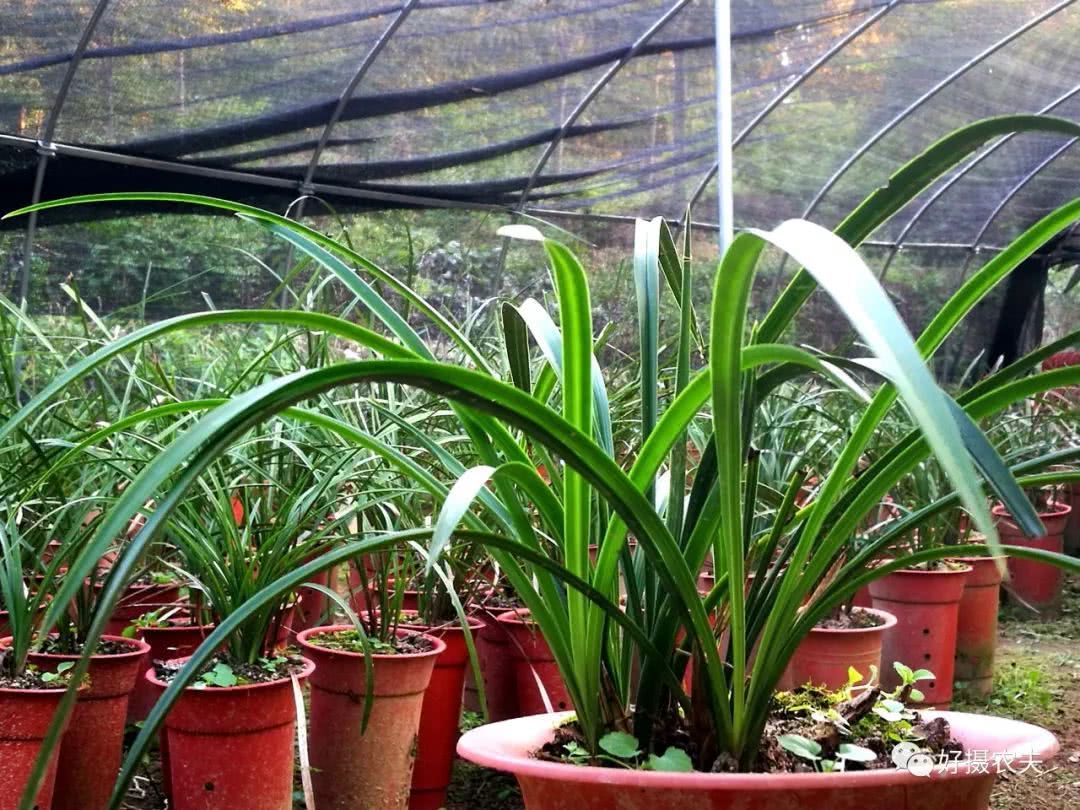
This pot of Cymbidium faberi can now be root-trimmed, reset, and repotted; the new shoots' leaves are robust and strong. So what method did I actually use? When I first discovered it had developed the disease, I dug open the potting medium near the roots, leaving most of its pseudobulbs exposed outside to sun. I did not cut away the diseased branches; nor did I empty the pot and change the medium. I only sprinkled some mixed powder of carbendazim and mancozeb on the exposed area, and placed it outdoors under tree shade, without even any rain-shelter measures. Just like that, it later successively put out these new shoots.
Orchid growers can refer to this and learn from it. If you have any other questions, you are welcome to leave a message in the comment section.