What kind of melon is the cut melon, and does it really keep growing?
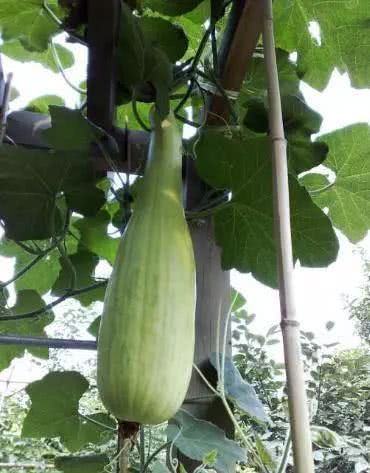
Summary: What kind of melon is the cut melon? Does it really keep growing?
Many people have seen a gecko's tail grow back after being cut off, and have also seen a cut earthworm regrow the part it lost, but there is a melon in the world that you can trample as you please and cut as you please; after you cut it off it still does not become arrogant or impatient, does not lose heart or feel discouraged, and steadily regrows its lower half, then once again lets you cut it off and eat it. This existence, which only knows how to give and does not ask for anything in return, is what the title refers to - the cut melon.
One of the amazing things about the cut melon is its constant growth, so that it can be cut and eaten again and again. The cut melon actually belongs to a variety of pumpkin, and its growing conditions are basically the same as those of ordinary pumpkin (that is, winter squash), but unlike pumpkin, the healing hormone in the cut melon is much higher than in pumpkin, so it can promote the continuous healing of wounds. After the lower half of the cut melon is cut off, it can produce healing hormone, block the contact of the cut wound with air and bacteria, and continuously promote the formation of new tissue, so the cut melon can be eaten whenever you look at it, and you can eat fresh melon every day.
The second amazing thing about the cut melon is that although it can continue to grow after being cut, it also has a limit to its growth if it is not cut. After reading the first amazing point, everyone will think: if the cut melon is not cut, then can it keep extending, growing to several meters or even more than ten meters tall? The facts may disappoint everyone. The cut melon secretes a large amount of healing hormone when it is cut. If it is not cut, then it can only grow to a length of about 1 m, and the longest is about 1.5 m, so the cut melon cannot grow endlessly.
The third amazing thing about the cut melon lies in endless imagination. Although Science Xingnong has also seen cut melons, eaten cut melons, and seen cut melons being cut, I believe many people have also seen cut melons being cut, but what everyone usually sees is cut melons being cut horizontally. Has anyone seen a cut melon cut vertically? Science Xingnong is also very curious, but can only wonder in the mind, and has not really seen what the condition of a cut melon is like after it is cut vertically. Those who are interested might as well plant a few, and when the cut melons have grown, take a knife and make one vertical cut to observe.
Since the cut melon is so amazing, then how exactly should the cut melon be planted?
Apply enough base fertilizer. The growing environment of the cut melon is similar to that of pumpkin, and it is also a vegetable type that has relatively high fertilizer requirements, so applying 10-20 kg of farmyard manure around each cut melon plant is more suitable. If it is planted in front of your own home, there is no requirement for density. If it is planted on a large scale for sale, a row spacing of 2 m and a plant spacing of 1 m are more suitable.
Raise seedlings early. Cut melons that reach the market early can have a relatively large advantage in price. Although cut melons are crisper and sweeter than ordinary pumpkin and more delicate than winter melon, because pumpkin is easier to plant, there is no advantage if they reach the market at the same time as pumpkin, so seedlings should be raised early, so that they can reach the market earlier than pumpkin.
Scientific management. From sowing to harvest takes about 80 days. During the planting process, attention should be paid to topdressing; topdressing can use compound fertilizer or farmyard manure. After fertilizing, pay attention to watering to increase the vegetative growth of the cut melon. Making the melon trellis still requires a certain input of labor, but it is indispensable in the management process of the cut melon. Pay attention to reasonable leaf thinning for ventilation, and pay attention to pressing the vines, and you will have a good harvest.
This is Science Xingnong. You are welcome to add a follow, and let us grow knowledge together.