Siberian squill is extremely cold-hardy; even at minus 20 degrees in winter, it will not freeze to death.
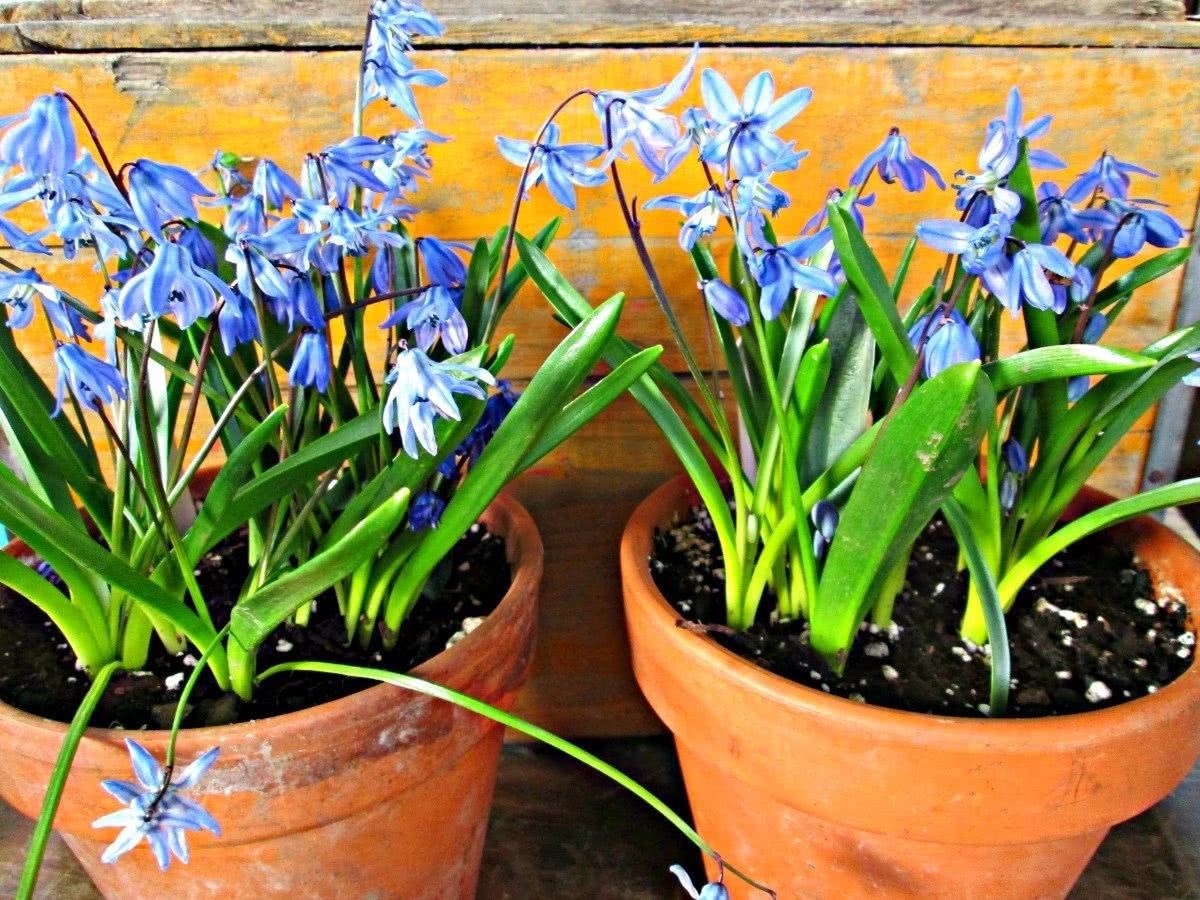
If friends in the north want to plant a large patch of small blue flowers in their yard, then the bulbous flower introduced below is very suitable. It is the Siberian squill, also called Siberian scilla, and it is an extremely cold-hardy bulbous flower.
Siberian squill is a flowering plant propagated by bulbs. The plant is very small and compact, suitable for planting. It can be grown as a large patch in a yard, and it can also be grown in a small flower pot to become a very charming little potted plant. After spring warms up, it can produce charming blue flowers.
Siberian squill likes a year-round warm, humid and semi-shaded environment. In positions with little demand for light, it must still be kept ventilated and exposed to some light, avoiding excessively high temperatures.
The most amazing thing about Siberian squill is its cold hardiness. It can survive when the lowest winter temperature is around minus 20 degrees. Of course, if you want it to grow well, you should maintain a cool environment year-round. It grows most vigorously at temperatures between 15 and 16 degrees, and you can choose to cultivate it after the weather turns cool in autumn.
Siberian squill fears heat and dryness. When summer temperatures are high, the leaves will wither and it begins to enter dormancy. At this time, the soil should be kept dry, and once planted in the soil, watering should be avoided. Only after the weather turns cool in autumn can watering resume.
To cultivate Siberian squill, you need to prepare some loose, fertile and well-drained sandy soil. During the growing period, water regularly to keep the soil moist. You can use leaf mold, peat soil and an appropriate amount of river sand.
Siberian squill plants can generally grow to 10-20 cm tall. They are propagated by bulbs. In autumn, you can dig up their bulbs for division propagation. Some flowers can also produce seeds.
Cultivation can be carried out in autumn. For Siberian squill, you can directly dig some small holes in the yard and bury its bulbs for planting, then water thoroughly. Before the weather turns cold in autumn, you can regularly supply water to keep the soil moist, so that they can grow very thin sword-shaped leaves.
Siberian squill originally grows in the Eurasian region and is very cold-hardy, so it can be grown outdoors in the north.
When caring for Siberian squill, avoid placing it in a spot with excessive direct sun. It is best to grow it in a place with scattered light. You can even plant them under tree shade. Potted Siberian squill can be grown on an east-facing balcony or windowsill, with appropriate scattered light each day, and it will grow well.
Siberian squill is also very easy to care for when grown in a flower pot. You can place several bulbs in each pot. After planting, water thoroughly and place it in a cool, ventilated spot.
After spring warms up, Siberian squill can produce charming blue flowers. After the flowers fade, do not cut off the leaves immediately. Wait until its leaves naturally turn yellow and dry up before cutting them off.