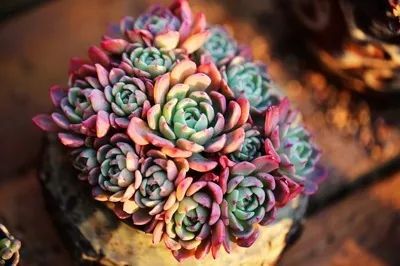
In late autumn, plump fleshy colors adorn the branches
?
Set us as a super follow right now~
The dew air is cold
It will condense
Autumn succulents are truly a gift from heaven,
The splendor of colors, the shifting of layers,
How I wish, there were a doorway,
In the morning, sunlight falls on the grass.
We stand, leaning on our own door and window,
The door is low, but the sun is bright.
The grass is setting its seeds, the wind is shaking its leaves,
We stand, not speaking, and it is simply beautiful
In late autumn, the succulents quietly grow more beautiful, and the sense of achievement surges. Every succulent lover has always dreamed of having a succulent garden like Su Jun's, and also wants someday to be like May, defying everything for the things they love. When it comes to growing succulents, we are serious!
In October, with ample sunlight and large temperature differences between day and night, peony-type plants and some Aizoaceae plants enter their flowering period. The leaves of Crassulaceae plants begin to turn red.
Whether the succulent variety is a summer-growing type or a winter-growing type, water thoroughly before noon whenever possible.
Winter-growing succulents should be given attention to ventilation; only in this way can the plants grow healthily.
And for those summer-growing succulents placed outdoors, when their leaf color turns yellow, move them into a greenhouse (indoor environment) promptly.
In late autumn, as temperatures drop, some varieties that cannot tolerate cold should be protected from frost damage.
At this time, Lithops and Conophytum can be sown.
By November and December, the air becomes dry and daylight hours are relatively shortened, so succulent plant care should focus mainly on cold protection, warmth retention and increasing light. Summer-growing types grown in a greenhouse should be given attention to watering, and the best time to water is in the evening.
<< 滑动查看下一张图片 >>
As deep autumn arrives, let me introduce the precautions for caring for succulent plants, hoping it will help the many succulent lovers
1. Make sure the temperature stays above 5 degrees; if that really cannot be guaranteed, then at least keep the temperature above zero degrees.
2. For succulent plants received from online shopping, after bringing them indoors do not open the package immediately; first leave them for a few hours to settle, and open them only after the succulent plants have adapted to the indoor temperature.
3. The lower the temperature, the harder and slower it is for succulent plants to establish roots. You can cover the pot with a layer of plastic film or add a transparent lid to increase temperature and humidity, which helps them establish roots quickly. Note that you cannot keep it covered all the time; it needs to breathe and be ventilated.
4. If the temperature is too low, below 15 degrees, do not fertilize the succulent plants. At low temperatures the fertilizer releases slowly, and fertilizing succulent plants themselves also has no obvious effect.
5. Make sure there is sufficient light; place the succulent plants in the spot with the longest sunlight exposure, and you can change their position between morning and afternoon.
6. Below 5 degrees, stop watering. If you do water, choose a clear morning and water according to the temperature, humidity and weather.
7. Although it is winter, places in the north with heating can still have insects, so pay attention to spraying insecticide to prevent pests.
8. Promptly clean up leaves that have turned to mush or dried out.
9. At low temperatures, try to avoid repotting; if you must repot, do it with the soil.
10. For flowering succulent plants, if you do not like the flower spikes, cut them off; if you like them, keep them, and spray some insecticide on the flower spikes to prevent mealybugs.