Aloe vera is small but powerful, and its amazing benefits should not be underestimated
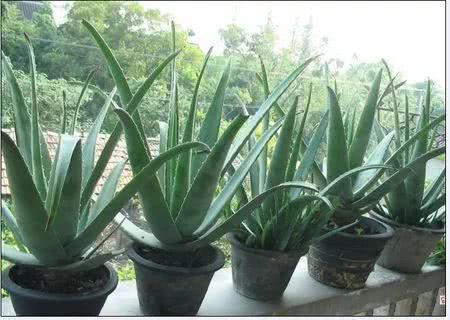
Aloe, sometimes described as a "miracle plant," is a short, clustered shrub. Aloe is a genus containing more than 500 species of flowering succulent plants. Many aloes grow in North Africa.
The leaves of aloe are fleshy, upright, and form dense rosettes. Many uses are made from the gel obtained from the plant's leaves, and in our daily lives the most commonly seen types are these few kinds of aloe.
1: Curaçao aloe, from the Curaçao islands and Barbados in the West Indies of the Americas. It likes dry conditions, can tolerate full sun, needs little watering, and its propagation methods are also cuttings and division.
This type of aloe is a favorite among women, and let me slowly tell you about its benefits.
Benefits: beauty and skin care. The polysaccharides and various vitamins contained in Curaçao aloe have good nourishing, moisturizing, and whitening effects on human skin. Curacao aloe is the fresh aloe leaf most suitable for direct beauty use, namely Curaçao aloe. It has astringent, softening, moisturizing, anti-inflammatory, and whitening properties for the skin.
It also helps relieve hardening and keratinization and improve scars. It can not only prevent fine wrinkles, eye bags, and skin sagging, but also keep the skin moist and delicate. At the same time, it can also treat skin inflammation and has good effects on acne, freckles, pimples, as well as burns, cuts, and insect bites. It is equally effective for hair, keeping it moist and smooth and preventing hair loss.
Method: Facial beauty care: apply fresh leaf juice to the face in the morning and evening for 15-20 minutes. If persisted with, it will make facial skin smooth, fair, tender, and soft, and it also has the effect of treating melasma, freckles, and age spots.
Homemade aloe toner: take the juice and add a little water, then apply it to the face for beauty care. After washing the hair, apply it to the head to relieve itching, prevent gray hair and hair loss, and keep the hair black and shiny. People with baldness may also grow new hair.
Homemade aloe moisturizing cream: prepare 250 grams of aloe leaves, 1 cucumber, 1 egg, flour and sugar. Wash the aloe leaves and cucumber, crush them separately, and extract the juice with gauze; crack the egg into a bowl, then add a small spoon of aloe juice, 3 small spoons of cucumber juice, and 2 small spoons of sugar and stir thoroughly to mix; add about 5 small spoons of flour or oat flour and mix into a paste. If an allergic reaction occurs while using aloe for beauty care, stop immediately and seek medical attention.
2. Aloe nobilis, native to the Greater Karoo and Little Karoo plateaus of South Africa. It likes warm, dry environments with soft but ample sunlight, tolerates partial shade and drought, and is averse to full sun and waterlogging. Its root system is very strong, and it likes loose sandy soil and relatively deep pots. Its main propagation methods are division and cuttings.
Aloe nobilis
This aloe is the type most often seen in flower markets. Generally, households that like growing flowers will also keep one or two pots. If you go to some office buildings, you will inevitably see its beautiful presence.
Growing method: this aloe belongs to the succulents and does not like water. Its growing method is to water it less. It has very strong reproductive capacity. After growing for a period, it will send out small young shoots, and when you have time you can transplant the small young shoots out to form a new pot of life.
Benefits: generally, the people who buy this kind of aloe the most are families who have just finished renovating their homes. After renovation, homes will more or less have some formaldehyde, and most families wait a while before moving in, which is also to remove formaldehyde. Generally, green plants are used most often to achieve the effect, and among green plants, the one bought most is this Aloe nobilis. First of all, it is easy to grow.
After all, no one lives in the new home, and no one takes care of these plants. Aloe nobilis meets these requirements. As long as it is planted in soil, watering about once every ten days is enough for it to survive tenaciously. At the same time, it is also a type of succulent, so it will absorb at least some radiation. That is why you can also see it at workstations in office buildings. One thing to remember: this kind of aloe cannot be eaten or used for beauty care; it can only be used to purify the air.
3: Aloe arborescens, currently commercially produced in Japan. Japanese people consider Aloe arborescens to be the best medicinal aloe variety. It tolerates drought, does not tolerate waterlogging, and is prone to root rot when the soil is too wet. Its growth rate is average, and it is relatively cold-tolerant in winter.
Home-grown Aloe arborescens
This kind of aloe is relatively rare on the market. Unless you specifically tell the seller you want this type, it will not be available. It is also rarely seen in homes. It can only be used medicinally, and its effects are quite good. Especially after being bitten by mosquitoes in summer, applying a little of its juice can immediately relieve itching and reduce swelling.
Benefits: relieving itching and reducing swelling
The content of this article comes from the internet. If there is any infringement, please contact us for deletion.
-the end-