Rice paddies stocked with Azolla: weed suppression and natural nitrogen fertilizer, so why can't Taiwan, China scale it up?
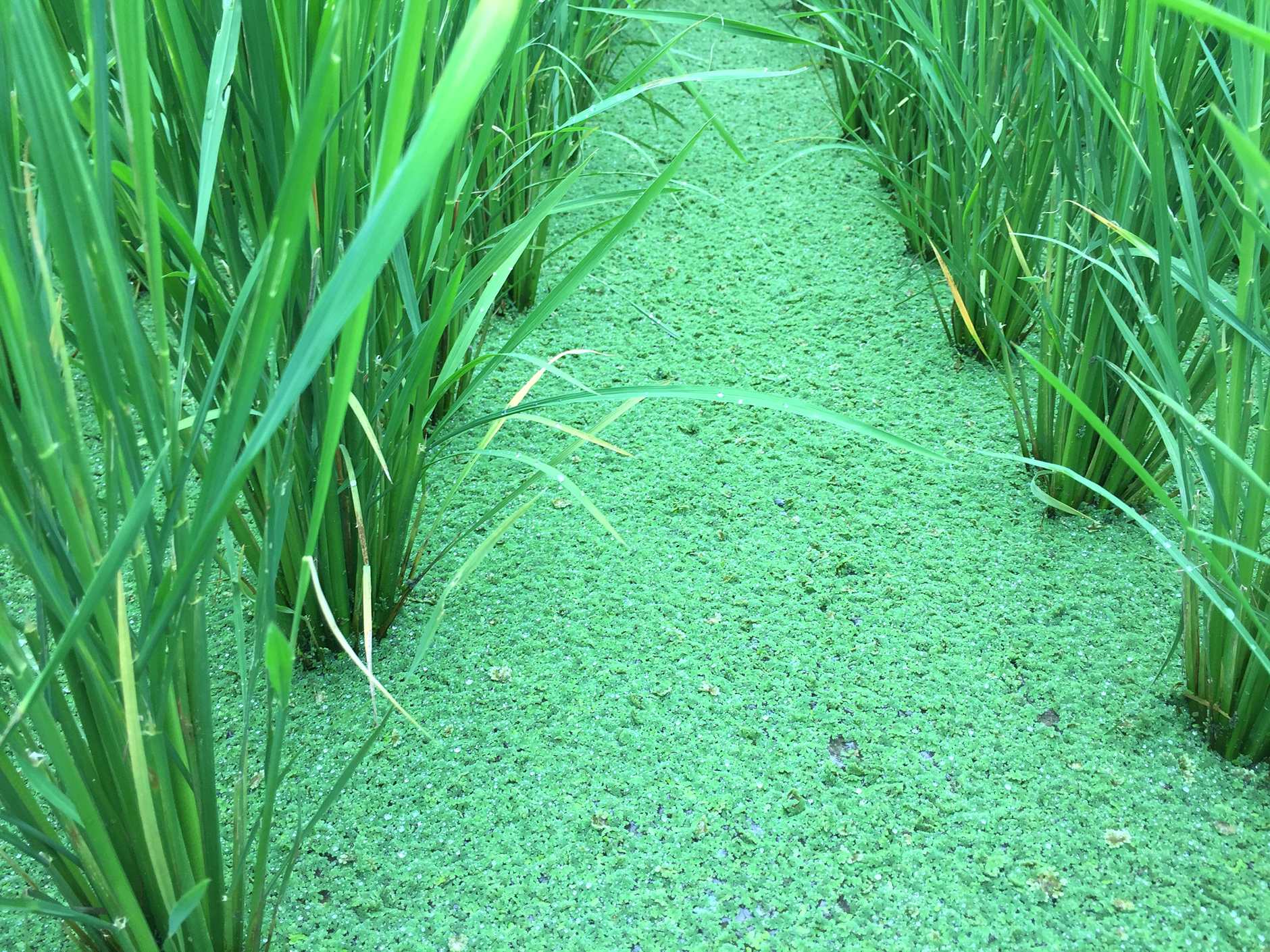
There is a clever method for suppressing weeds in eco-friendly rice paddies! The Taichung District Agricultural Research and Extension Station of the Council of Agriculture (Taichung Station) experimented with stocking rice paddies with the aquatic fern "Azolla," which not only suppresses weeds and increases soil nitrogen but may even boost rice yields. Yet despite these many benefits, after years of promotion few farmers have tried it. The main reason is that Azolla seed stock is scarce; farmers must have a pond to cultivate Azolla to produce enough for their rice paddies, so farmers are reluctant to try it.
Female farmer Yang Shu-hua said that Thailand's KKF natural farming method also promotes this practice, but in Thailand rice paddies hold water year-round, so Azolla can keep reproducing and growing. When she tried it in Tainan, the rotation between flooded and dry conditions prevented Azolla from growing steadily. She tried cultivating Azolla in a washbasin, "but placed on one or two fen of field, the amount of Azolla is simply not enough." She noted that golden apple snails also eat Azolla, and rice paddies face more golden apple snails, "if the golden apple snails all eat the Azolla and don't eat the rice, that would be great too."
Yang Shu-hua: In practice it did not go smoothly
Yang Shu-hua once actually stocked Azolla in a rice paddy, but it did not go smoothly. She said she went to a water resource area to scoop up Azolla to stock, but the amount was insufficient and could not cover the entire rice paddy. In the early stage of rice growth, when weed suppression is most needed, Azolla reproduces slowly, making it hard to achieve the effect.
Although Thailand's KKF promotes this practice, Yang pointed out that locally rice paddies hold water year-round, so Azolla can keep reproducing and growing, whereas her own fields use rotation between flooded and dry conditions; when the rice paddy dries out, the Azolla dies with it. Even if it can become nutrients in the field, the next rice crop will again face the predicament of having no Azolla to stock. Yang also tried cultivating Azolla in a washbasin, "but placed on one or two fen of field, the amount of Azolla is simply not enough." She also had no extra pond to cultivate Azolla, so in the end she had to give up.
Yang believes that Yilan, with rice paddies that hold water year-round, might be more suitable for trying to stock Azolla in fields. However, golden apple snails also eat Azolla, and rice paddies face more golden apple snails, "if the golden apple snails all eat the Azolla and don't eat the rice, that would be great too." It is just that a balance must be found between suppressing weeds and the golden apple snails competing for food.