Can't grow orchids well? First understand the three dos and three don'ts
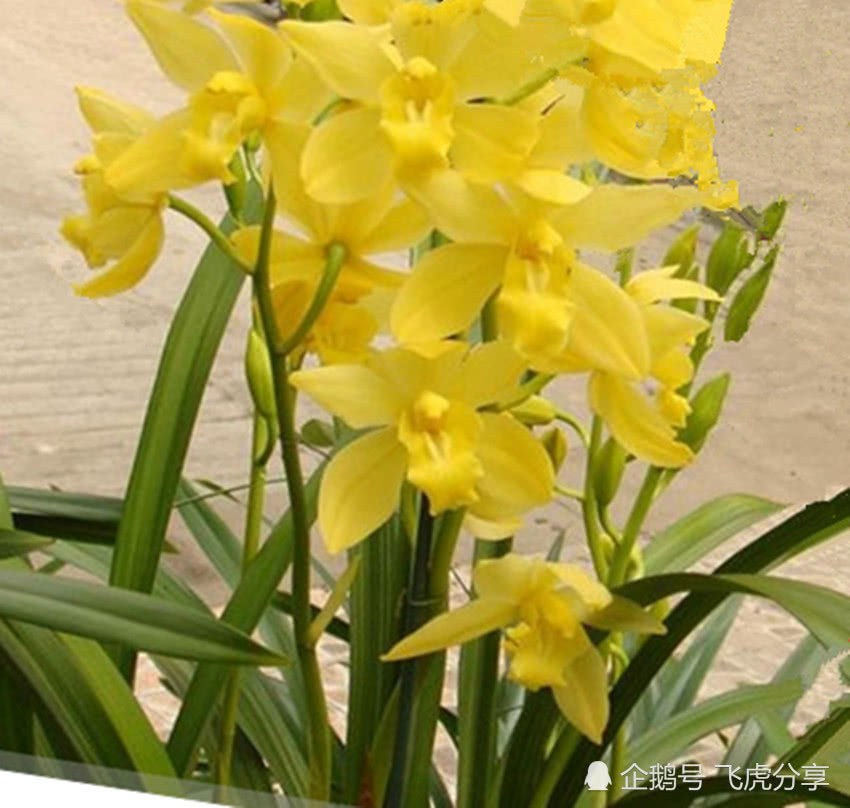
Almost everyone who grows orchids goes from beginner to expert gradually; everyone starts out not knowing how and slowly becomes skilled. Although orchids are more delicate than ordinary flowers, as long as you understand their habits and the key points of cultivation, caring for them is actually very easy. Throughout the entire process of orchid care, the most important thing is the "three dos and three don'ts."
Three dos for growing orchids. 1. Ventilate frequently. The issue of ventilation has been mentioned many times before; ventilation plays a key role in growing orchids well. A well-ventilated environment allows moisture in the pot to evaporate quickly, speeds up air circulation inside and around the pot, prevents yellow leaves and root rot, and further prevents the occurrence of pests and diseases. 2. Observe frequently. Growing orchids requires care; you should often observe the growth of the orchids, detect problems early and solve them, handle them promptly - cut off what should be cut off, change the soil when it should be changed, disinfect when disinfection is needed - thereby reducing the occurrence of seedling collapse, root rot and death. 3. Look more and learn more. Most orchid growers are beginners with no cultivation experience; read more books on cultivation, learn more from others' growing experience, make up for your shortcomings by learning from others' strengths, and then, combined with your own actual situation, figure out an orchid-growing method that suits you.
Three don'ts for growing orchids. 1. Don't water too frequently. Many novice orchid growers, as soon as they see the surface of the flower pot dry out, can't wait to water, afraid the orchid will dry out. In fact, although the pot surface is dry, the inside is still very wet; if this continues long-term, the surface looks very dry while the growing medium inside is soggy, which leads to an insufficient oxygen supply to the roots, causing root rot and the occurrence of orchid shoots. But you also can't let it dry out completely; completely dry growing medium is also bad for orchid growth. Therefore, to grow orchids well you need to first learn how to water.
2. Don't fertilize arbitrarily. Although orchid roots grow thick and strong, they are most afraid of arbitrary fertilizing. Some flower lovers, in order to make orchids grow fast and well, often apply all sorts of messy fertilizers to the orchids, and the result is the opposite of what they wanted. In fact, when growing orchids, if you choose some fertile leaf mold or fully fermented bark, pine needle soil and other growing media, there is simply no need to fertilize; the nutrients in the growing medium are enough for the orchid to grow for two or three years, and by then you only need to change the soil, so it's better not to use growing media that have no nutrients at all. Furthermore, during care, if fertilization is truly needed, you should choose some well-fermented organic fertilizer solution or special orchid fertilizer, making it thinner than thin and lighter than light, and never too much or too concentrated.
3. Don't place it arbitrarily. When growing orchids at home, don't just find any spot and put it there. There is a saying about orchids: "love the morning sun, avoid the setting sun, like southern warmth, fear northern cold, and dread smoke and dust." In summer, indoors it should be placed in a bright spot, avoiding direct strong sunlight; if conditions permit, it is best to place it outdoors, and if there are trees around, that is best of all, but shade it in good time to avoid scorching sun. In this way the orchid can receive fresh air and the nourishment of rain and dew. In winter it should be placed indoors in a spot with scattered light, and you should increase the ventilation and humidity of the environment so that it grows robustly.