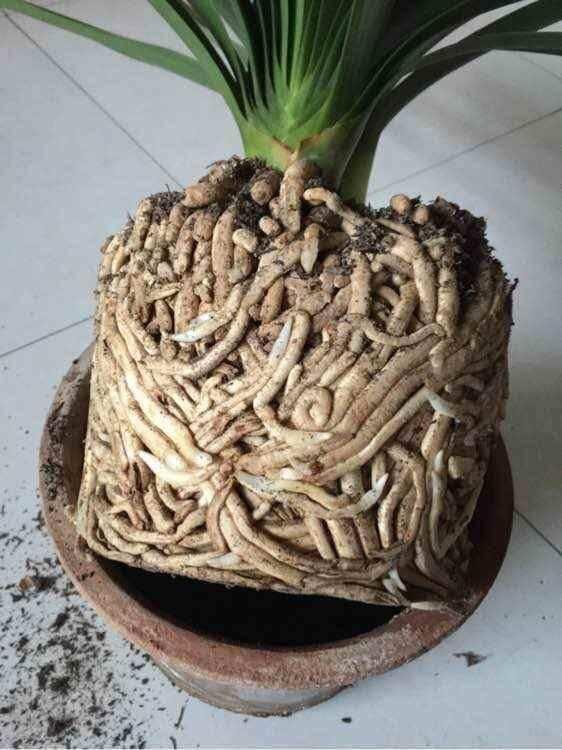
When repotting a clivia, the roots had grown like this, and gardening friends said outright they wouldn't dare keep one
Clivia, this flowering plant is well worth growing at home, because when it isn't blooming, its leaves are emerald green and glossy, and it can be enjoyed as a foliage plant. Once it blooms, the flowers are bright and elegant, and as a flowering plant it is in no way inferior to other flowers. Clivia was loved by the public many years ago, especially during the sky-high clivia speculation craze years back, though it has now returned to reason. This flower still has no shortage of gardening fans who love it; some people grow one for decades, and it can bloom two, even three times a year. However, there is still a lot to know about clivia.
When repotting a clivia, seeing the roots grow "like this," a gardening friend said: I wouldn't dare keep one
It is already late autumn now, and if you don't repot your flowering potted plants soon, you'll have to wait until next year. That's because for most flowering plants, the best time to repot and change the soil is generally spring and autumn each year. The reason is that in these two seasons the plants grow vigorously and the climate is just right, so the survival rate after repotting is very high. For a plant like clivia, the root system can be said to be extremely well developed. A few days ago, a gardening friend left me a message saying that when repotting his clivia, he was stunned. He had known clivia roots were vigorous, but never expected they would grow so vigorously!
Why do clivia roots grow so vigorously
First, from the perspective of the clivia itself, its roots are fleshy roots, a typical water-storing plant. When the pot has been dry for a long time, the clivia can still live a while longer on the nutrients stored in its roots beforehand. Second, from the perspective of external care. Everyone who grows clivia knows this flower is not easy to grow, especially young clivia plants, which grow very slowly. So people fertilize more. Fertilizing too frequently, especially with nitrogen fertilizer, will cause the clivia to "grow leggy." The result of leggy growth is also more and more roots, until even the pot can't hold them. The clivia of the gardening friend below was the same, the pot was even split open.
Quite a few gardening friends with trypophobia, upon seeing clivia roots, swear off growing it ever again. Actually, vigorous clivia root growth is a good thing, it's just that you have to keep it in moderation. For example, in daily care, reduce the frequency of fertilizing a bit. In every season, fertilizing must be kept in moderation. In the peak growing season, apply less nitrogen fertilizer. Of course, just fertilizing less isn't enough. You also need to regularly "prune old roots." When repotting and changing the soil for clivia, check the roots; if they have grown very lush, then it's best to find a pair of scissors and cut off the older roots, so that new roots will grow and the pot won't be split open later.
After cutting off the old clivia roots with scissors, it is recommended to soak them in potassium permanganate solution for 10 minutes, which can serve to sterilize and disinfect; finally, before transplanting into new nutrient soil, you can apply a little rooting powder to the damaged parts of the roots, or dissolve aspirin tablets in water to make a rooting solution and soak them in it. This helps the clivia survive. Many people say that changing the soil in a flower pot is equivalent to major surgery for the plant. Although there is risk, for a plant like clivia with abnormally developed roots, if you don't repot and don't check the roots for a long time, the consequences will be more serious, causing the roots to lack oxygen and rot, until the plant dies.
That's all for sharing about clivia, thank you for reading!
Remember to like and share~