A Detailed Guide to Appreciating and Caring for Bonsai Ficus
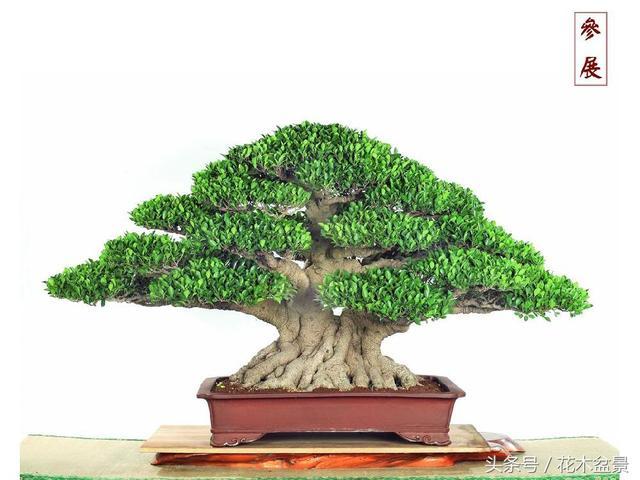
People who love flowers, trees and bonsai are all people of refined taste!
Ficus is the general term for plants of the genus Ficus in the mulberry family (Moraceae). More than 800 species are known worldwide, mainly distributed in tropical regions, and most concentrated in tropical rainforests. There are about 100 species of Ficus in China, of which 67 are distributed in Yunnan, and 44 in Xishuangbanna, accounting for 44.9% of China's known total of Ficus species and 5.5% of the world's total.
Ficus bonsai has a unique appearance and extremely high ornamental value. Among household plant bonsai, ficus bonsai is relatively popular because it stays green all year round. The leaves of the ficus are leathery, dark green and glossy, evergreen through all four seasons; the bark is dark brown, the branches are soft, and it has powerful aerial roots in the form of tendrils. Some aerial roots hang down and enter the ground, shaped like pillars; some wind and droop downward, with gnarled and intertwining roots, quite spectacular. Ficus bonsai is a sculpted landscape that symbolizes vitality, and how to grow ficus bonsai has become something many cultivation enthusiasts urgently want to know.
1. Light and ventilation: For ficus, the suitable growing temperature should not differ too much between day and night (a difference of 10 degrees) or it will very easily drop its leaves and die. Normally, pay attention to placing it in a place with plenty of light and light transmission; in summer, pay attention to appropriate shading. When the temperature is below 32°C, it is best not to shade it, so as to avoid leaf drop. Ficus is a subtropical plant and likes a sunny, well-ventilated, warm and humid environment. It is drought-tolerant and tolerant of partial shade. Generally, it should be placed in a ventilated, light-transmitting spot, and there should be a certain level of air humidity. Insufficient sunlight, poor ventilation, and no certain level of air humidity can make the plant turn yellow and dry out, leading to pests and diseases, and eventually death.
2. Watering: Ficus is planted in pots. If water is not supplied for a long time, the plant will wither from lack of water. Therefore, observe it promptly and water according to the wetness or dryness of its soil to maintain soil moisture. Water until water seeps out of the drainage hole at the bottom of the pot, but do not give half-hearted watering (that is, wet on top and dry below). After watering once, wait until the soil surface turns pale and the surface layer of soil is dry, then water a second time. Never wait until the entire pot of soil is dry before watering. In hot seasons, often spray water on the leaves or the surrounding environment to lower the temperature and increase air humidity. Water less often in winter and spring, and more often in summer and autumn. Ficus is relatively difficult to care for in the north.
3. Fertilizing: Ficus does not like heavy fertilizer. Applying just over 10 granules of compound fertilizer each month is enough. When fertilizing, be careful to bury the fertilizer into the soil along the edge of the flower pot, and water immediately after fertilizing. The main components of the fertilizer are nitrogen, phosphorus and potassium.
4. Pruning: For a wild stump to become a bonsai specimen, pruning is a very important procedure. In the first year, first cultivate its root base and nurture its vitality, only removing buds that are in the wrong position. Only in the second year, after the branches have grown thick and become woody, may you use the shears. Pruning is primary and tying is secondary. It is advisable to prune once a year; for vigorously growing ones, you may prune twice. After the forked branches growing from the shortened branches become thick and strong, prune again. Repeat this process. If you prune properly and skillfully, within four years a fine bonsai will appear in your hands.
Special reminder: Ficus bonsai should generally be placed in a ventilated, light-transmitting spot. If the soil is sandy, you can water appropriately more; if the soil is clayey, you should water less, because clayey soil has poor water permeability, and too much watering will cause the root system to rot. There should be a certain level of air humidity. Insufficient sunlight, poor ventilation, and no certain level of air humidity easily make the plant turn yellow and dry out, leading to pests and diseases, and eventually death. If problems occur, pay attention to observing the specific causes and treat them according to the symptoms.
For more information on bonsai, flowers and plants, and orchids, please follow the WeChat public accounts: Huamu Penjing, Yanghua Renjia, and Zhilan.